Airport terminal modern with travelers walking
1344×768 · AVIF · CC BY 4.0
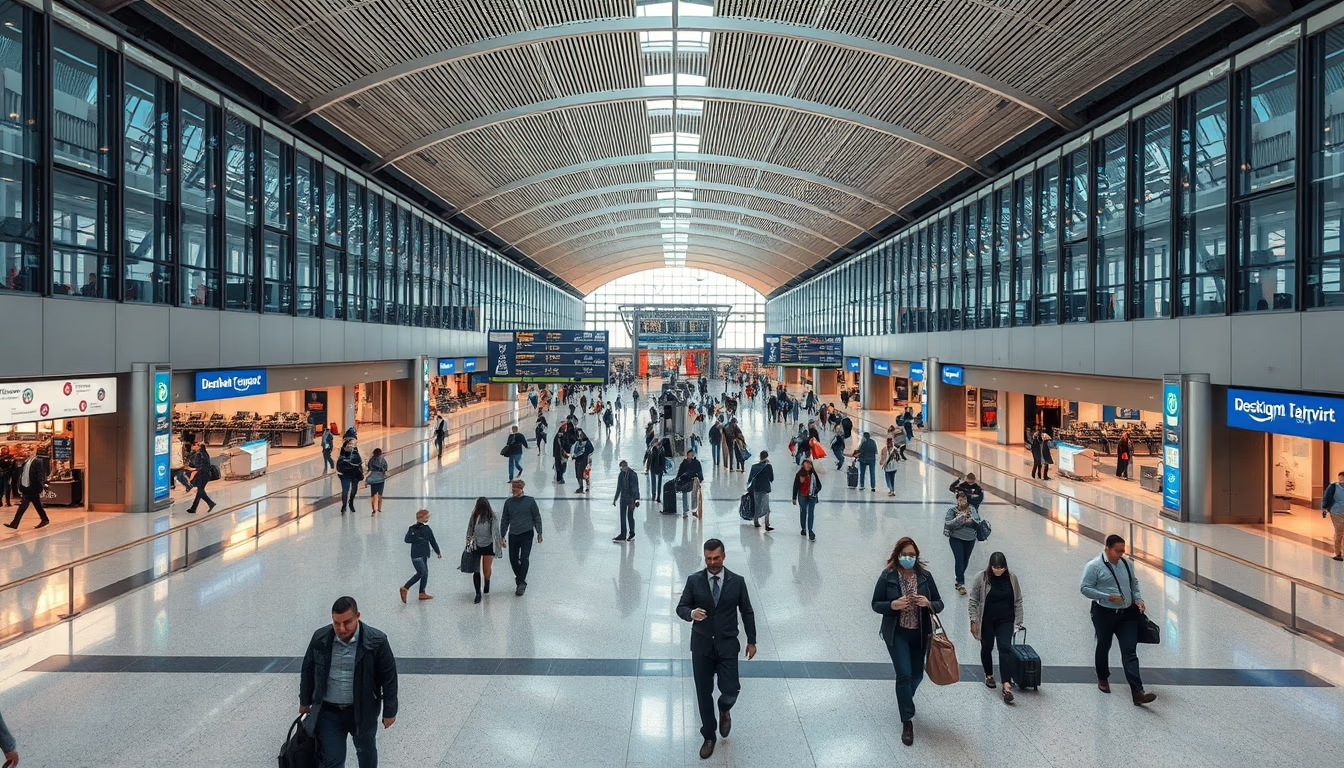
Modern airport terminals are global mobility hubs, designed for efficient passenger flow and multimodal integration.
About this subject
Modern airport terminals have evolved beyond mere boarding points. They function as complex logistical hubs, combining functional architecture with advanced baggage processing, security, and traveler information systems. Designs like Singapore Changi Airport or Incheon International Airport (South Korea) set global standards, integrating green spaces, entertainment, and digital connectivity. In Brazil, Guarulhos Airport (SP) and Brasília Airport underwent recent upgrades to meet growing demand, with new boarding bridges and automated systems.
Passenger movement in terminals follows patterns studied by airport traffic engineering. Studies show average dwell time ranges from 60 to 90 minutes for domestic flights and 2 to 3 hours for international ones. Factors such as online check-in, automated immigration, and signage design directly impact flow efficiency. Large airports process tens of thousands of passengers daily, requiring HVAC, lighting, and internal transport systems (like moving walkways and automated trains) sized for peak movement.
The modern traveler experience is shaped by amenities such as lounges, work areas, restaurants, and duty-free shops. IATA data indicates passenger satisfaction correlates with signage clarity and seat availability near gates. Terminals like London Heathrow and Tokyo Narita invest in public art and interactive installations to reduce waiting stress. In Brazil, airport concessions to private operators accelerated renovations, such as the expansion of Congonhas Airport (SP) and modernization of Galeão Airport (RJ).
Frequently Asked Questions
Which are the busiest airports in the world by passenger traffic?
Atlanta Airport (USA) leads for years, followed by Beijing (China) and Dubai (UAE). In Brazil, Guarulhos (SP) is the busiest.
How do modern airports manage passenger flow?
They use real-time monitoring systems, dynamic digital signage, moving walkways, and internal trains. Mobile apps and self-service kiosks also expedite check-in and boarding.
What defines a modern airport terminal?
Functional architecture with extensive use of glass and steel, automated baggage systems, multiple intermodal transport options (subway, train, bus), and common areas with shops, restaurants, and lounges.
Direct URL
https://pub-c7d6a6ea828543ac903a74a341ccb2e1.r2.dev/imagens/airport-terminal-modern-with-travelers-walking-aerial-drone-shot-studio-professional-lighting.avifHow to credit
Include a visible link back to UtilizAí. Copy one of the snippets below:
<a href="https://xn--utiliza-eza.com/en/midia/imagens/airport-terminal-modern-with-travelers-walking-aerial-drone-shot-studio-professional-lighting">Airport terminal modern with travelers walking</a> by <a href="https://xn--utiliza-eza.com">UtilizAí</a>, licensed under <a href="https://creativecommons.org/licenses/by/4.0/">CC BY 4.0</a>.
[Airport terminal modern with travelers walking](https://xn--utiliza-eza.com/en/midia/imagens/airport-terminal-modern-with-travelers-walking-aerial-drone-shot-studio-professional-lighting) by [UtilizAí](https://xn--utiliza-eza.com), CC BY 4.0
License: CC-BY-4.0