Air plants tillandsia
1344×768 · AVIF · CC BY 4.0
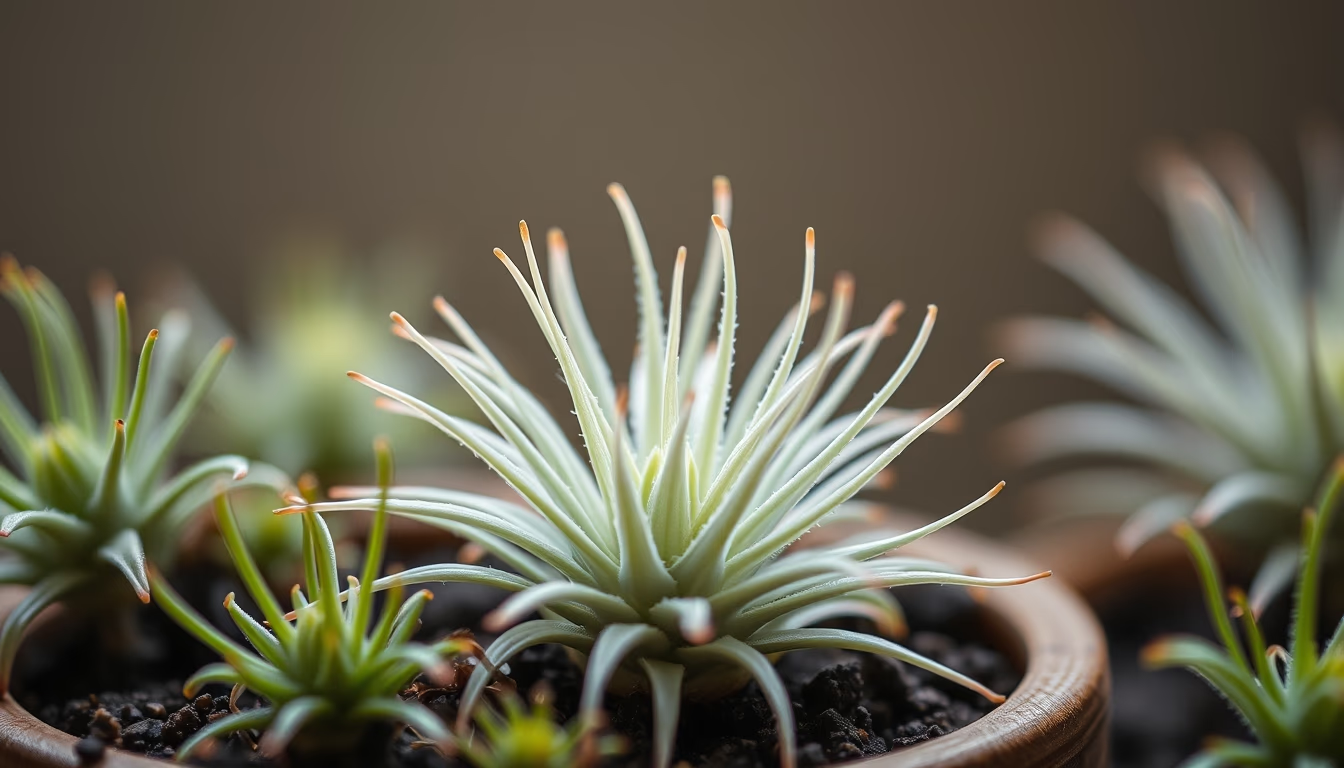
Tillandsias, known as air plants, are epiphytic bromeliads that absorb water and nutrients through leaves, requiring no soil. Native to the Americas, they are popular in decor.
About this subject
Tillandsias belong to the Bromeliaceae family and are native to regions from the southern United States to Argentina. Unlike most plants, they do not rely on roots for nutrient uptake; roots only serve as anchors on trees, rocks, or even power lines. Their leaves, covered with trichomes (scales), capture moisture and particles from the air. This mechanism makes them highly adaptable to both dry and humid environments.
There are over 600 species of Tillandsia, ranging from a few centimeters to nearly one meter. Tillandsia usneoides, known as Spanish moss, is famous for hanging from trees in the southern United States. Other species, such as Tillandsia cyanea, produce colorful inflorescences highly prized in gardening. In home cultivation, they require good air circulation and indirect light, being watered by soaking or misting once or twice a week.
Culturally, tillandsias have gained popularity in interior design for their minimalist aesthetic and low maintenance. In their natural habitats, they play important ecological roles, providing shelter for small animals and contributing to canopy biodiversity. Some species are used in handicrafts and even in traditional medicine by indigenous peoples. Their ability to flower without soil fascinates botanists and enthusiasts, making them subjects of studies on epiphytic adaptation.
Frequently Asked Questions
How to care for a tillandsia at home?
They need bright indirect light, good air circulation, and watering by soaking or misting 1-2 times per week. Allow to dry completely between waterings.
Why don't tillandsias need soil?
They absorb water and nutrients through their leaves via trichomes. Roots are only for attachment, not absorption.
Do tillandsias flower?
Yes, before dying, each plant produces a single colorful inflorescence. After flowering, it produces offsets (pups) that continue the cycle.
Direct URL
https://pub-c7d6a6ea828543ac903a74a341ccb2e1.r2.dev/imagens/air-plants-tillandsia-tilt-shift-miniature-fresh6.avifHow to credit
Include a visible link back to UtilizAí. Copy one of the snippets below:
<a href="https://xn--utiliza-eza.com/en/midia/imagens/air-plants-tillandsia-tilt-shift-miniature-fresh6">Air plants tillandsia</a> by <a href="https://xn--utiliza-eza.com">UtilizAí</a>, licensed under <a href="https://creativecommons.org/licenses/by/4.0/">CC BY 4.0</a>.
[Air plants tillandsia](https://xn--utiliza-eza.com/en/midia/imagens/air-plants-tillandsia-tilt-shift-miniature-fresh6) by [UtilizAí](https://xn--utiliza-eza.com), CC BY 4.0
License: CC-BY-4.0