Air plants tillandsia
1344×768 · AVIF · CC BY 4.0
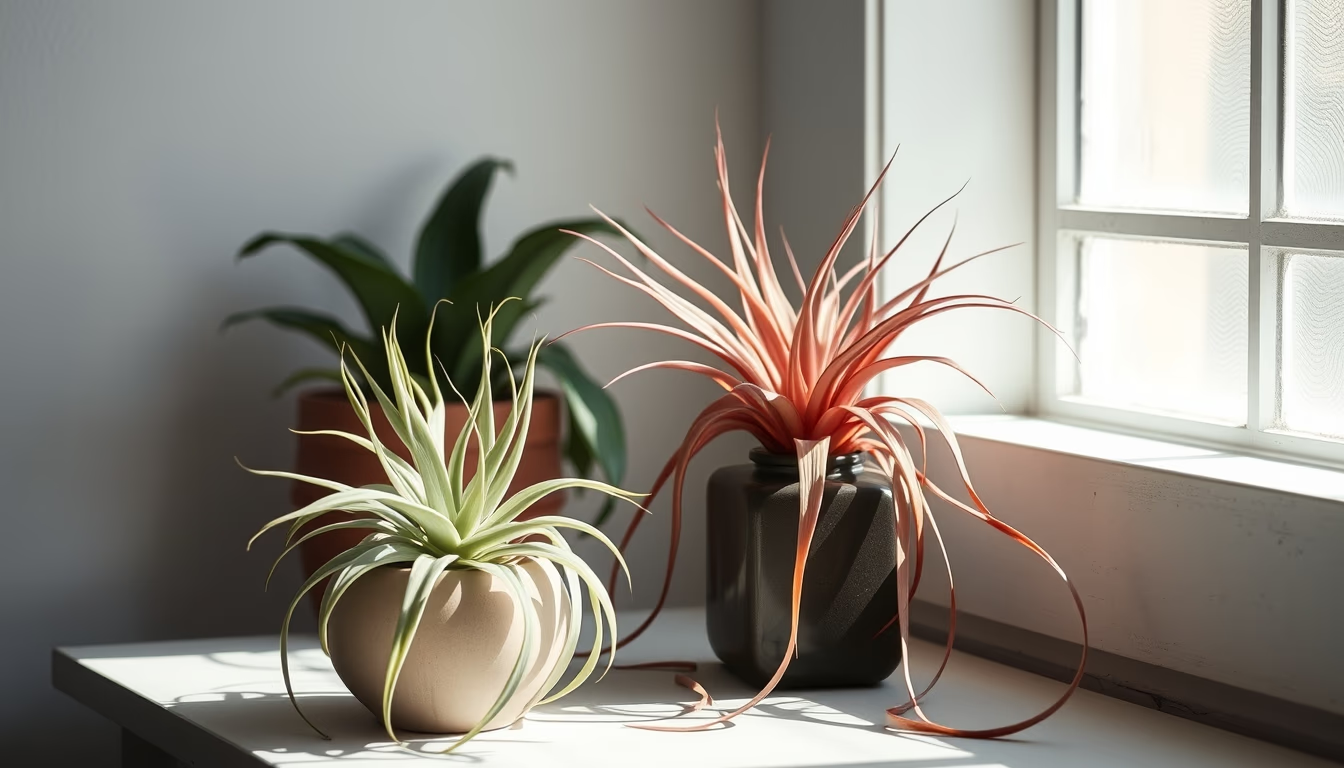
Tillandsias are air plants that absorb nutrients from the air without soil, standing out in minimalist decoration.
About this subject
Tillandsias, commonly known as air plants, belong to the Bromeliaceae family and the genus Tillandsia, which includes over 650 species native to the Americas, from the southern United States to Argentina. Unlike most plants, they do not require soil to grow: their roots serve only for attachment to trees, rocks, or other supports. Water and nutrient uptake occur through specialized scales called trichomes on the leaves, which absorb moisture and particles directly from the air.
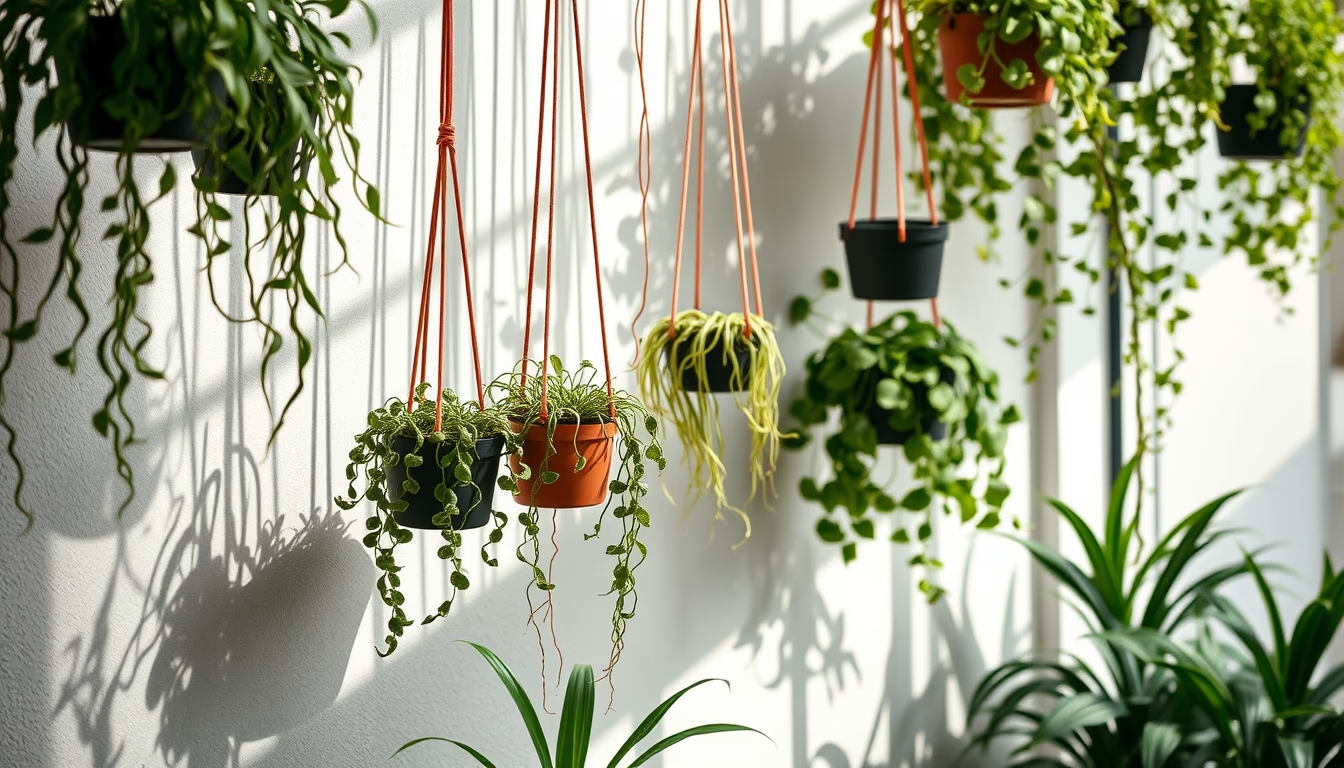
This adaptation allows tillandsias to inhabit diverse environments, from humid forests to arid deserts. In Brazil, they are common in Atlantic Forest and Cerrado regions, attached to trees or rocky outcrops. Species like Tillandsia usneoides (Spanish moss) form hanging curtains, while Tillandsia ionantha and Tillandsia cyanea are popular in terrariums and decorative pots. Due to their low maintenance, they have become icons of minimalist design, especially in suspended compositions or metal holders.
For home cultivation, bright indirect light and good air circulation are essential. Watering should be done by weekly soaking in filtered water or misting, always allowing complete drying between waterings to prevent rot. Monthly foliar fertilization with a bromeliad-specific fertilizer is also beneficial. Notably, many species produce vibrant flowers before generating lateral offsets (pups), ensuring propagation.
The versatility of tillandsias makes them ideal for those seeking a green touch without traditional cultivation challenges. Whether in glass containers, living frames, or vertical gardens, they provide a unique, natural look with simple care requirements.
Frequently Asked Questions
Do air plants need soil to grow?
No, tillandsias are epiphytic plants that do not require soil. They absorb water and nutrients through trichomes on their leaves, using roots only for attachment.
How to properly water an air plant?
The most effective method is soaking: submerge the plant in filtered water for 20 to 30 minutes once a week. After soaking, shake off excess water and let it dry completely in a well-ventilated area to prevent rot.
Which tillandsia species are easiest for beginners?
Tillandsia ionantha and Tillandsia stricta are excellent for beginners as they tolerate variations in light and watering. Tillandsia usneoides (Spanish moss) is also hardy but requires more humidity.
Direct URL
https://pub-c7d6a6ea828543ac903a74a341ccb2e1.r2.dev/imagens/air-plants-tillandsia-minimalist-composition-fresh13.avifHow to credit
Include a visible link back to UtilizAí. Copy one of the snippets below:
<a href="https://xn--utiliza-eza.com/en/midia/imagens/air-plants-tillandsia-minimalist-composition-fresh13">Air plants tillandsia</a> by <a href="https://xn--utiliza-eza.com">UtilizAí</a>, licensed under <a href="https://creativecommons.org/licenses/by/4.0/">CC BY 4.0</a>.
[Air plants tillandsia](https://xn--utiliza-eza.com/en/midia/imagens/air-plants-tillandsia-minimalist-composition-fresh13) by [UtilizAí](https://xn--utiliza-eza.com), CC BY 4.0
License: CC-BY-4.0