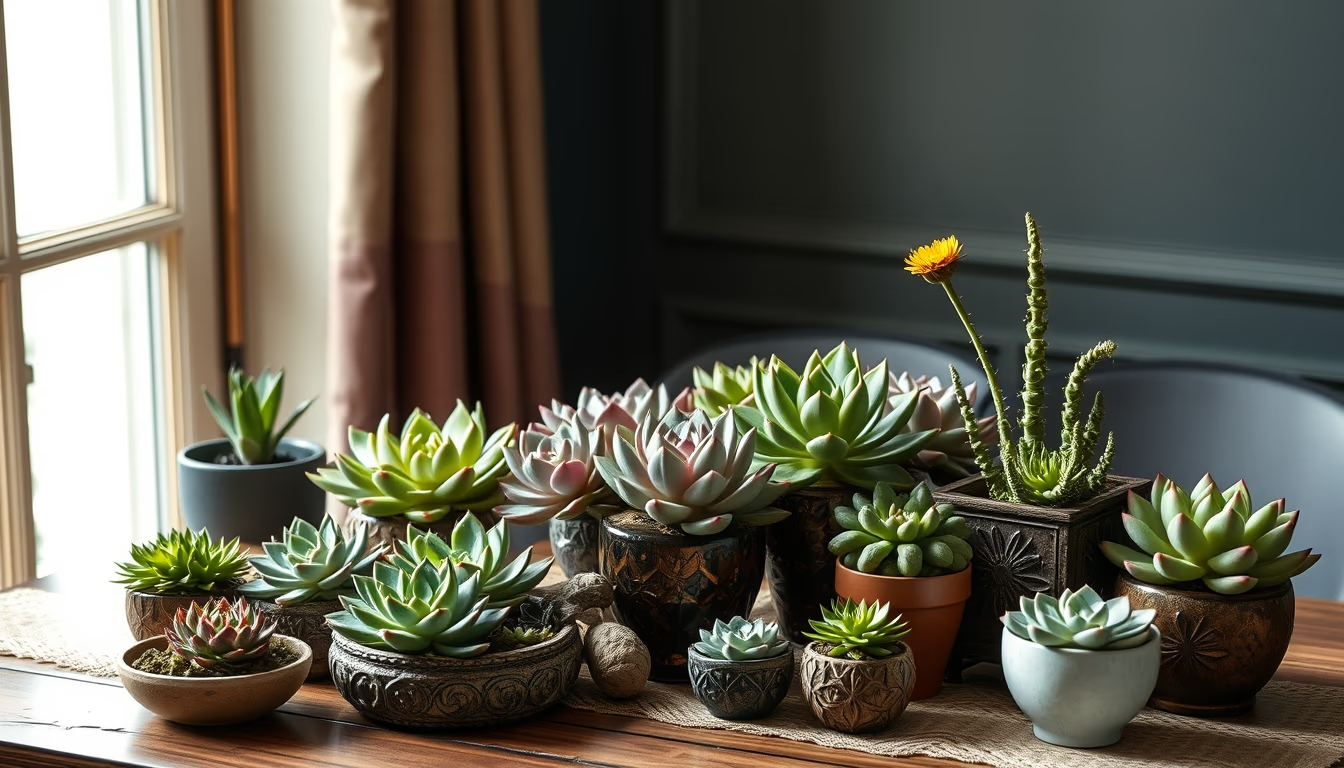
Air plants tillandsia
1344×768 · AVIF · CC BY 4.0
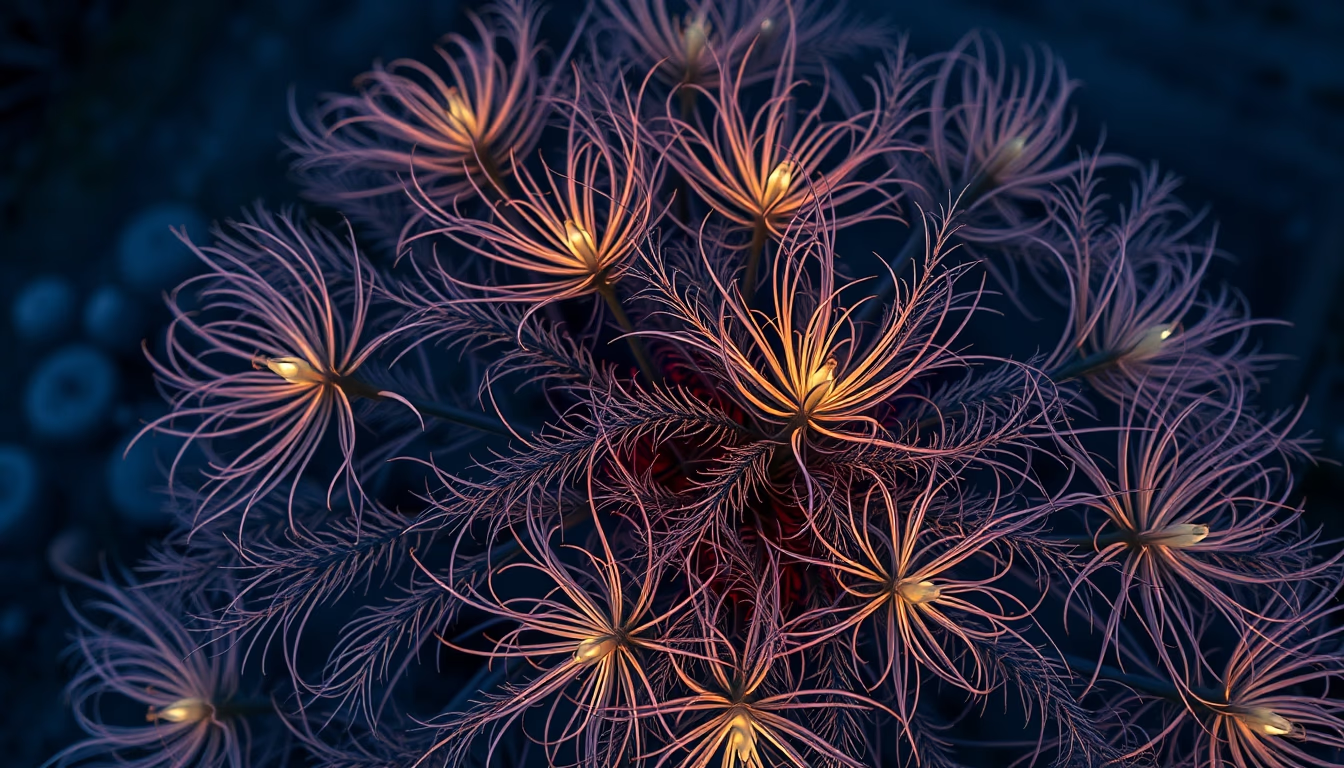
Tillandsias are epiphytic plants that don't need soil, absorbing water and nutrients from the air. Discover their traits and how to grow them.
About this subject
Tillandsias, widely known as air plants, belong to the Bromeliaceae family and are native to the Americas, ranging from the southern United States to Argentina. These epiphytic plants grow on other plants or surfaces like rocks and logs without being parasitic. They absorb water and nutrients through trichomes on their leaves, specialized structures that capture atmospheric moisture. There are over 650 species of tillandsias, varying in size, shape, and color. Some, like Tillandsia usneoides (Spanish moss), form long hanging chains, while others, such as Tillandsia ionantha, are compact and colorful. In Brazil, they can be found in diverse biomes, including the Atlantic Forest and the Cerrado, usually in areas with high relative humidity.
Growing tillandsias requires no traditional soil. They attach to supports like stones, wood, or shells, and watering is done by soaking or misting. Indoors, it is recommended to submerge the plant in filtered water for 20 to 30 minutes every one to two weeks, depending on local humidity. Ideal lighting ranges from bright indirect light to partial shade. Species with silvery or scaly leaves tolerate more sun, while green ones prefer less light. Tillandsias are also sensitive to salts and chlorine, so rainwater or filtered water should be used. They also appreciate good air circulation to prevent rot.
These plants hold significant ecological importance. In their natural habitats, they provide shelter and food for small animals like frogs, insects, and birds. Their tubular flowers are pollinated by hummingbirds, bees, and butterflies. After flowering, the mother plant produces lateral offsets (pups) that can be separated for propagation. Each rosette has a single life cycle: it blooms once and then slowly dies, but the pups ensure the colony's continuity. Due to their exotic beauty and low maintenance, tillandsias have become popular in terrariums, kokedamas, and vertical gardens, offering a sustainable decor option without soil.
Frequently Asked Questions
How to water a tillandsia?
Submerge the plant in filtered or rainwater for 20, 30 minutes every 1, 2 weeks. Increase frequency in dry environments. After soaking, shake off excess water and let it dry in a well-ventilated area to prevent rot.
Do tillandsias need soil?
No. Tillandsias are epiphytic and do not require soil. They absorb water and nutrients from the air through their leaves. They can be mounted on bark, stones, or decorative holders.
What is the best lighting for tillandsias?
Bright indirect light is ideal. Species with silvery leaves tolerate direct sun for a few hours, while green-leaved ones prefer partial shade. Avoid intense, continuous sun that can burn the leaves.
Direct URL
https://pub-c7d6a6ea828543ac903a74a341ccb2e1.r2.dev/imagens/air-plants-tillandsia-aerial-drone-shot-fresh11.avifHow to credit
Include a visible link back to UtilizAí. Copy one of the snippets below:
<a href="https://xn--utiliza-eza.com/en/midia/imagens/air-plants-tillandsia-aerial-drone-shot-fresh11">Air plants tillandsia</a> by <a href="https://xn--utiliza-eza.com">UtilizAí</a>, licensed under <a href="https://creativecommons.org/licenses/by/4.0/">CC BY 4.0</a>.
[Air plants tillandsia](https://xn--utiliza-eza.com/en/midia/imagens/air-plants-tillandsia-aerial-drone-shot-fresh11) by [UtilizAí](https://xn--utiliza-eza.com), CC BY 4.0
License: CC-BY-4.0