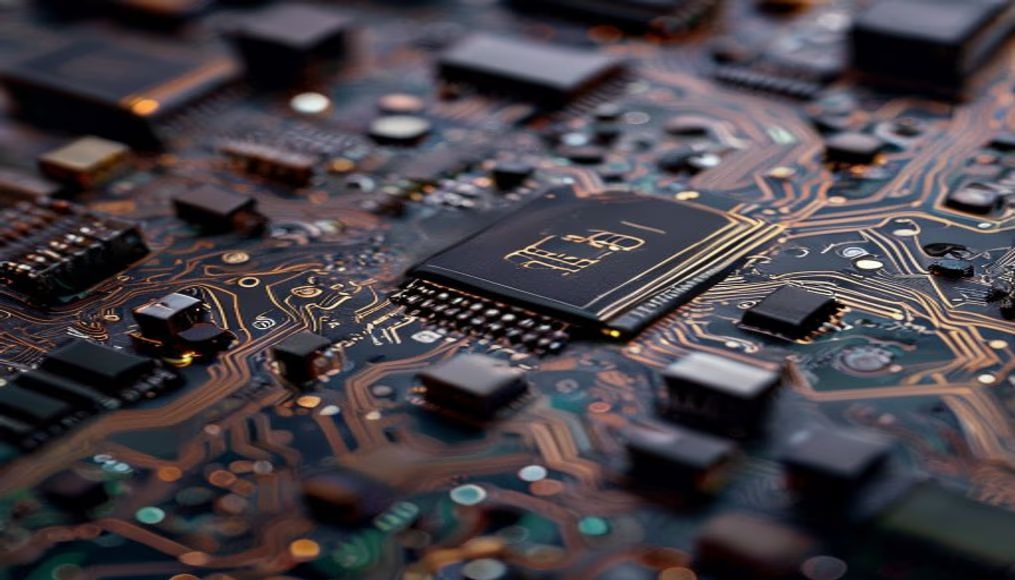
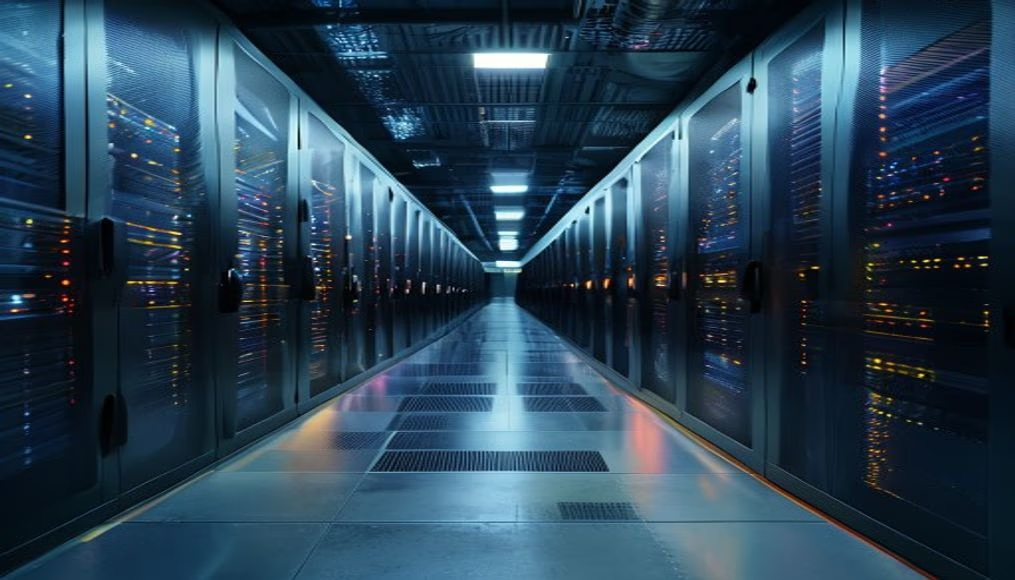
AI engineer training neural network on workstation
1344×768 · AVIF · CC BY 4.0

AI engineer trains neural network on workstation on an overcast day, professional tech environment.
About this subject
Training neural networks is a critical step in developing artificial intelligence systems. In this process, the AI engineer uses a high-performance workstation equipped with dedicated GPUs, such as the NVIDIA RTX or A100 series, which accelerate the matrix calculations needed to adjust network weights. Overcast conditions, as depicted, may affect workspace lighting but do not impact computational performance.
AI workstations typically feature multiple CPU cores, large amounts of RAM (64 GB or more), and NVMe SSD storage to handle large datasets. The engineer monitors metrics like loss and accuracy in real time using frameworks such as TensorFlow, PyTorch, or JAX. Hardware and software choices directly affect training time, which can range from hours to weeks depending on model complexity.
Globally, AI engineering is a booming field. Companies like Google, OpenAI, and Meta invest heavily in neural network training. The demand for AI engineers has surged, with LinkedIn reporting a 74% annual growth rate in job postings. Workstations for deep learning often cost between $5,000 and $30,000, balancing performance and budget.
Interestingly, the first modern neural network training, the multilayer perceptron, was demonstrated in 1986 by Rumelhart, Hinton, and Williams, but it only became commercially viable with programmable GPUs in the 2000s.
Frequently Asked Questions
How long does it take to train a neural network?
Training time ranges from hours to weeks, depending on model size, dataset, and hardware. Simple models may take a few hours on a workstation GPU; complex models like GPT-3 took months on clusters of thousands of GPUs.
What is the difference between CPU and GPU in AI training?
GPUs are optimized for parallel operations, essential for neural network calculations. While a CPU may have 8 to 16 cores, a modern GPU has thousands of smaller cores, making training up to 100 times faster.
Which frameworks are most used for training neural networks?
The main ones are TensorFlow (Google), PyTorch (Meta), and JAX (Google). PyTorch is popular in academic research, while TensorFlow is common in industrial production.
Direct URL
https://pub-c7d6a6ea828543ac903a74a341ccb2e1.r2.dev/imagens/ai-engineer-training-neural-network-on-workstation-editorial-overcast-daytime-6.avifHow to credit
Include a visible link back to UtilizAí. Copy one of the snippets below:
<a href="https://xn--utiliza-eza.com/en/midia/imagens/ai-engineer-training-neural-network-on-workstation-editorial-overcast-daytime-6">AI engineer training neural network on workstation</a> by <a href="https://xn--utiliza-eza.com">UtilizAí</a>, licensed under <a href="https://creativecommons.org/licenses/by/4.0/">CC BY 4.0</a>.
[AI engineer training neural network on workstation](https://xn--utiliza-eza.com/en/midia/imagens/ai-engineer-training-neural-network-on-workstation-editorial-overcast-daytime-6) by [UtilizAí](https://xn--utiliza-eza.com), CC BY 4.0
License: CC-BY-4.0