AI engineer training neural network on workstation
1344×768 · AVIF · CC BY 4.0
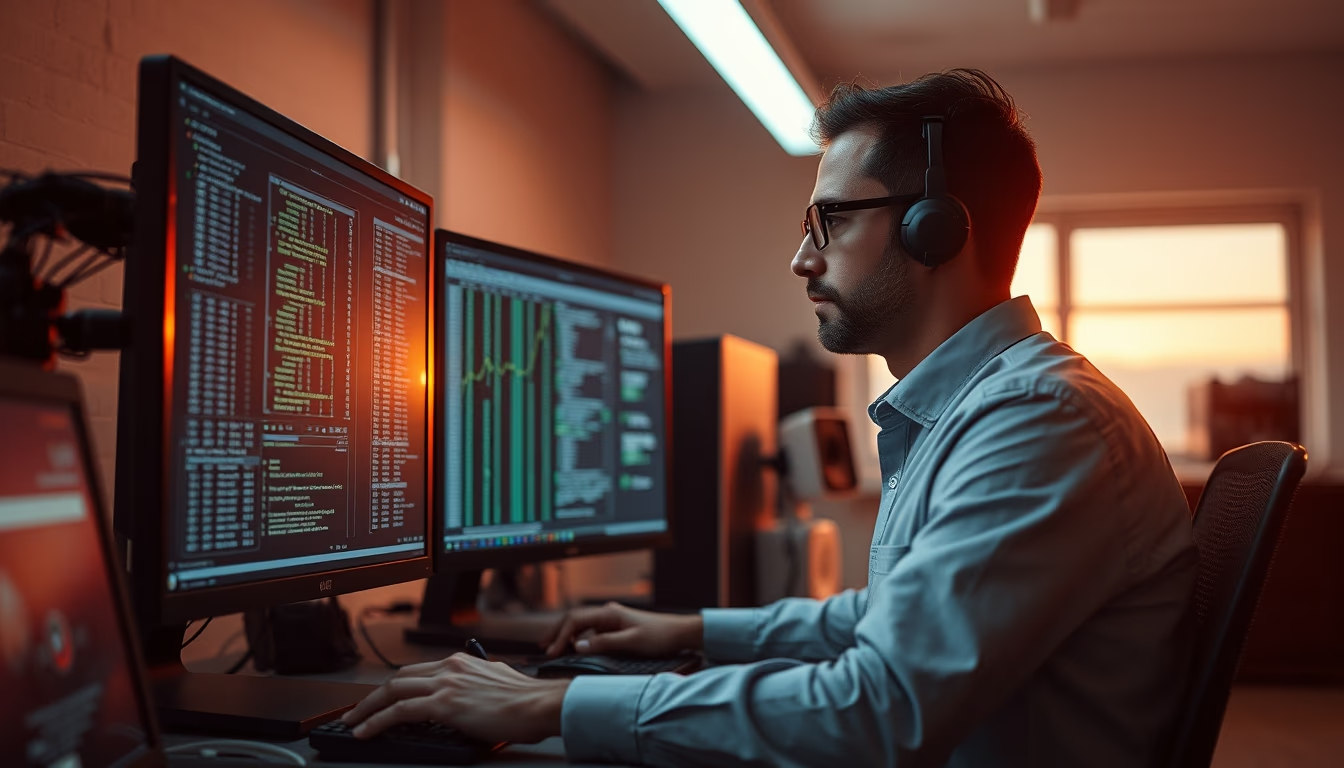
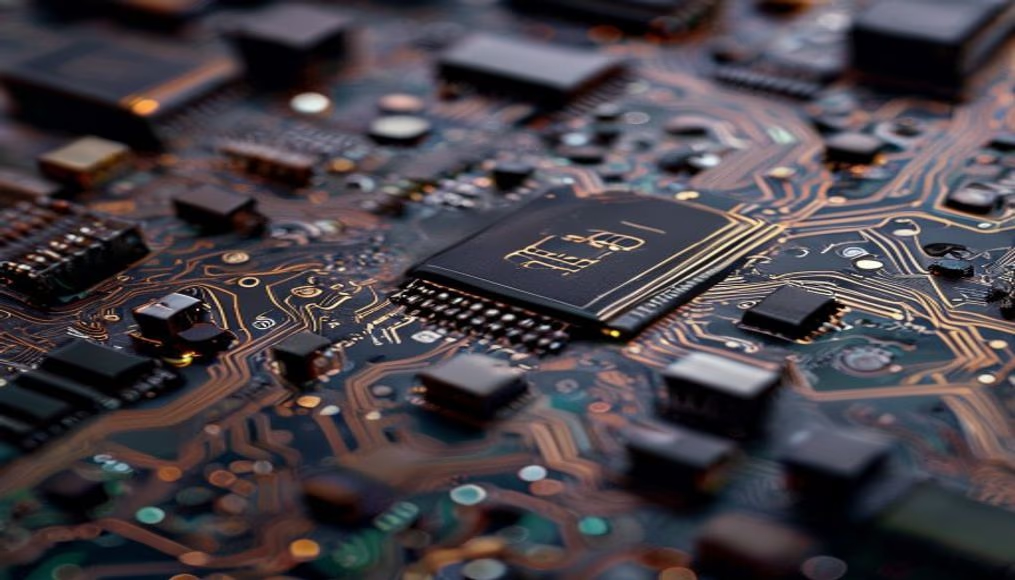
AI engineer trains a neural network on a workstation at twilight, a closeup revealing the complexity of high-performance computing hardware.
About this subject
Training deep neural networks is a computationally intensive process that requires specialized hardware. AI engineers often use workstations equipped with multiple high-performance GPUs, such as NVIDIA RTX or A100 series, which accelerate the linear algebra calculations needed for backpropagation. The closeup of the image highlights component details: heat sinks, fans, and cables managing thermal dissipation, as training can last days or weeks, consuming hundreds of watts per GPU.
The twilight lighting in the environment suggests long working hours, common in cutting-edge research projects. Training models like GPT or convolutional networks for computer vision requires massive datasets and continuous hyperparameter tuning. Tools like TensorFlow, PyTorch, and CUDA are essential in this workflow, which involves real-time monitoring of metrics such as loss and accuracy.
A technical curiosity: during training, GPU temperatures can exceed 80°C, requiring robust cooling systems. Additionally, the energy consumption of a single large-scale training session can equal that of a household over several days. Therefore, optimizations like mixed-precision training and network pruning are increasingly adopted to reduce costs.
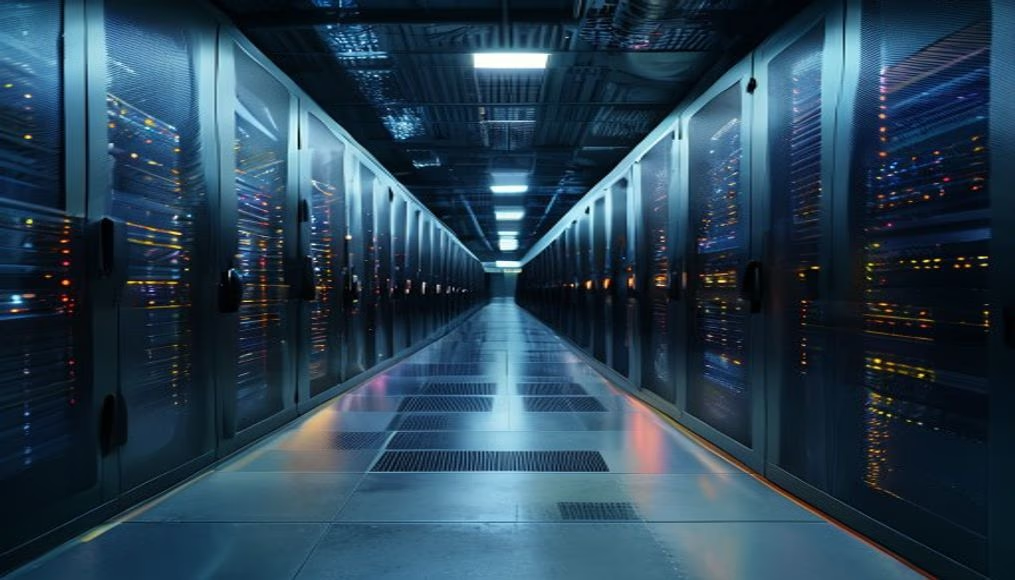
The nighttime setting and focus on workstation details reflect the dedication required to advance artificial intelligence. AI engineers combine knowledge in mathematics, computer science, and electrical engineering to overcome computational bottlenecks, whether in data centers or local prototyping stations.
Frequently Asked Questions
Why does training neural networks consume so much energy?
Training involves millions of parallel mathematical operations, especially matrix multiplications. High-performance GPUs execute these operations quickly but consume significant electrical power, generating heat that must be dissipated.
What are the main components of an AI workstation?
Typically includes multiple GPUs (e.g., NVIDIA RTX or A100), a high-core-count CPU, large RAM (64 GB or more), fast SSD storage, and advanced cooling systems to prevent overheating.
How long does it take to train a large neural network?
Depends on model and hardware. Small models may take minutes; large models like GPT-3 can take weeks or months on clusters of hundreds of GPUs. Fine-tuning can be faster, from hours to days.
Direct URL
https://pub-c7d6a6ea828543ac903a74a341ccb2e1.r2.dev/imagens/ai-engineer-training-neural-network-on-workstation-closeup-twilight-7.avifHow to credit
Include a visible link back to UtilizAí. Copy one of the snippets below:
<a href="https://xn--utiliza-eza.com/en/midia/imagens/ai-engineer-training-neural-network-on-workstation-closeup-twilight-7">AI engineer training neural network on workstation</a> by <a href="https://xn--utiliza-eza.com">UtilizAí</a>, licensed under <a href="https://creativecommons.org/licenses/by/4.0/">CC BY 4.0</a>.
[AI engineer training neural network on workstation](https://xn--utiliza-eza.com/en/midia/imagens/ai-engineer-training-neural-network-on-workstation-closeup-twilight-7) by [UtilizAí](https://xn--utiliza-eza.com), CC BY 4.0
License: CC-BY-4.0