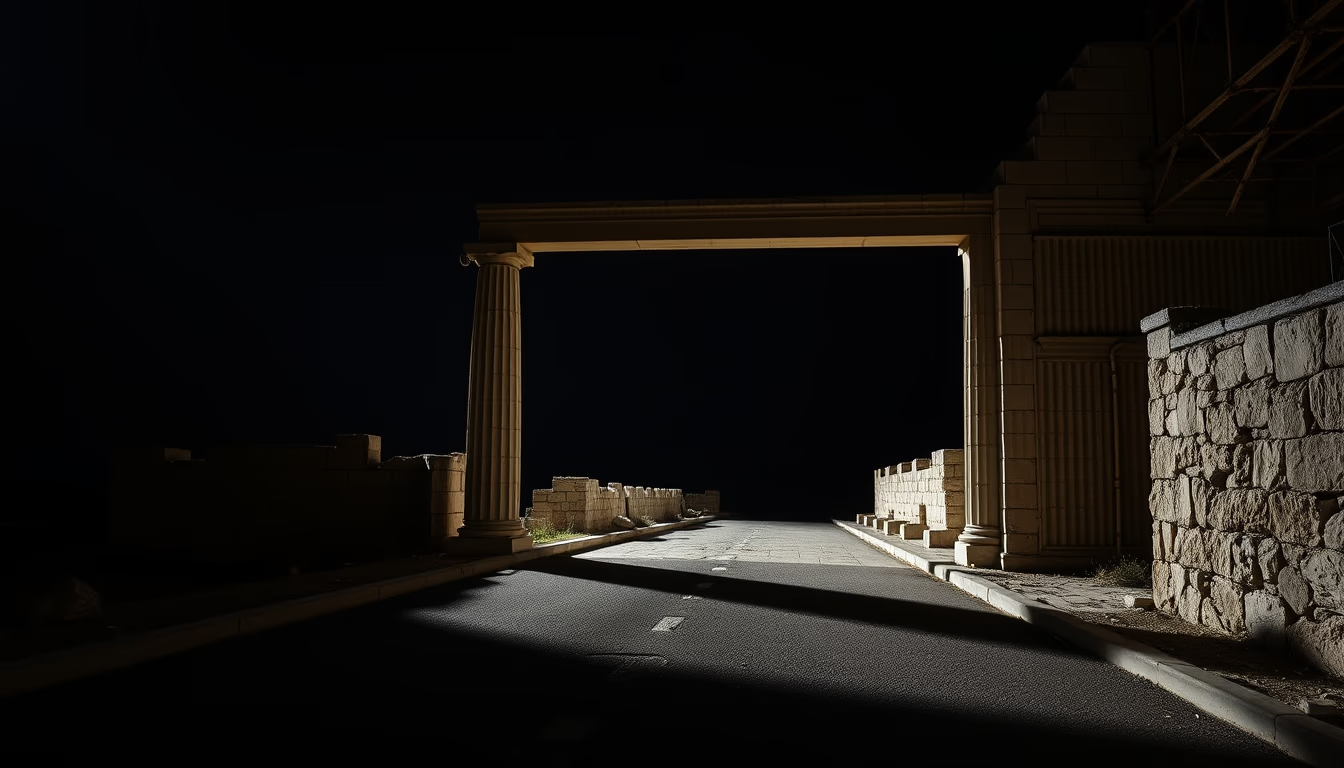
Agincourt field england
1344×768 · AVIF · CC BY 4.0

The Battle of Agincourt (1415) was a decisive Hundred Years' War engagement where Henry V's English army defeated the French despite being outnumbered.
About this subject
The Battle of Agincourt took place on 25 October 1415 near the commune of Azincourt in northern France. It was one of the most iconic engagements of the Hundred Years' War, a conflict between England and France from 1337 to 1453. The English army, led by King Henry V, was heavily outnumbered: estimates suggest around 6,000 English troops faced between 20,000 and 30,000 French soldiers. Despite this, the English won a decisive victory, thanks to the strategic use of longbow archers and the muddy terrain, which neutralized the French heavy cavalry.
The battlefield was a recently plowed field turned into thick mud by rain. The English archers, positioned on the flanks behind sharpened stakes, decimated the French ranks with volleys of arrows. The French infantry, clad in heavy armor, sank into the mud and were cut down before reaching the English lines. The battle lasted only a few hours but resulted in thousands of French casualties, including many nobles and knights, while English losses were minimal.
Agincourt became a symbol of English tactical superiority in the Middle Ages and immortalized the longbow as a decisive weapon. The event was celebrated by Shakespeare in his play "Henry V," featuring the famous St. Crispin's Day speech. Today, the battle is studied in military academies as an example of how terrain and discipline can overcome numerical odds. The Agincourt field remains a site of memory, with a museum and monuments attracting visitors interested in medieval history.
Frequently Asked Questions
Why was the Battle of Agincourt so important in the Hundred Years' War?
Agincourt was important because it demonstrated the effectiveness of the longbow against heavy cavalry, strengthened the English position in France, and inspired Shakespeare's play, influencing popular culture to this day.
How many soldiers fought at the Battle of Agincourt?
Estimates suggest around 6,000 English soldiers faced between 20,000 and 30,000 French troops, resulting in a significant numerical disparity.
What role did the terrain play in the English victory?
The muddy field, due to recent rain, bogged down the French heavy cavalry and infantry, allowing English archers to shoot effectively and the English infantry to attack with advantage.
Direct URL
https://pub-c7d6a6ea828543ac903a74a341ccb2e1.r2.dev/imagens/agincourt-field-england-tilt-shift-miniature-fresh15.avifHow to credit
Include a visible link back to UtilizAí. Copy one of the snippets below:
<a href="https://xn--utiliza-eza.com/en/midia/imagens/agincourt-field-england-tilt-shift-miniature-fresh15">Agincourt field england</a> by <a href="https://xn--utiliza-eza.com">UtilizAí</a>, licensed under <a href="https://creativecommons.org/licenses/by/4.0/">CC BY 4.0</a>.
[Agincourt field england](https://xn--utiliza-eza.com/en/midia/imagens/agincourt-field-england-tilt-shift-miniature-fresh15) by [UtilizAí](https://xn--utiliza-eza.com), CC BY 4.0
License: CC-BY-4.0