5G antenna tower silhouette against deep blue twilight sky
1344×768 · AVIF · CC BY 4.0
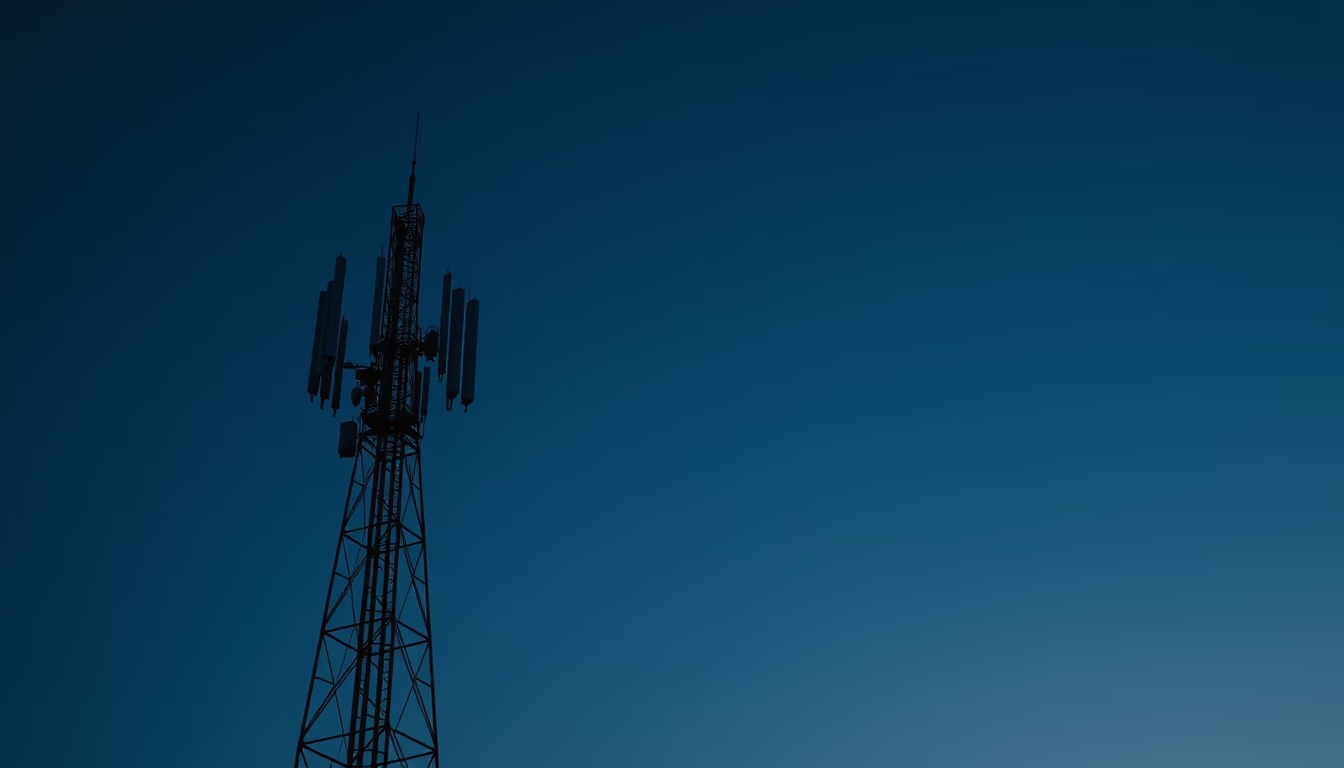
5G antenna tower silhouetted against a deep blue twilight sky, an icon of fifth-generation mobile connectivity.
About this subject
The silhouette of a 5G antenna tower against the evening sky represents the technological leap redefining wireless communication. 5G, the fifth generation of mobile networks, began commercial deployment in 2019, offering download speeds up to 20 Gbps, latency under 1 millisecond, and capacity to connect up to 1 million devices per square kilometer. Unlike previous generations, 5G uses higher frequency bands, such as millimeter waves (24 GHz to 100 GHz), which require a greater number of antennas to ensure coverage, as their range is shorter and they suffer more interference from obstacles like buildings and trees.
In Brazil, standalone 5G deployment was authorized by Anatel in 2021, with an auction held in November that year. The first capitals to receive the signal were Brasília, São Paulo, Rio de Janeiro, Belo Horizonte, Porto Alegre, and Curitiba, starting in July 2022. The technology promises to transform sectors such as healthcare (remote surgeries), agriculture (real-time sensors), Industry 4.0 (robot automation), and entertainment (immersive virtual reality). The tower in the image, with its compact equipment and aerodynamic design, is an example of the radio base stations that make up 5G infrastructure.
Interestingly, the silhouette of communication towers has been a subject of aesthetic and urbanistic debates. In many cities, regulations require antennas to be disguised or integrated into lampposts to minimize visual impact. However, the view of a tower against a twilight sky also evokes progress and connectivity that bring people and machines closer. 5G is the backbone of the Internet of Things (IoT), enabling everything from autonomous cars to smart cities with real-time traffic management.
Frequently Asked Questions
What does 5G stand for?
5G stands for fifth generation of mobile networks. It is the successor to 4G LTE and offers much higher speeds, lower latency, and capacity to connect more devices simultaneously.
Is 5G dangerous to health?
There is no scientific evidence proving health risks within exposure limits set by organizations like WHO and Anatel. The frequencies used are non-ionizing and follow international safety standards.
When will 5G be available throughout Brazil?
Anatel determined that all Brazilian state capitals must have 5G coverage by July 2025. Cities with more than 30,000 inhabitants should receive the signal by 2029, but the timeline may vary by operator.
Direct URL
https://pub-c7d6a6ea828543ac903a74a341ccb2e1.r2.dev/imagens/5g-antenna-tower-silhouette-against-deep-blue-twilight-sky-wide-late-afternoon.avifHow to credit
Include a visible link back to UtilizAí. Copy one of the snippets below:
<a href="https://xn--utiliza-eza.com/en/midia/imagens/5g-antenna-tower-silhouette-against-deep-blue-twilight-sky-wide-late-afternoon">5G antenna tower silhouette against deep blue twilight sky</a> by <a href="https://xn--utiliza-eza.com">UtilizAí</a>, licensed under <a href="https://creativecommons.org/licenses/by/4.0/">CC BY 4.0</a>.
[5G antenna tower silhouette against deep blue twilight sky](https://xn--utiliza-eza.com/en/midia/imagens/5g-antenna-tower-silhouette-against-deep-blue-twilight-sky-wide-late-afternoon) by [UtilizAí](https://xn--utiliza-eza.com), CC BY 4.0
License: CC-BY-4.0