5G antenna tower silhouette against deep blue twilight sky
1344×768 · AVIF · CC BY 4.0
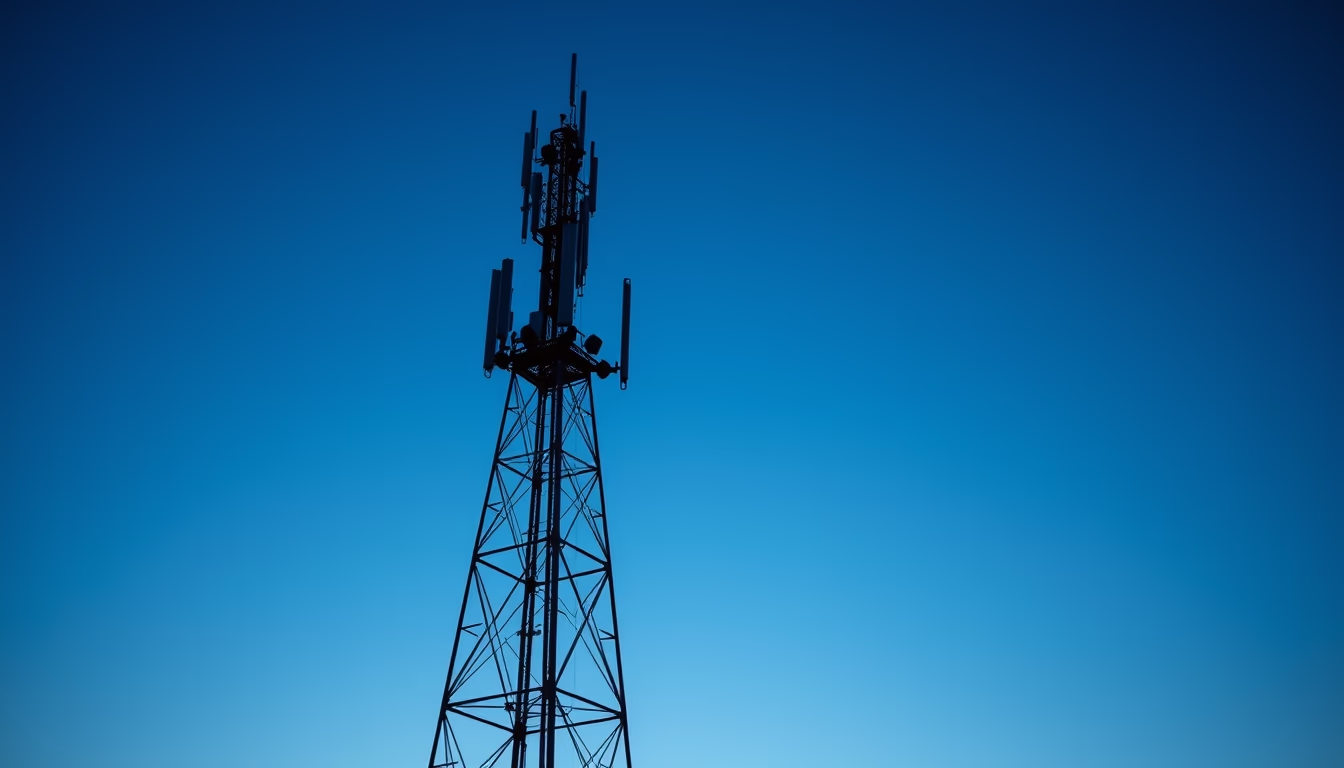
5G antenna tower silhouetted against a deep blue twilight sky, symbolizing modern connectivity and the expansion of fifth-generation mobile networks.
About this subject
The silhouette of a 5G antenna tower against the deep blue twilight sky represents the invisible infrastructure that underpins modern digital communication. Telecommunications towers, often camouflaged or integrated into urban structures, transmit high-frequency radio signals enabling download speeds up to 20 times faster than 4G. In Brazil, 5G deployment officially began in July 2022 with activation in Brasília, and has since expanded to capitals and mid-sized cities. The technology operates in three bands: low (700 MHz), mid (2.3 GHz and 3.5 GHz), and high (26 GHz), each with different ranges and capacities. The 3.5 GHz band, auctioned by Anatel, is the primary band for urban coverage, requiring a higher density of antennas due to shorter signal propagation. This explains the proliferation of towers on poles, buildings, and even tourist spots. The silhouette cut against the night sky evokes the ubiquity of connectivity, but also raises questions about public health and visual impact. WHO studies indicate no evidence of harmful effects from radiofrequencies within regulatory limits, though debate continues. 5G installation also boosts the Internet of Things (IoT), autonomous vehicles, and telemedicine, transforming sectors like agriculture, industry, and entertainment. The image, with its dramatic contrast, captures the duality between technological progress and the natural or urban landscape that shelters it.
Frequently Asked Questions
What does 5G stand for?
5G stands for fifth-generation mobile technology. It is the successor to 4G, designed to provide higher speed, lower latency, and the ability to connect a massive number of devices simultaneously.
Why are 5G antennas more numerous than 4G antennas?
Millimeter waves used in 5G have shorter range and are more affected by obstacles like buildings and trees. Therefore, more antennas need to be installed at closer distances to ensure continuous coverage.
Is the radiation from 5G antennas harmful to health?
According to the World Health Organization and Brazil's National Telecommunications Agency (Anatel), there is no scientific evidence that exposure to radiofrequencies within regulated limits causes health damage. 5G antennas operate on frequencies already used by other technologies.
Direct URL
https://pub-c7d6a6ea828543ac903a74a341ccb2e1.r2.dev/imagens/5g-antenna-tower-silhouette-against-deep-blue-twilight-sky-symmetric-bright-midday-2.avifHow to credit
Include a visible link back to UtilizAí. Copy one of the snippets below:
<a href="https://xn--utiliza-eza.com/en/midia/imagens/5g-antenna-tower-silhouette-against-deep-blue-twilight-sky-symmetric-bright-midday-2">5G antenna tower silhouette against deep blue twilight sky</a> by <a href="https://xn--utiliza-eza.com">UtilizAí</a>, licensed under <a href="https://creativecommons.org/licenses/by/4.0/">CC BY 4.0</a>.
[5G antenna tower silhouette against deep blue twilight sky](https://xn--utiliza-eza.com/en/midia/imagens/5g-antenna-tower-silhouette-against-deep-blue-twilight-sky-symmetric-bright-midday-2) by [UtilizAí](https://xn--utiliza-eza.com), CC BY 4.0
License: CC-BY-4.0