5G antenna tower silhouette against deep blue twilight sky
1344×768 · AVIF · CC BY 4.0
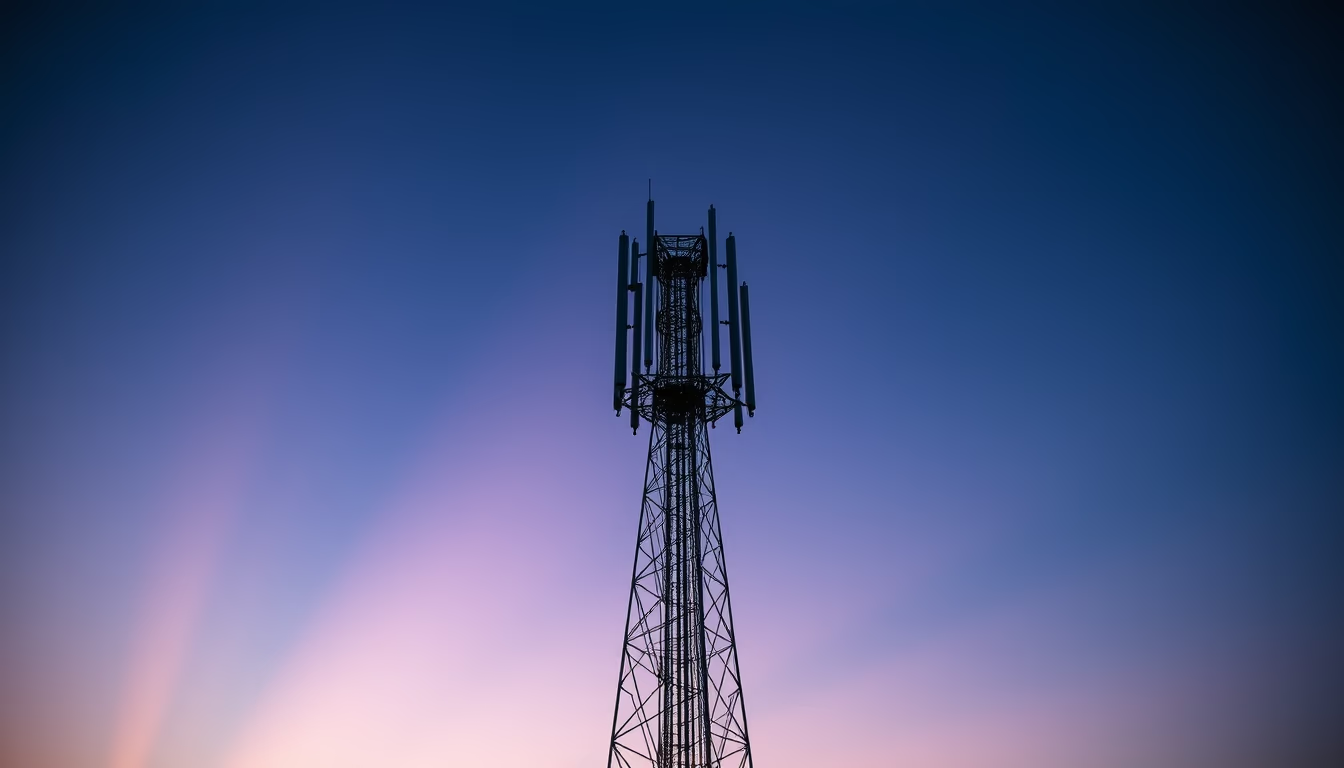
5G antenna tower silhouette against a deep blue twilight sky, symbolizing the new era of mobile connectivity in Brazil.
About this subject
5G antenna towers are becoming increasingly common in Brazilian urban landscapes, marking the transition to the fifth generation of mobile networks. In Brazil, 5G deployment officially began in July 2022, with activation in Brasília, and has since expanded to all state capitals and major urban centers. 5G technology offers download speeds up to 20 times faster than 4G, latency reduced to less than 1 millisecond, and capacity to connect up to 1 million devices per square kilometer. This enables applications such as autonomous vehicles, remote surgeries, smart cities, and industrial-scale Internet of Things.
The tower's silhouette against the twilight sky evokes the integration of technological infrastructure and the natural environment. Unlike 4G antennas, 5G base stations use millimeter waves, which require higher antenna density to ensure coverage, resulting in towers closer to each other and often installed on lampposts or building facades. In Brazil, Anatel has established specific rules for installing these devices, including limits on exposure to electromagnetic fields and requirements for infrastructure sharing among operators.
Interestingly, the deep blue color of the twilight sky results from Rayleigh scattering, the same phenomenon that explains why the sky is blue during the day. At dusk, sunlight travels through a thicker layer of the atmosphere, scattering shorter wavelengths (blue and violet) and leaving orange and red tones predominant. However, on clear days with low pollution, blue can persist longer, creating a dramatic contrast with the metallic structure of the antenna.
The expansion of 5G in Brazil faces logistical and regulatory challenges, such as the need for fiber optic backhaul, the release of frequency bands (like the 3.5 GHz band), and the adaptation of municipal zoning laws. Despite this, the country already has over 10,000 activated 5G antennas, according to the Brazilian Association of Telecommunications Infrastructure (Abrint). The technology is expected to boost sectors such as agribusiness, healthcare, education, and entertainment, with projected economic impact of R$ 220 billion by 2030.
Frequently Asked Questions
What is required for a 5G tower to work?
Besides the antenna itself, it needs fiber optic backhaul infrastructure (connection to the core network), electrical power, municipal licensing, and Anatel approval. Operators may also need to share the tower in some cases.
Is 5G harmful to health?
According to the World Health Organization and Anatel, 5G radio waves are non-ionizing and do not cause health damage within established limits. Exposure levels are far below those considered dangerous.
How many 5G antennas are there in Brazil currently?
As of 2025, Brazil has over 10,000 activated 5G antennas, according to Abrint. The goal is to cover all cities with more than 30,000 inhabitants by 2029.
Direct URL
https://pub-c7d6a6ea828543ac903a74a341ccb2e1.r2.dev/imagens/5g-antenna-tower-silhouette-against-deep-blue-twilight-sky-editorial-overcast-daytime-4.avifHow to credit
Include a visible link back to UtilizAí. Copy one of the snippets below:
<a href="https://xn--utiliza-eza.com/en/midia/imagens/5g-antenna-tower-silhouette-against-deep-blue-twilight-sky-editorial-overcast-daytime-4">5G antenna tower silhouette against deep blue twilight sky</a> by <a href="https://xn--utiliza-eza.com">UtilizAí</a>, licensed under <a href="https://creativecommons.org/licenses/by/4.0/">CC BY 4.0</a>.
[5G antenna tower silhouette against deep blue twilight sky](https://xn--utiliza-eza.com/en/midia/imagens/5g-antenna-tower-silhouette-against-deep-blue-twilight-sky-editorial-overcast-daytime-4) by [UtilizAí](https://xn--utiliza-eza.com), CC BY 4.0
License: CC-BY-4.0