5G antenna tower silhouette against deep blue twilight sky
1344×768 · AVIF · CC BY 4.0
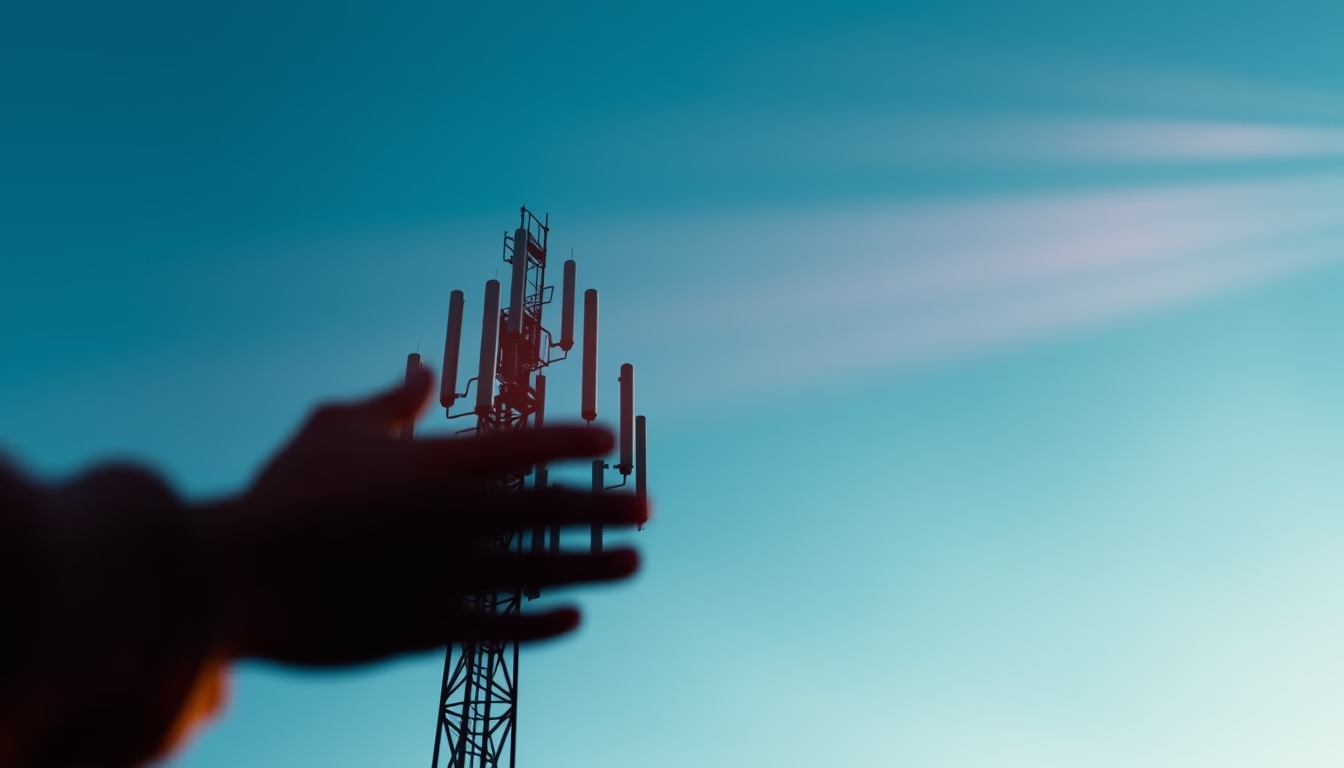
5G antenna tower silhouette against a deep blue twilight sky, symbolizing the new era of mobile connectivity in Brazil.
About this subject
The implementation of 5G in Brazil officially began in July 2022, after Anatel's auction in November 2021. 5G antenna towers, like the one depicted, use higher frequencies (such as the 3.5 GHz band) that require a greater density of base stations to ensure adequate coverage. Unlike 4G, 5G offers latency under 1 millisecond, download speeds exceeding 1 Gbps, and the capacity to connect up to 1 million devices per square kilometer. These features enable applications such as remote surgery, autonomous vehicles, and smart cities.
In Brazil, operators Claro, Vivo, and TIM lead the expansion, covering over 500 municipalities by 2024. Installing 5G antennas faces challenges including the need for fiber optic backhaul, municipal zoning restrictions, and misinformation about electromagnetic wave effects, which, according to the WHO, pose no health risk at levels regulated by Anatel. The elongated shape of 5G antennas (known as Massive MIMO) allows more efficient signal direction, reducing interference.
The tower silhouette against the night sky evokes the ubiquity of digital infrastructure in the contemporary urban landscape. It is estimated that 5G will contribute R$ 1.2 trillion to Brazil's GDP by 2035, according to a study by EY. However, the digital divide still affects 40 million Brazilians without internet access, making 5G expansion a challenge of social inclusion and infrastructure investment.
Frequently Asked Questions
Is 5G harmful to health?
According to the World Health Organization (WHO) and Anatel, electromagnetic waves from 5G, within regulated limits, pose no health risk. Peer-reviewed studies have found no evidence of harmful effects.
What is the difference between 5G and 4G?
5G offers speeds up to 100 times faster than 4G, latency of 1 ms (compared to 30-50 ms for 4G), and the ability to connect many more devices simultaneously, enabling applications like autonomous cars and remote surgery.
How many 5G antennas are there in Brazil?
As of 2024, Brazil has over 40,000 5G base stations installed, with a forecast of reaching 100,000 by 2026, according to Conexis Brasil Digital.
Direct URL
https://pub-c7d6a6ea828543ac903a74a341ccb2e1.r2.dev/imagens/5g-antenna-tower-silhouette-against-deep-blue-twilight-sky-editorial-overcast-daytime.avifHow to credit
Include a visible link back to UtilizAí. Copy one of the snippets below:
<a href="https://xn--utiliza-eza.com/en/midia/imagens/5g-antenna-tower-silhouette-against-deep-blue-twilight-sky-editorial-overcast-daytime">5G antenna tower silhouette against deep blue twilight sky</a> by <a href="https://xn--utiliza-eza.com">UtilizAí</a>, licensed under <a href="https://creativecommons.org/licenses/by/4.0/">CC BY 4.0</a>.
[5G antenna tower silhouette against deep blue twilight sky](https://xn--utiliza-eza.com/en/midia/imagens/5g-antenna-tower-silhouette-against-deep-blue-twilight-sky-editorial-overcast-daytime) by [UtilizAí](https://xn--utiliza-eza.com), CC BY 4.0
License: CC-BY-4.0