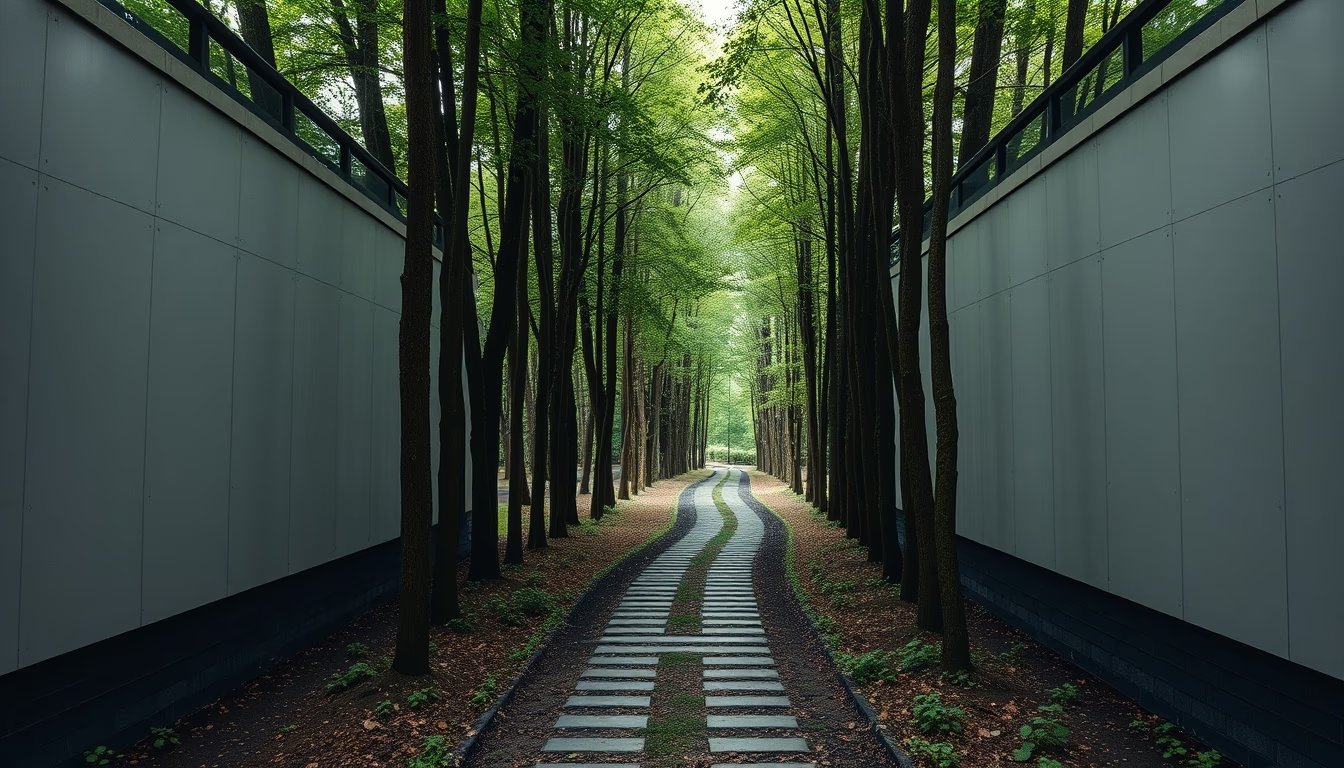
Zen garden raked sand
1344×768 · AVIF · CC BY 4.0

The zen garden with raked sand is a centuries-old expression of Japanese aesthetics, symbolizing harmony and contemplation.
About this subject
Zen gardens, known as Karesansui (dry landscapes), are an art form dating back to the Muromachi period (14th to 16th centuries) in Japan. Originating in Buddhist monasteries, these minimalist spaces use sand, gravel, and rocks to represent natural features like water, islands, and mountains. The practice of raking sand, usually with a wooden rake, creates wavy patterns that evoke flowing water or currents. The act of raking is not merely decorative but an active meditation, where the monk or practitioner focuses their mind on the rhythmic movement and symmetry of the lines.
A distinctive feature of zen gardens is the arrangement of stones in odd groups (such as 3, 5, or 7), often with moss or sand around them to suggest islands in a sea of sand. The famous Ryoan-ji Temple in Kyoto houses one of the most iconic examples, with 15 stones arranged so that only 14 are visible from any single viewpoint. This technique challenges perception and invites introspection. Unlike Western gardens, zen gardens are not lush or colorful; their beauty lies in the economy of elements and the suggestion of vastness through few objects.
Beyond religious contexts, zen gardens have been adapted in homes and public spaces in Japan and the West as tools for relaxation and mindfulness. Modern studies indicate that contemplating such patterns reduces stress and improves focus. Maintaining the garden, especially daily raking, requires discipline and attention, reinforcing Zen Buddhist principles: simplicity, impermanence, and connection to nature. Today, miniature versions (like desktop sand trays) are popular as meditation aids.
Interestingly, the word “zen” derives from the Chinese term “chan” and ultimately from the Sanskrit “dhyana,” meaning meditation. The dry garden is a visual translation of that meditative state. Although frequently associated with Japan, similar influences can be seen in stone gardens of Chinese and Korean temples. The practice of raking sand has also inspired contemporary art and interior design, becoming a global symbol of serenity.
Frequently Asked Questions
What is the origin of the zen garden?
The zen garden originated in Japan during the Muromachi period (14th-16th centuries) in Zen Buddhist monasteries. It was influenced by Chinese stone garden aesthetics and meditation practices.
Why is the sand raked in a zen garden?
Raking the sand is a form of active meditation. The wavy patterns symbolize water or waves, and the repetitive action helps the practitioner focus and calm the mind.
Can I recreate a zen garden at home?
Yes, miniature versions are available for desktops. You need a shallow tray, fine sand, small stones, and a miniature rake. It serves as a relaxation and mindfulness tool.
Direct URL
https://pub-c7d6a6ea828543ac903a74a341ccb2e1.r2.dev/imagens/zen-garden-raked-sand-national-geographic-style-p4.avifHow to credit
Include a visible link back to UtilizAí. Copy one of the snippets below:
<a href="https://xn--utiliza-eza.com/en/midia/imagens/zen-garden-raked-sand-national-geographic-style-p4">Zen garden raked sand</a> by <a href="https://xn--utiliza-eza.com">UtilizAí</a>, licensed under <a href="https://creativecommons.org/licenses/by/4.0/">CC BY 4.0</a>.
[Zen garden raked sand](https://xn--utiliza-eza.com/en/midia/imagens/zen-garden-raked-sand-national-geographic-style-p4) by [UtilizAí](https://xn--utiliza-eza.com), CC BY 4.0
License: CC-BY-4.0