Wooden carving tools
1344×768 · AVIF · CC BY 4.0
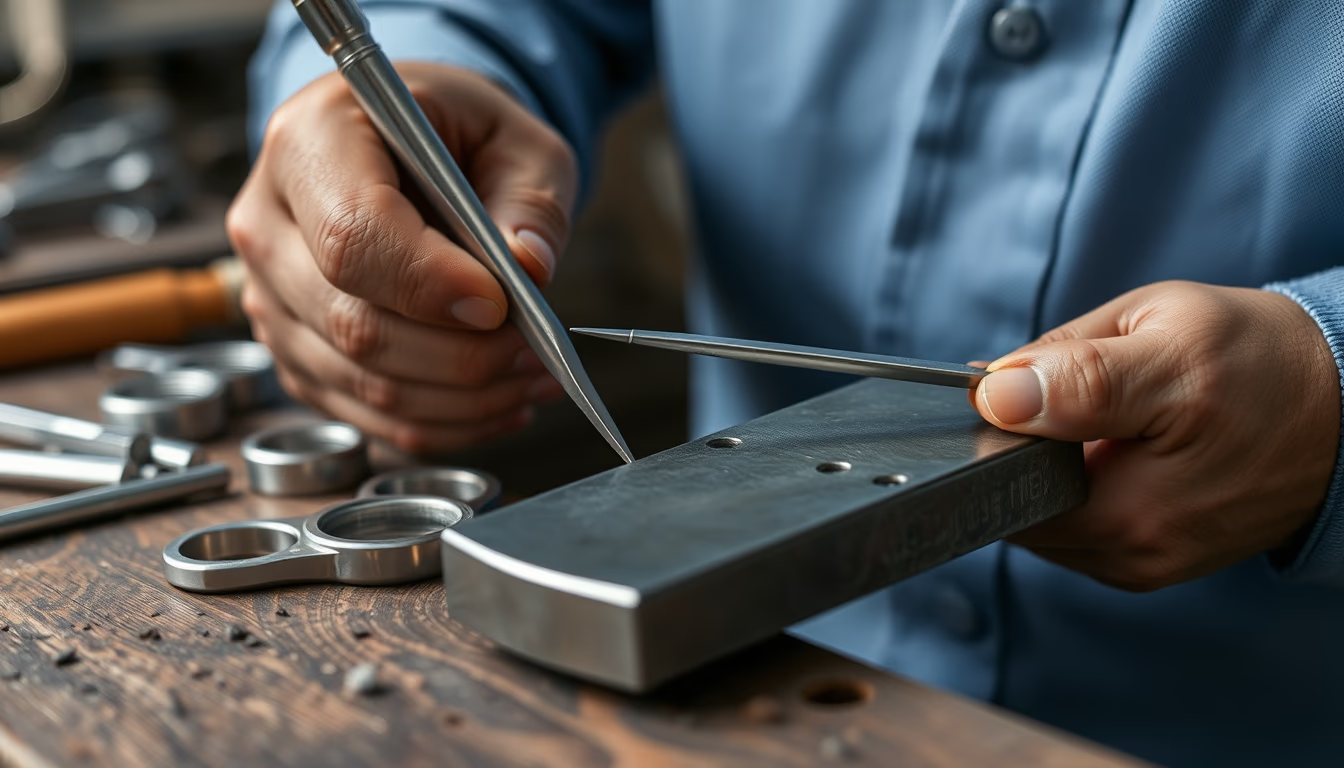
Wood carving tools: gouges, chisels, and knives used by artisans to carve details in wood, with carbon steel blades and wooden or plastic handles.
About this subject
Wood carving tools are hand instruments designed to remove chips and shape wood surfaces. The basic set includes gouges of various curvatures, straight chisels, and point knives. Blades are forged from carbon steel, allowing precise sharpening and edge retention. Traditional handles are made of hardwoods like oak or walnut, but modern versions use plastic or rubber for durability.
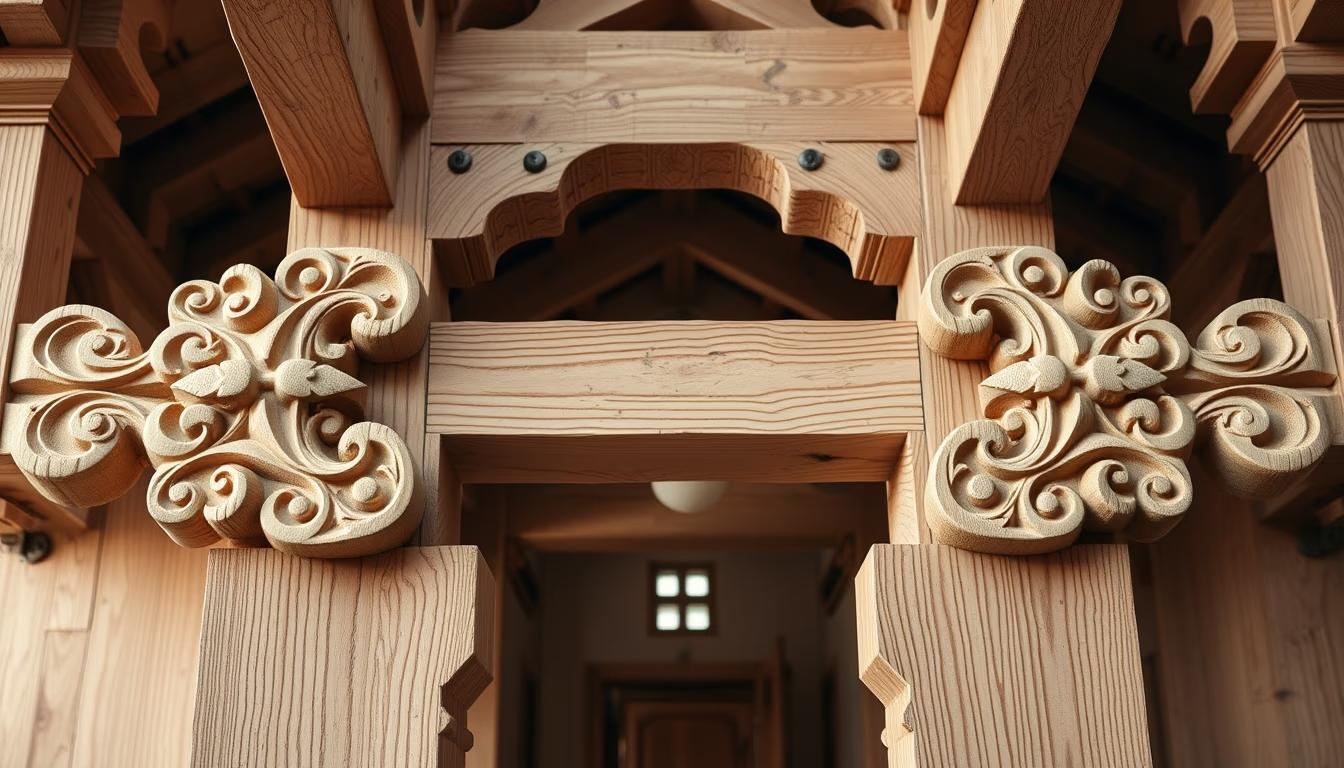
Carving history dates back to ancient civilizations such as the Egyptians and Chinese, who used similar tools to decorate furniture and temples. In Brazil, wood carving arrived with Portuguese colonizers and evolved into styles like the Baroque of Minas Gerais, visible in altars and sacred images. Each tool has a specific profile: U- or V-shaped gouges create grooves and curves, while straight chisels serve for roughing and flat finishes.
Proper maintenance is essential. Blades should be sharpened with water or oil stones, and handles checked for cracks. Artisans often customize the cutting angle according to wood hardness - softwoods like cedar require shallower angles, while hardwoods like ipe need steeper angles to avoid chips. Contemporary carving also incorporates power tools, but manual ones remain irreplaceable for detailed work.
Choosing the right tool depends on carving style: relief, in-the-round, or incision. Gentle-curve gouges are ideal for organic details, while angled chisels allow sharp corners. Practice leads to a subtle touch - uneven pressure can ruin a piece. That's why many artisans spend years perfecting the use of each tool.
Frequently Asked Questions
What are the essential tools for a beginner in wood carving?
For beginners, a basic set is recommended: a medium-curve gouge (e.g., 12 mm), a straight chisel (10 mm), a knife, and a file for finishing. A bench support and eye protection are also important.
How to properly sharpen wood carving tools?
Use sharpening stones with grit 1000 and 4000 to refine the edge. Maintain the original angle (usually 20-25 degrees) and finish with a strop to remove burrs. Lubrication with water or oil prevents overheating.
Which types of wood are best for beginners in carving?
Softwoods like basswood, pine, or cedar are ideal due to easy cutting. Hardwoods like oak or walnut require sharper tools and more force, better suited after gaining experience.
Direct URL
https://pub-c7d6a6ea828543ac903a74a341ccb2e1.r2.dev/imagens/wooden-carving-tools-architectural-photography-p3.avifHow to credit
Include a visible link back to UtilizAí. Copy one of the snippets below:
<a href="https://xn--utiliza-eza.com/en/midia/imagens/wooden-carving-tools-architectural-photography-p3">Wooden carving tools</a> by <a href="https://xn--utiliza-eza.com">UtilizAí</a>, licensed under <a href="https://creativecommons.org/licenses/by/4.0/">CC BY 4.0</a>.
[Wooden carving tools](https://xn--utiliza-eza.com/en/midia/imagens/wooden-carving-tools-architectural-photography-p3) by [UtilizAí](https://xn--utiliza-eza.com), CC BY 4.0
License: CC-BY-4.0