Western saddle leather
1344×768 · AVIF · CC BY 4.0

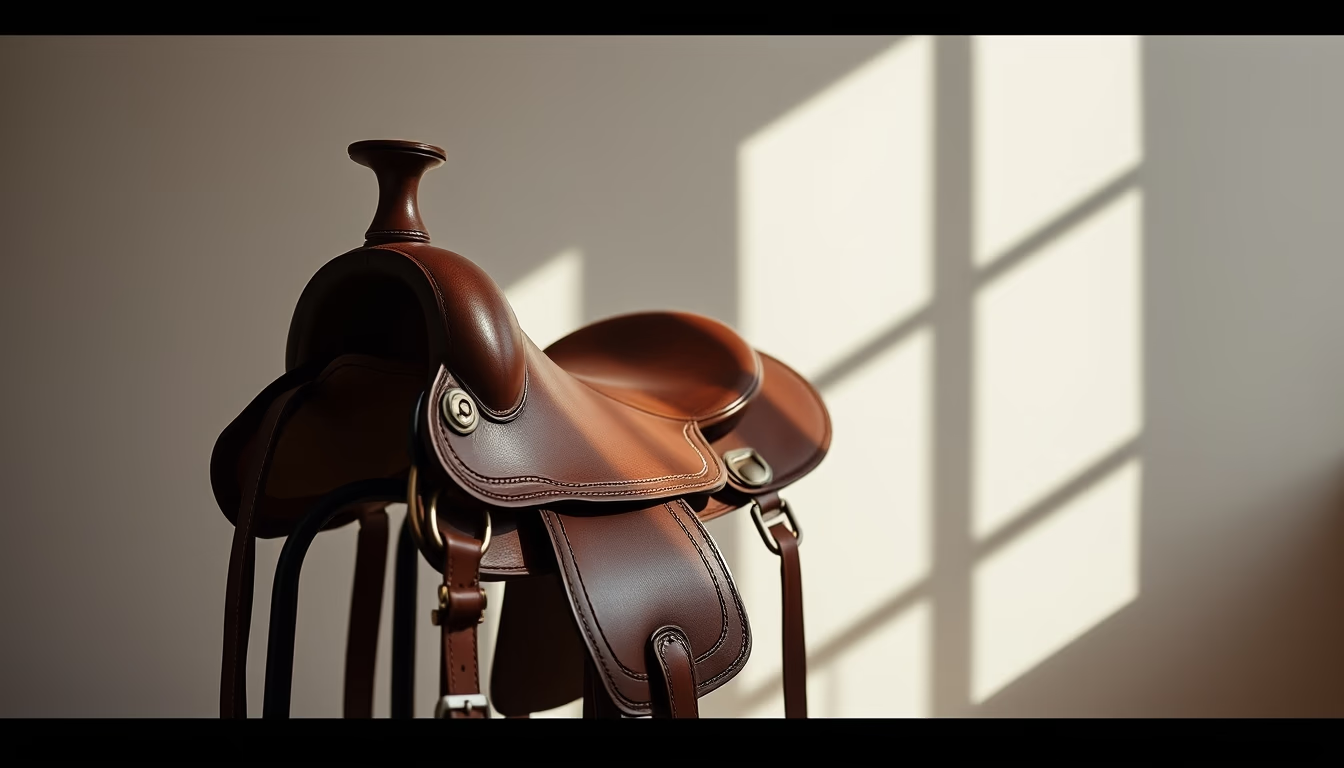
Western saddle leather is prized for its strength and durability, essential for equestrian work across the United States.
About this subject
The Western saddle traces its origins to the Spanish vaquero tradition, adapted by American cowboys in the 19th century for ranch work, roping, and long rides. Leather used in this saddle must be tough and durable, typically made from bovine hide tanned to a thickness of 8 to 12 ounces. Chrome tanning is common for flexibility and water resistance, while vegetable tanning is favored for handmade saddles that feature intricate tooling and carving. The hide requires careful selection to avoid defects like brands or scars.
A Western saddle is built from multiple leather pieces stitched with waxed nylon or polyester thread. The saddle tree (frame), often made of fiberglass or wood, is covered with leather and fleece linings. The seat is cut from a single piece of stretched leather; the fenders (leg protection) and stirrups use thicker cuts. The cinch and rigging are also leather, sometimes reinforced with rawhide. Regional variations exist: Texas saddles have a flatter seat and less cantle angle, while California-style saddles have a higher cantle and more pronounced horn.
Leather in a Western saddle carries deep cultural weight in cowboy heritage. It appears in rodeo events, parades, and as family heirlooms. Ornate saddles with silver trim and floral tooling can fetch thousands of dollars. Proper care includes cleaning after use and applying neatsfoot oil or specialized conditioners to prevent drying and cracking. The average retail price for a new leather Western saddle ranges from $500 to over $5,000, depending on craftsmanship, materials, and custom features.
Frequently Asked Questions
What is the difference between chrome-tanned and vegetable-tanned leather for Western saddles?
Chrome tanning is faster, yielding softer, water-resistant leather suitable for daily work. Vegetable tanning is traditional, producing firmer leather ideal for carving and stamping, often used in custom or show saddles.
How should one care for Western saddle leather to extend its lifespan?
Clean the saddle with a leather-specific soap after each use to remove dirt and sweat. Apply neatsfoot oil or conditioner every 3 to 6 months, avoiding over-saturation. Store in a dry, ventilated area away from direct sunlight.
What are the key differences between Texas and California Western saddles?
Texas saddles have a flatter seat and lower cantle, designed for open-range roping and work. California saddles feature a higher cantle and more seat slope, providing greater security on steep terrain.
Direct URL
https://pub-c7d6a6ea828543ac903a74a341ccb2e1.r2.dev/imagens/western-saddle-leather-lo-fi-disposable-camera-fresh6.avifHow to credit
Include a visible link back to UtilizAí. Copy one of the snippets below:
<a href="https://xn--utiliza-eza.com/en/midia/imagens/western-saddle-leather-lo-fi-disposable-camera-fresh6">Western saddle leather</a> by <a href="https://xn--utiliza-eza.com">UtilizAí</a>, licensed under <a href="https://creativecommons.org/licenses/by/4.0/">CC BY 4.0</a>.
[Western saddle leather](https://xn--utiliza-eza.com/en/midia/imagens/western-saddle-leather-lo-fi-disposable-camera-fresh6) by [UtilizAí](https://xn--utiliza-eza.com), CC BY 4.0
License: CC-BY-4.0