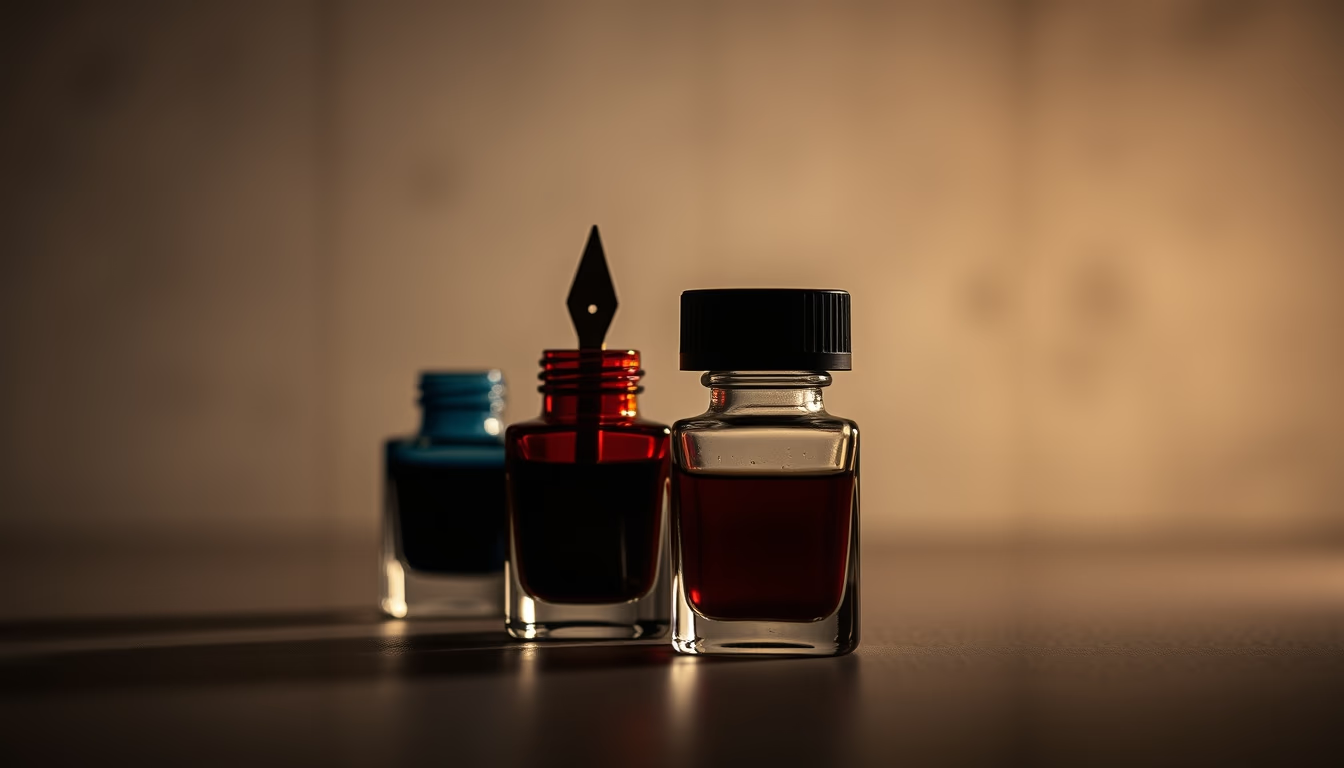
Wax seal collection
1344×768 · AVIF · CC BY 4.0

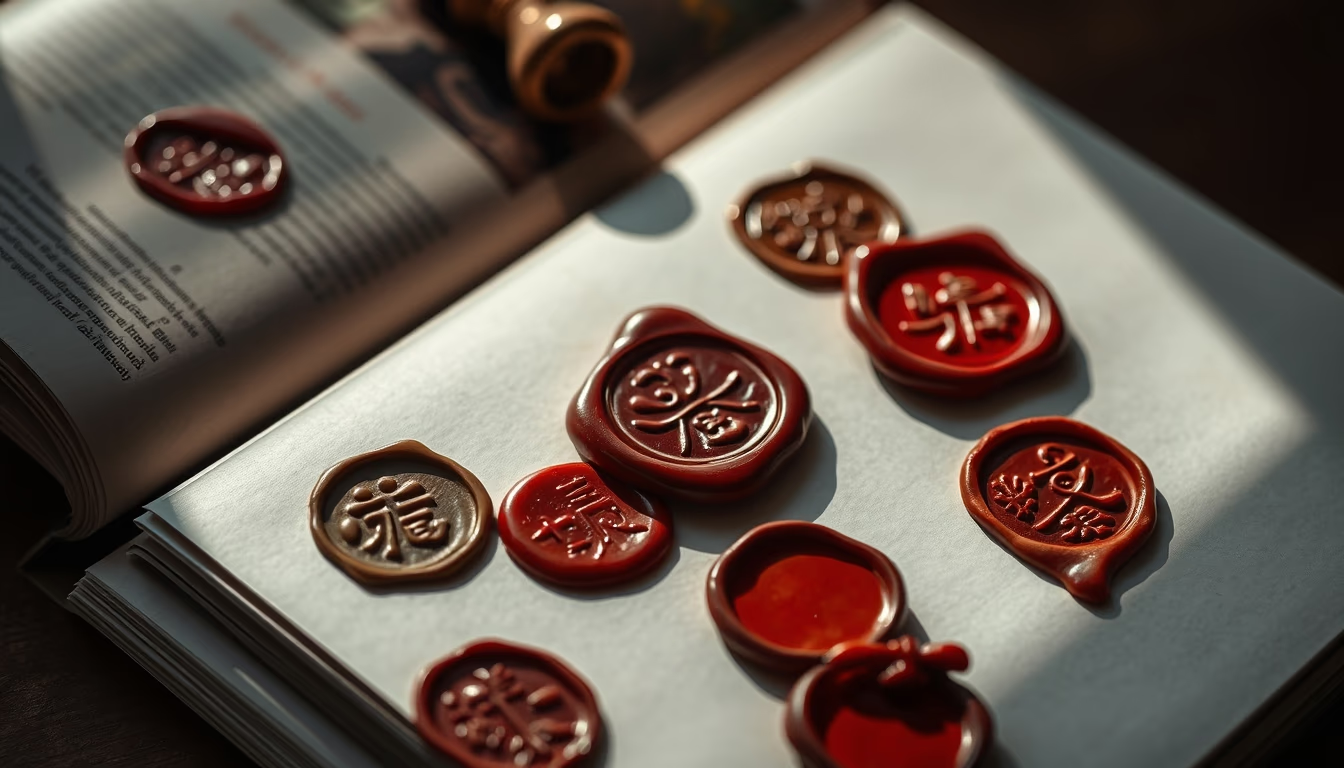
A collection of wax seals reveals the art of correspondence, with custom seals historically used to authenticate documents and convey social status.
About this subject
Wax seals are small decorative metal stamps, usually made of brass or bronze, that create raised impressions in melted wax. Originating in antiquity, they became widespread in medieval Europe as a method of authenticating and securing letters and documents. Each seal bore a family crest, monogram, or symbol, functioning as the sender’s visual signature. The wax, made from natural or synthetic resin, was heated and poured over the closure, then pressed with the stamp to form the characteristic relief.
Historically, the color of the wax indicated purpose: red for official and royal matters, black for mourning, gold for congratulations or weddings. The practice declined with the adhesive postage stamp in the 19th century but revived in the 21st century for decorative and ceremonial uses, especially in wedding invitations, bullet journals, and scrapbooking. Collectors seek antique seals for their historical and artistic value, while artisans create new custom designs.
To make a wax seal, a wax bead is melted in a special spoon over the desired surface (paper, envelope). After a few seconds, the stamp is pressed into the wax, ideally lubricated to prevent sticking. Modern wax comes in glitter, metallic, or even scented varieties. Seals can be laser-engraved or cast in metal, allowing fine details and exact reproduction of logos or complex designs.
Interestingly, in Brazil, wax seals were used by the Imperial Court to seal official documents and correspondence of the Royal Family. Today, the practice is more common at themed events or as a hobby, with specialized stores selling complete kits including interchangeable stamps, spoons, and colored waxes. The depicted collection includes several seals with varied designs, from floral to geometric, showcasing the versatility of this centuries-old tradition.
Frequently Asked Questions
What types of wax are used for making seals?
There are natural waxes (based on bee resin) and synthetic ones (polymer-based). Synthetic waxes are more flexible and less likely to break, while natural waxes have a classic look and a mild scent.
How do I create a custom wax seal?
First, choose a design and order a metal stamp engraved with it. Melt the wax, pour it onto the paper, and press the stamp for a few seconds. Let it cool and remove carefully. Lubricate the stamp to prevent sticking.
What is the historical origin of wax seals?
Wax seals date back to ancient Mesopotamia (circa 3500 BCE) as cylinder seals. In medieval Europe, they became common for authenticating royal and ecclesiastical documents, peaking between the 12th and 18th centuries.
Direct URL
https://pub-c7d6a6ea828543ac903a74a341ccb2e1.r2.dev/imagens/wax-seal-collection-studio-editorial-portrait-fresh13.avifHow to credit
Include a visible link back to UtilizAí. Copy one of the snippets below:
<a href="https://xn--utiliza-eza.com/en/midia/imagens/wax-seal-collection-studio-editorial-portrait-fresh13">Wax seal collection</a> by <a href="https://xn--utiliza-eza.com">UtilizAí</a>, licensed under <a href="https://creativecommons.org/licenses/by/4.0/">CC BY 4.0</a>.
[Wax seal collection](https://xn--utiliza-eza.com/en/midia/imagens/wax-seal-collection-studio-editorial-portrait-fresh13) by [UtilizAí](https://xn--utiliza-eza.com), CC BY 4.0
License: CC-BY-4.0