Wax seal collection
1344×768 · AVIF · CC BY 4.0
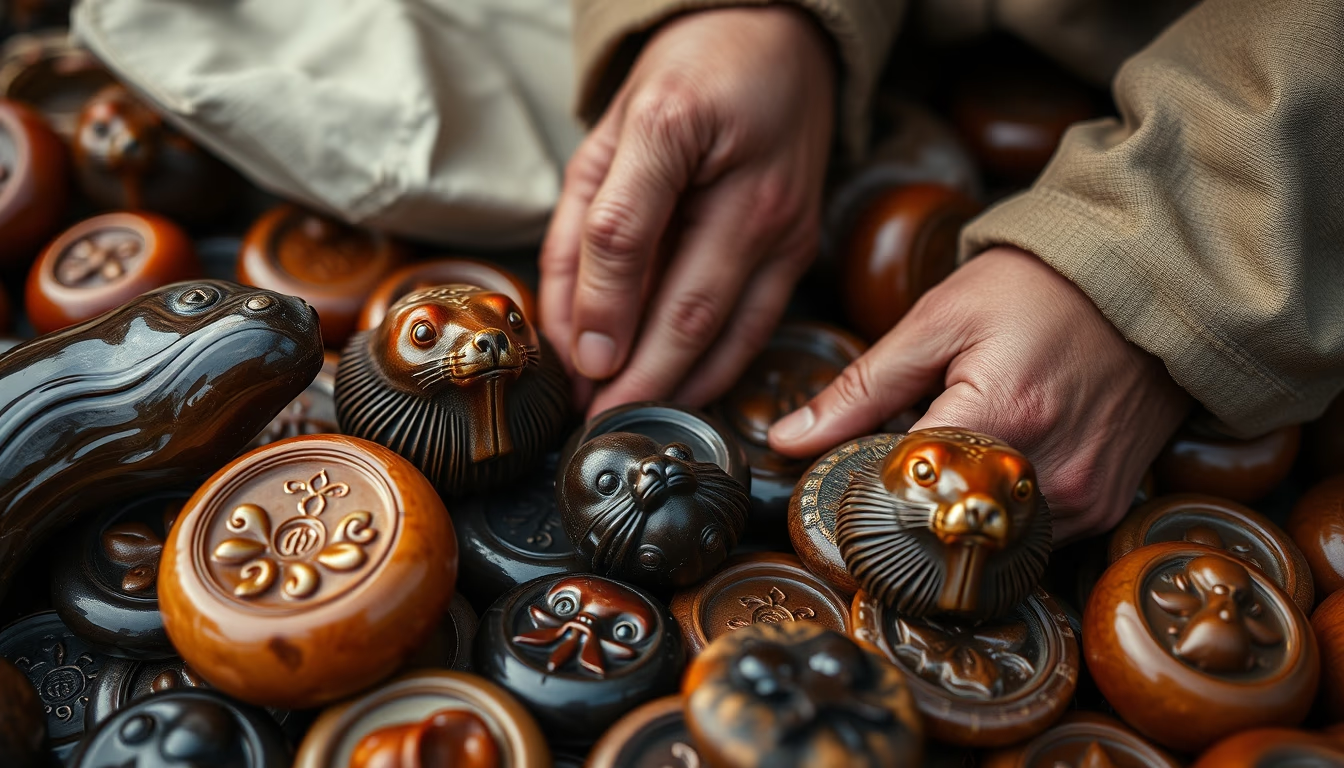
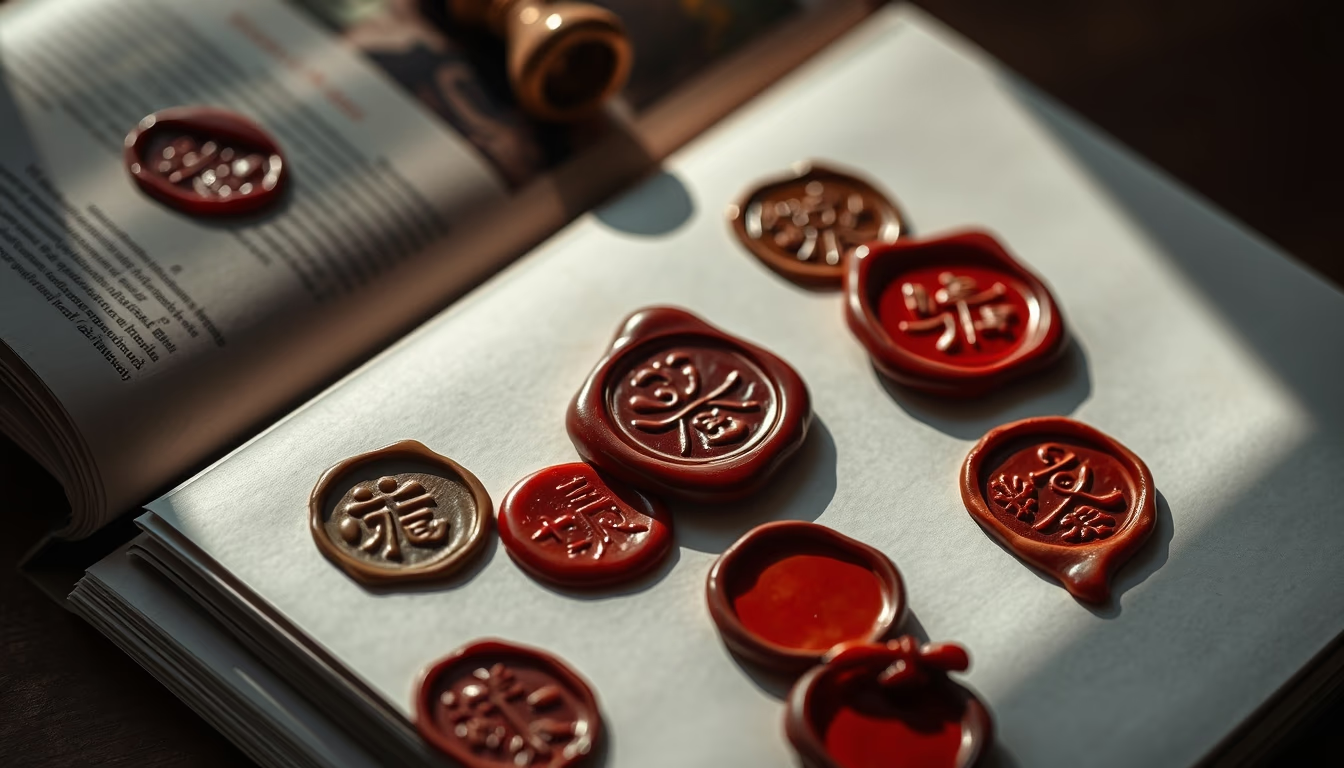
Wax seal collection: historical artifacts used to authenticate documents, now revisited by artisans and lettering enthusiasts.
About this subject
Wax seals originated in antiquity as a means to guarantee the integrity and authenticity of correspondence and official documents. In the Middle Ages, kings, bishops, and nobles used signet rings with family coats of arms to seal letters and decrees, a practice that lasted until the 19th century with the rise of adhesive envelopes. Each seal was unique, functioning as a visual signature and proof of origin. The process involved melting wax (traditionally beeswax dyed with vermilion or lampblack) and pressing a engraved metal or stone seal.
In colonial Brazil, wax seals arrived with the Portuguese court and were used in imperial documents and land grant letters. Ceremonial use persists today in letters of appointment for ambassadors and notarial seals in some countries. Contemporary artisans revive the technique using vegetable or synthetic wax with metallic pigments, creating decorative pieces for wedding invitations, bullet journals, and calligraphy projects.
A curiosity: traditional red sealing wax got its color from mercury in cinnabar, a toxic mineral. Black seals used soot or burnt bone. Collectors value regional variations, such as British seals with olive-green wax from the 18th century or French ones in cobalt blue. Durability depends on formulation: mixtures with rosin or shellac make the lacquer more crack-resistant.
Today, letter sealing is revived as a creative and aesthetic hobby, with online communities sharing matrices and scented wax recipes. The Wax Seal Museum in Paris (Musée de la Cire) houses over 10,000 historical specimens, including signets of French kings and popes.
Frequently Asked Questions
How to identify an original antique wax seal?
Original seals show irregular edges, air bubbles, and natural color variations. Old wax often smells of propolis and breaks with a conchoidal fracture, unlike modern resin replicas.
What is the difference between wax seal and sealing wax?
Though used interchangeably, 'sealing wax' is the melted stick, while 'seal' is the impression left by the signet. Together they form the sealed lacquer.
Are wax seals still used on official documents?
Yes, in diplomatic ceremonies and some notary offices. The Queen of England still uses red sealing wax on letters patent. In Brazil, seals are used on historical certificates from the National Archives.
Direct URL
https://pub-c7d6a6ea828543ac903a74a341ccb2e1.r2.dev/imagens/wax-seal-collection-documentary-nature-style-fresh0.avifHow to credit
Include a visible link back to UtilizAí. Copy one of the snippets below:
<a href="https://xn--utiliza-eza.com/en/midia/imagens/wax-seal-collection-documentary-nature-style-fresh0">Wax seal collection</a> by <a href="https://xn--utiliza-eza.com">UtilizAí</a>, licensed under <a href="https://creativecommons.org/licenses/by/4.0/">CC BY 4.0</a>.
[Wax seal collection](https://xn--utiliza-eza.com/en/midia/imagens/wax-seal-collection-documentary-nature-style-fresh0) by [UtilizAí](https://xn--utiliza-eza.com), CC BY 4.0
License: CC-BY-4.0