Watercolor brush splash
1344×768 · AVIF · CC BY 4.0
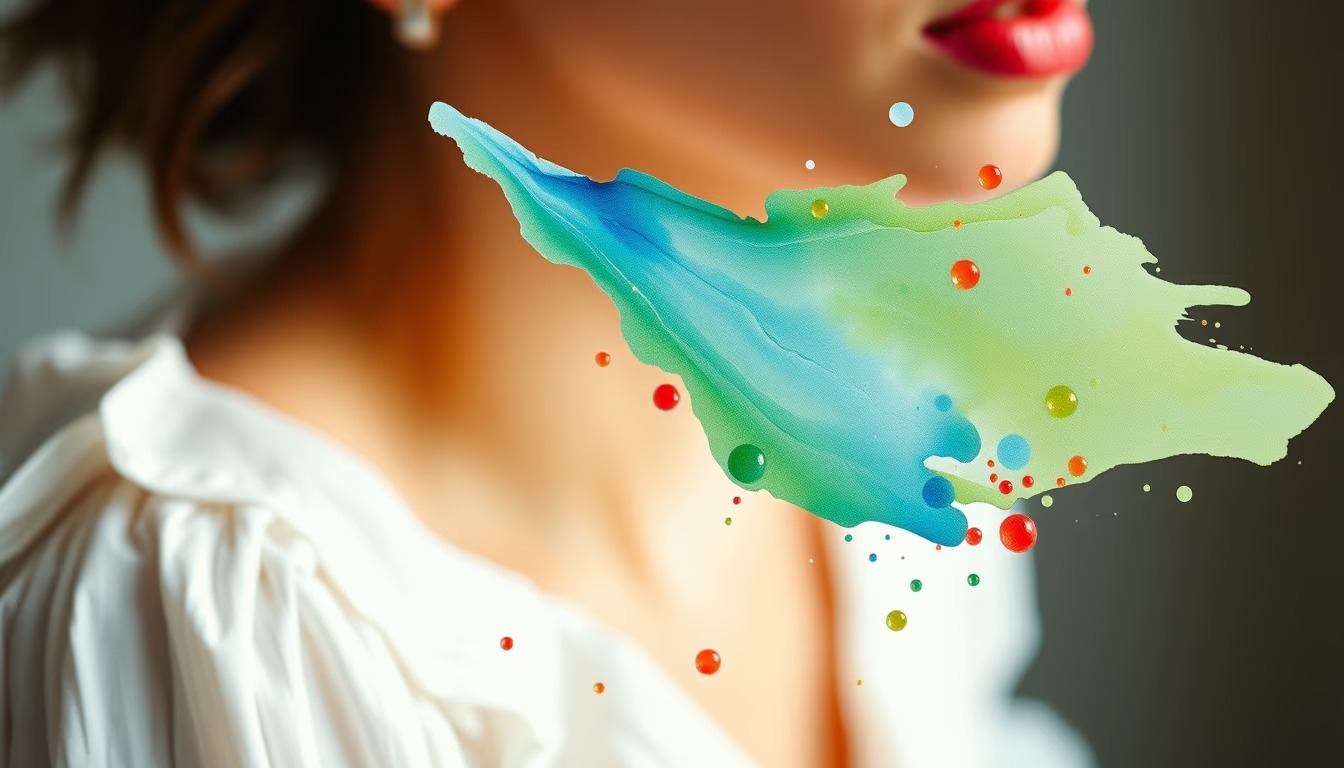
Watercolor brush splash technique creates organic, unique textures, prized for its grainy and authentic effect.
About this subject
Watercolor is an ancient technique that involves applying water-soluble pigments to paper. The brush splash technique takes advantage of the unpredictability of motion to create irregular stains and textures. This approach has gained prominence globally and in Brazil as a form of contemporary artistic expression, especially in botanical illustrations, abstract landscapes, and graphic design. The authentic grain, or film grain, evokes analog photographic film, adding nostalgia and visual depth. In practice, the artist controls water quantity, paint density, and gesture speed to achieve everything from subtle splatters to vibrant bursts of color. The grainy effect results from uneven absorption by the paper or the use of salt and alcohol, creating organic textures impossible to replicate digitally. This technique is often combined with other media like ink or colored pencils to enrich details. In Brazil, watercolor has a strong tradition in travel records and flora illustrations, as seen in works by José Maria dos Reis Junior and Debret. The brush splash, in turn, is explored by contemporary artists as a way to break academic rigidity and introduce chance and movement. The 'film grain authentic' aesthetic values imperfections like stains and density variations, which narrate the creative process. For beginners, it is an accessible technique requiring experimentation with different papers, brushes, and paint densities. The final result carries a visual energy that evokes the ephemeral and handmade, contrasting with digital perfection.
Frequently Asked Questions
How to achieve the splash effect in watercolor?
To get splashes, load a brush with diluted paint and gently tap it against the handle or use your fingers to release drops. Distance and force determine size and spread.
Which paper is best for the splash technique?
Papers with a weight above 300 gsm and rough texture are ideal as they absorb more paint and prevent soaking, enhancing the natural grain.
Can I use salt to create textures in watercolor?
Yes, coarse salt absorbs wet paint, forming crystals that create light, grainy patches after drying. The effect is controlled by the paper's moisture.
Direct URL
https://pub-c7d6a6ea828543ac903a74a341ccb2e1.r2.dev/imagens/watercolor-brush-splash-film-grain-authentic-p2.avifHow to credit
Include a visible link back to UtilizAí. Copy one of the snippets below:
<a href="https://xn--utiliza-eza.com/en/midia/imagens/watercolor-brush-splash-film-grain-authentic-p2">Watercolor brush splash</a> by <a href="https://xn--utiliza-eza.com">UtilizAí</a>, licensed under <a href="https://creativecommons.org/licenses/by/4.0/">CC BY 4.0</a>.
[Watercolor brush splash](https://xn--utiliza-eza.com/en/midia/imagens/watercolor-brush-splash-film-grain-authentic-p2) by [UtilizAí](https://xn--utiliza-eza.com), CC BY 4.0
License: CC-BY-4.0