Watercolor brush splash
1344×768 · AVIF · CC BY 4.0
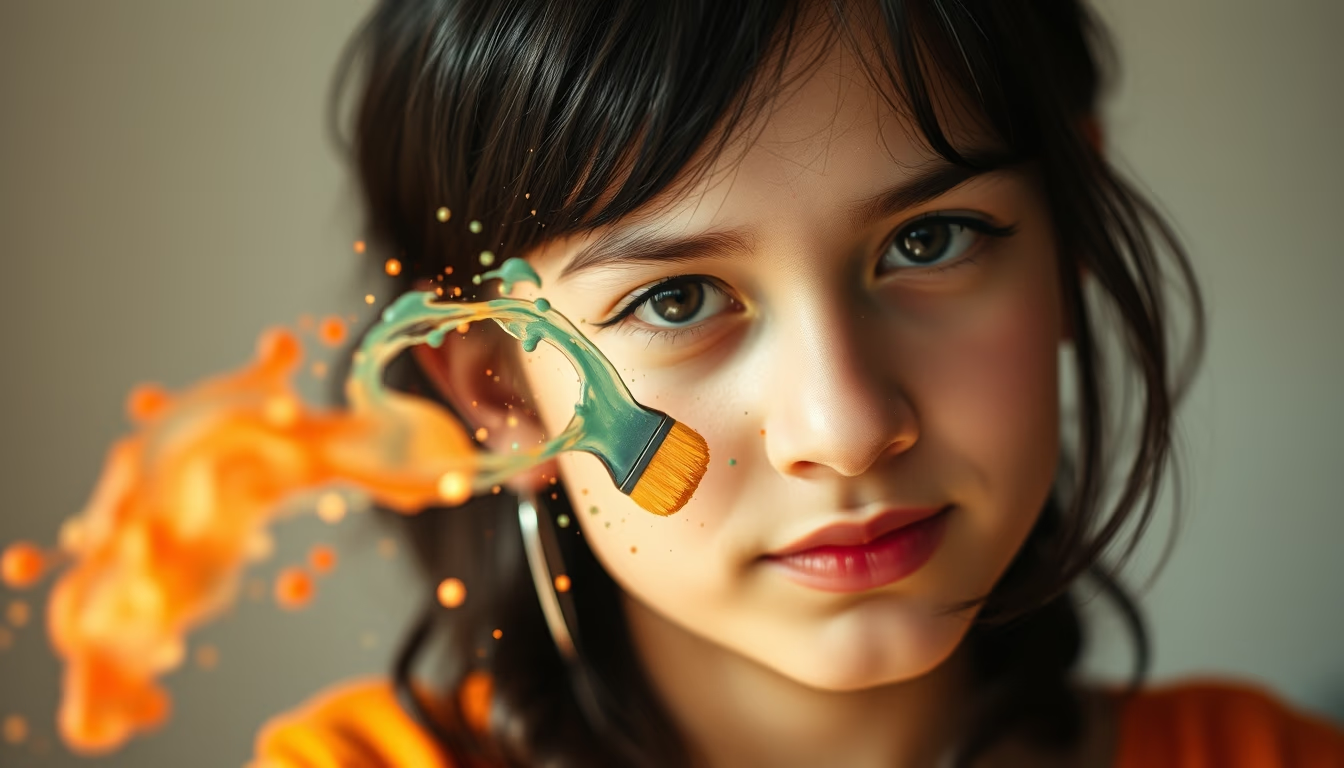
Watercolor explosion: how brushstrokes and splashes create unique textures on paper painting.
About this subject
The technique of splashing paint with a brush is a hallmark of watercolor, used by artists to create organic textures and unpredictable effects. By gently tapping a loaded brush against another brush or fingers, the painter produces small droplets that spread on wet or dry paper, forming patterns reminiscent of water spray, cosmic dust, or windblown petals. This method, known as splashing or spattering, was popularized by 19th-century English watercolorists such as J.M.W. Turner, who used splashes to suggest maritime atmospheres and storms.
In Brazil, watercolor has a strong tradition with artists like Antonio Parreiras and José Pancetti, who explored tropical luminosity through controlled washes and splashes. The splash requires mastery of dilution: too much water yields large, light blotches; too little produces intense, dry dots. Contemporary artists, such as Brazilian Mariozinho de Oliveira, incorporate splash into urban and natural landscapes, valuing chance as a creative element. The technique is also common in botanical illustrations, simulating dew, and in lettering, adding movement to letters.
A curiosity: the paper directly affects the result. Cotton papers with texture (cold press) absorb paint irregularly, creating soft edges, while smooth papers (hot press) allow sharper splashes. The brush angle and speed of the gesture alter droplet size: fast movements produce fine particles; slow ones, larger splashes. Some artists use toothbrushes or sieves to achieve homogeneous spray, a technique common in abstract painting and digital art that mimics watercolor.
For beginners, the secret is to practice on test paper and control the amount of paint on the brush. Covering adjacent areas with masking tape or wax paper prevents unwanted splatters. Watercolor splash is not just a decorative trick: it teaches about fluidity, density, and the interaction between pigment and water, the pillars of the hydrochromatic technique. Whether in realistic or abstract works, splash adds life and spontaneity, reminding us that watercolor is an art of both control and surrender.
Frequently Asked Questions
What is the difference between splash and spatter in watercolor?
Splash and spatter are variations of the same technique: flicking paint. Splash is usually done with a brush, creating larger and more irregular drops, while spatter can be achieved with a toothbrush or sieve, producing fine, uniform particles.
How can I prevent splatters from ruining areas I want to keep clean?
Use masking tape or wax paper to cover the regions that should not receive paint. Another tip is to lightly wet the paper only where you want the effect, as droplets tend to spread less on dry surfaces.
What type of paper is best for the splash technique?
Cotton papers with medium texture (cold press) are the most suitable, as they absorb paint in a controlled way. Very smooth papers (hot press) cause drops to run too much, while very rough papers can break the shape of the drops.
Direct URL
https://pub-c7d6a6ea828543ac903a74a341ccb2e1.r2.dev/imagens/watercolor-brush-splash-documentary-photography-p4.avifHow to credit
Include a visible link back to UtilizAí. Copy one of the snippets below:
<a href="https://xn--utiliza-eza.com/en/midia/imagens/watercolor-brush-splash-documentary-photography-p4">Watercolor brush splash</a> by <a href="https://xn--utiliza-eza.com">UtilizAí</a>, licensed under <a href="https://creativecommons.org/licenses/by/4.0/">CC BY 4.0</a>.
[Watercolor brush splash](https://xn--utiliza-eza.com/en/midia/imagens/watercolor-brush-splash-documentary-photography-p4) by [UtilizAí](https://xn--utiliza-eza.com), CC BY 4.0
License: CC-BY-4.0