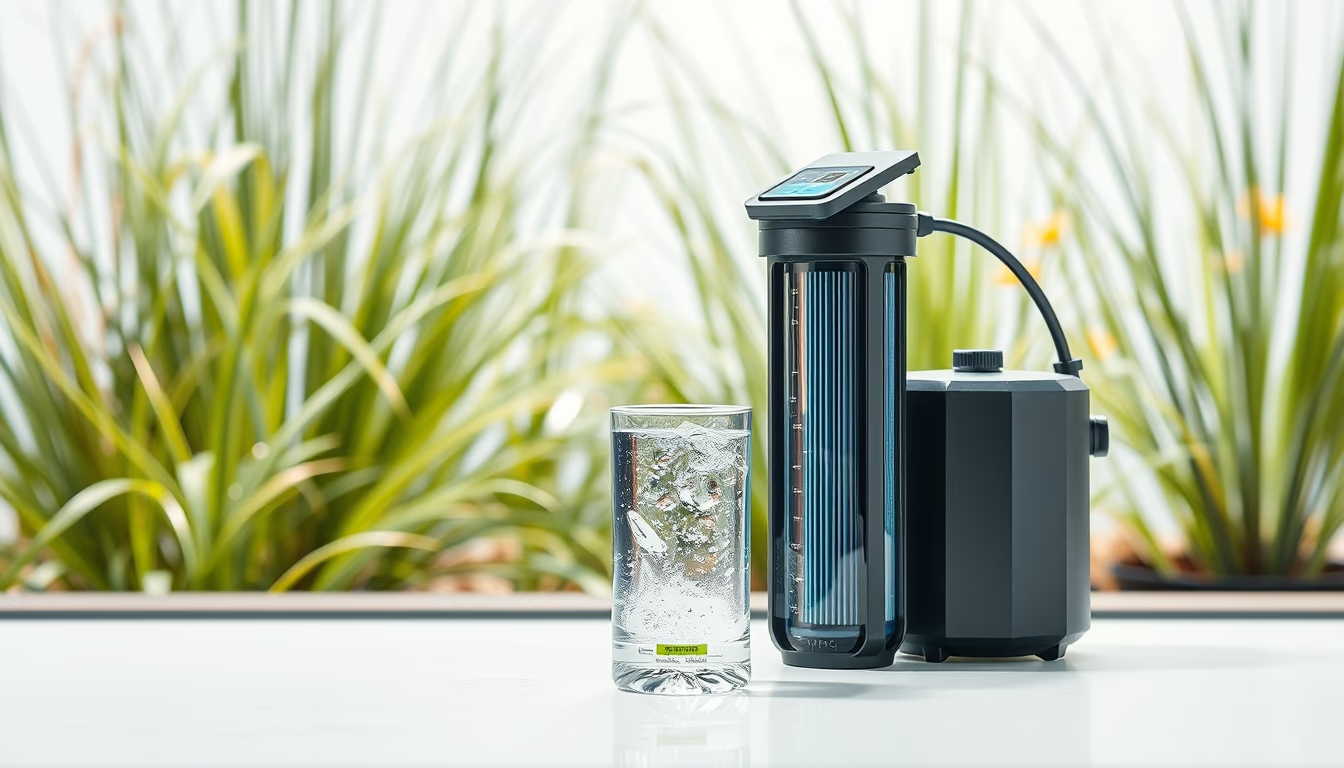
Water filter outdoor
1344×768 · AVIF · CC BY 4.0
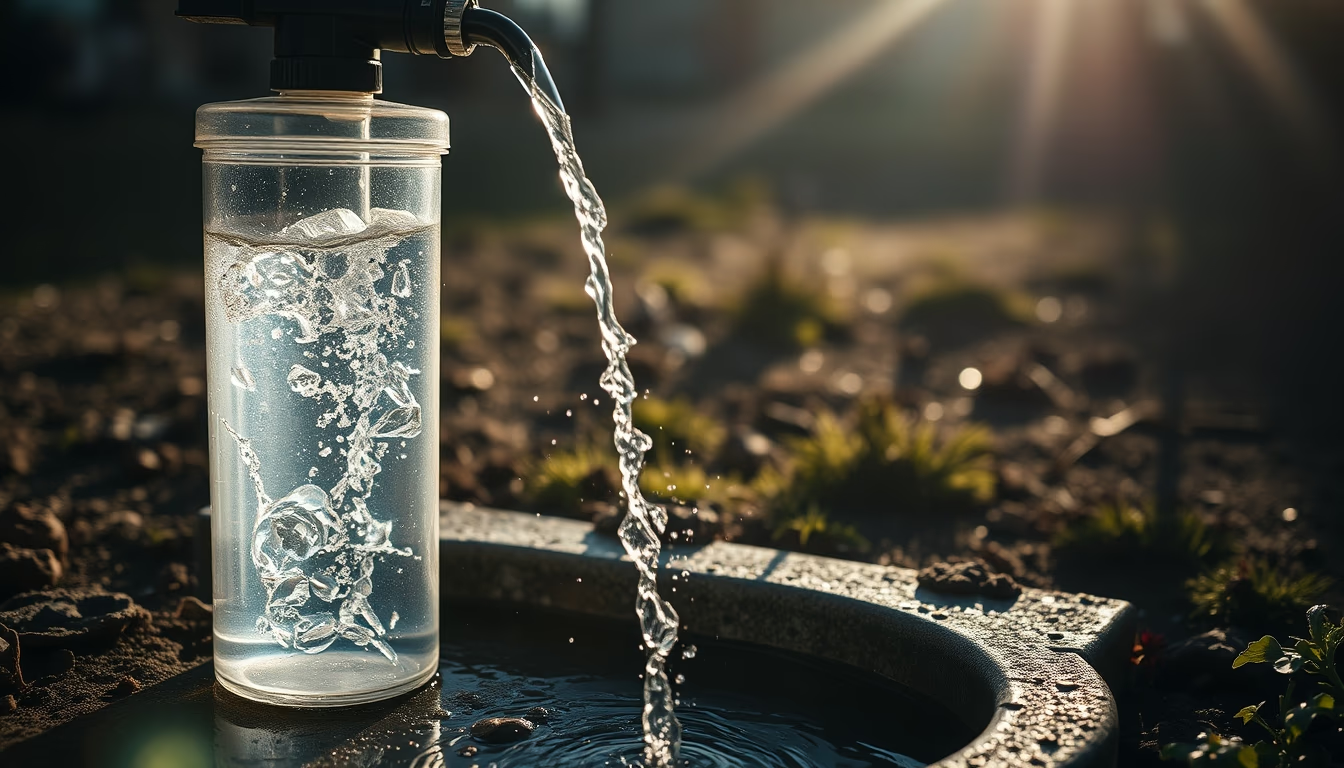
Portable water filters are essential equipment for purifying water in wilderness settings, removing bacteria and protozoans.
About this subject
In outdoor survival situations, access to safe drinking water is a top priority. Portable water filters allow turning natural sources like rivers, lakes, or springs into potable water, preventing waterborne diseases caused by pathogens such as Giardia, Cryptosporidium, and E. coli. Various types exist on the market, from manual pumps to gravity systems and integrated filter bottles. Selection depends on weight, flow rate, and desired filtration level. Models with ceramic or hollow fiber filters remove particles down to 0.2 microns, sufficient to eliminate most microorganisms. Many include activated carbon to improve taste and reduce chemicals. In tropical regions, where water may contain fine sediment, pre-filtering with cloth or a strainer extends the main filter's lifespan. Maintenance is simple: periodic cleaning of the filter element and dry storage to prevent mold. The U.S. Environmental Protection Agency (EPA) recommends that emergency-use filters meet NSF/ANSI Standard 53 or 58. On long expeditions, weight and durability are critical; ceramic filters are robust but heavier, while hollow fiber ones are lightweight and fast. The filtration method is preferable to boiling when fuel or time is limited, but it does not remove viruses; combining with chemical tablets or UV light is safer.
Frequently Asked Questions
Which pathogens does a portable water filter remove?
Portable water filters with 0.2 micron pores remove bacteria (e.g., E. coli, Salmonella) and protozoa (Giardia, Cryptosporidium). Viruses, however, are smaller and require additional treatment with chemicals or UV light.
How to choose between ceramic and hollow fiber filters?
Ceramic filters are more durable and easier to clean, but heavier. Hollow fiber filters are lightweight, fast, and have higher flow rates, but can clog with very turbid water. For lightweight trips, hollow fiber is ideal; for extended use in harsh conditions, ceramic.
Should I boil water even after using a filter?
If the source risks viral contamination (common in areas with human sewage), boiling for 1 minute (3 minutes above 2000 m) ensures complete safety. Filters alone do not remove viruses.
Direct URL
https://pub-c7d6a6ea828543ac903a74a341ccb2e1.r2.dev/imagens/water-filter-outdoor-rembrandt-lighting-dramatic-shadows-fresh8.avifHow to credit
Include a visible link back to UtilizAí. Copy one of the snippets below:
<a href="https://xn--utiliza-eza.com/en/midia/imagens/water-filter-outdoor-rembrandt-lighting-dramatic-shadows-fresh8">Water filter outdoor</a> by <a href="https://xn--utiliza-eza.com">UtilizAí</a>, licensed under <a href="https://creativecommons.org/licenses/by/4.0/">CC BY 4.0</a>.
[Water filter outdoor](https://xn--utiliza-eza.com/en/midia/imagens/water-filter-outdoor-rembrandt-lighting-dramatic-shadows-fresh8) by [UtilizAí](https://xn--utiliza-eza.com), CC BY 4.0
License: CC-BY-4.0