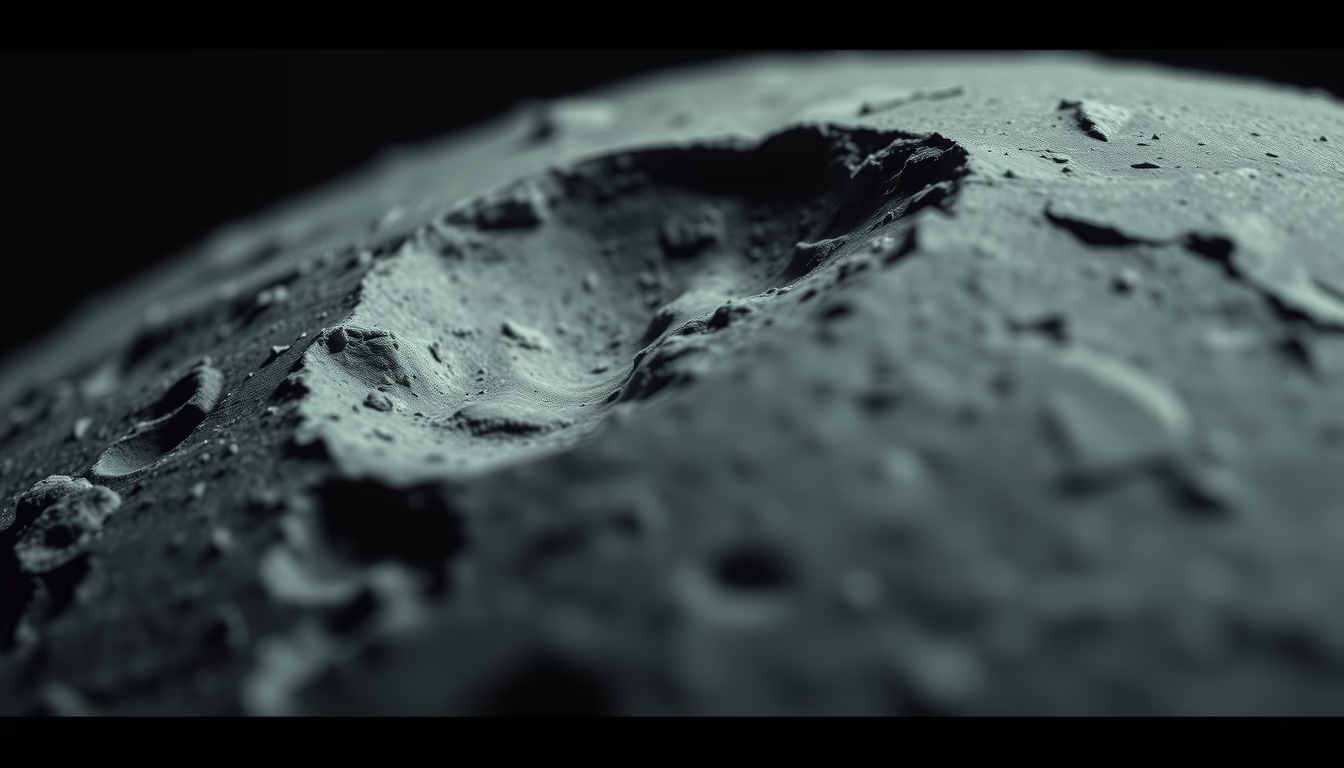
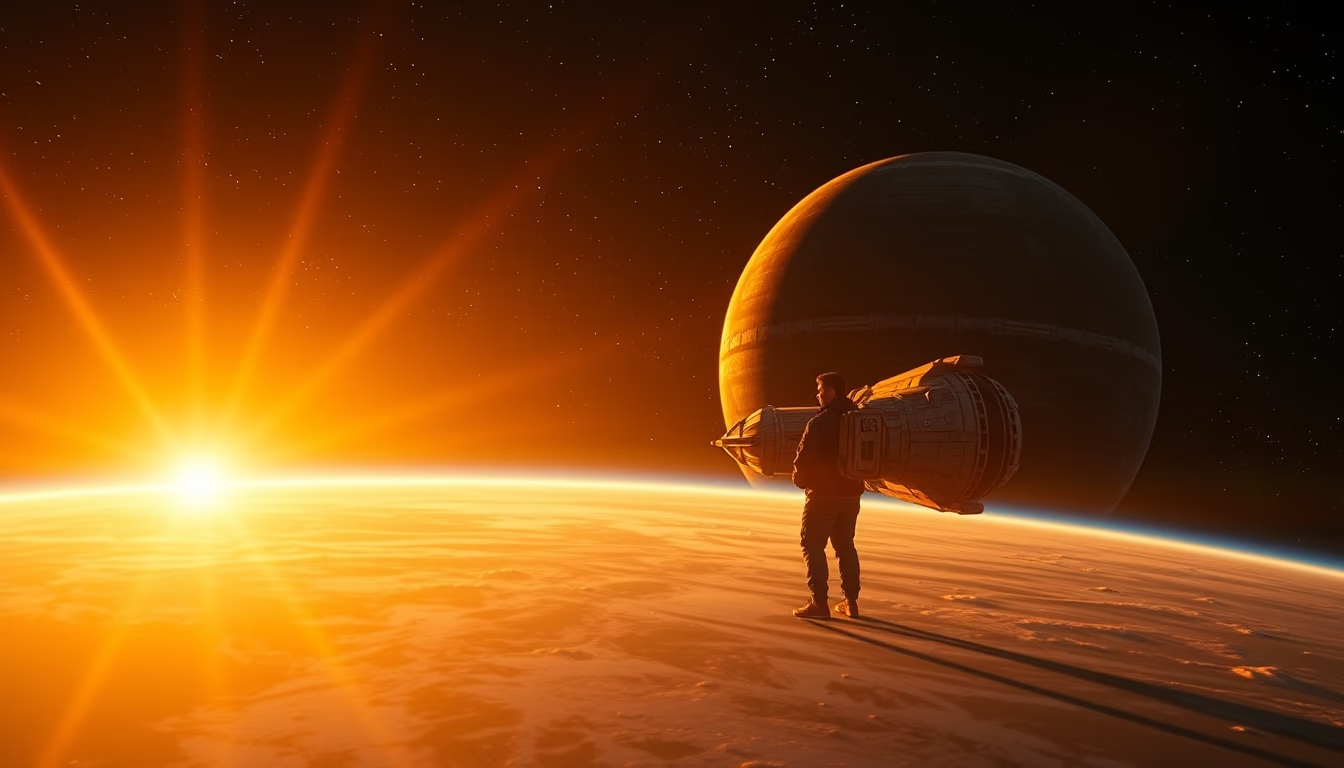
Voyager 1 deep space
1344×768 · AVIF · CC BY 4.0
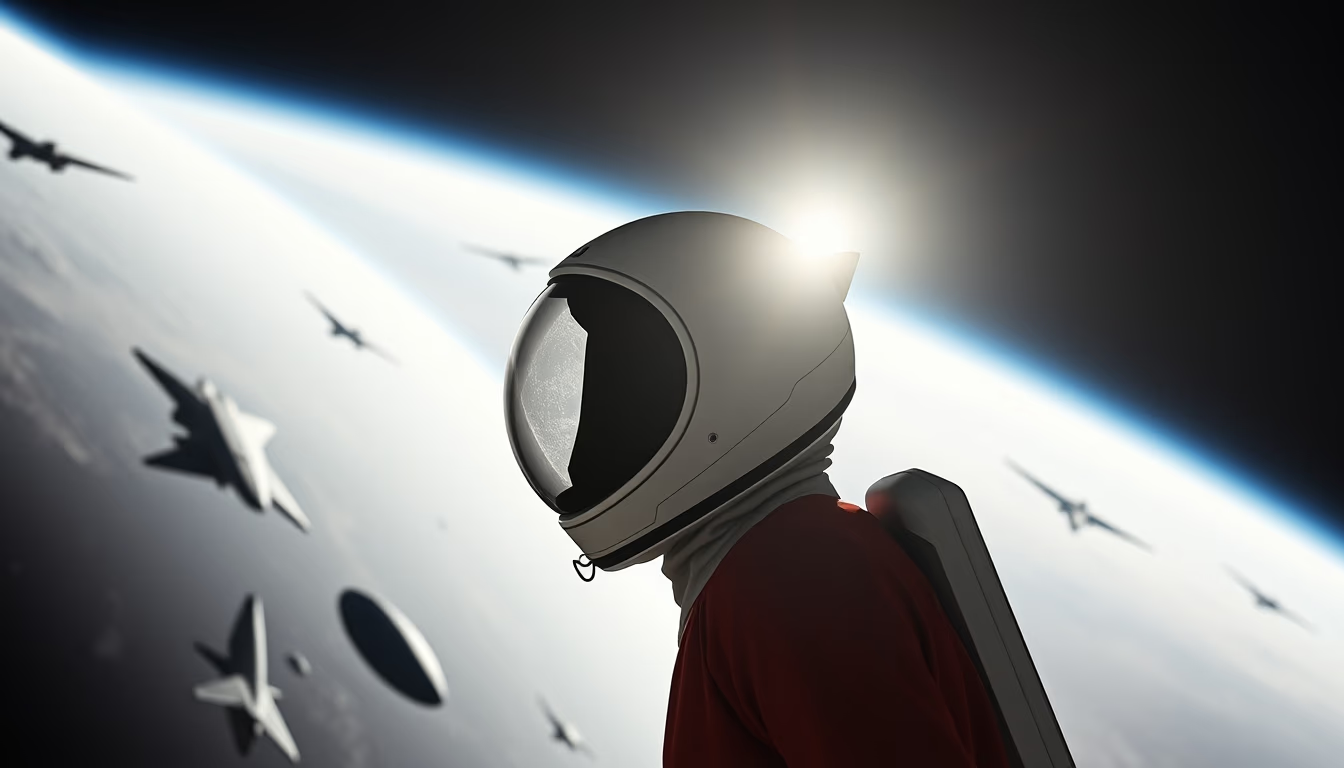
Launched in 1977 by NASA, Voyager 1 is the farthest human-made object from Earth, now traveling through interstellar space.
About this subject
Voyager 1 is a NASA robotic space probe launched on September 5, 1977, as part of the Voyager program. Its primary mission was to explore Jupiter and Saturn, which it accomplished successfully in 1979 and 1980. After flying by Saturn, the probe used a rare planetary alignment to head into deep space, becoming the first human-made object to enter interstellar space on August 25, 2012. Today, Voyager 1 is over 24 billion kilometers from the Sun, transmitting scientific data about interstellar particles and magnetic fields.
The probe carries the famous Golden Record, a time capsule of Earth's life and culture intended for potential extraterrestrial civilizations. Equipped with instruments such as a magnetometer, particle detectors, and cameras (now powered off to conserve energy), Voyager 1 continues to operate thanks to radioisotope thermoelectric generators (RTGs), which convert heat from plutonium-238 decay into electricity. Communication with Earth takes about 22 hours one-way, relying on the Deep Space Network (DSN) to receive faint signals.
The mission's longevity is remarkable: designed to last five years, it has been operating for over 45 years. In 2023, NASA performed maneuvers to extend its lifespan by shutting down non-essential instruments. Voyager 1 continues to send data about interstellar plasma, revealing unexpected properties such as the density of the interstellar medium. Its RTGs are expected to provide power until around 2025, after which the probe will fall silent, becoming humanity's quiet ambassador in the cosmos.
Frequently Asked Questions
Where is Voyager 1 currently?
Voyager 1 is in interstellar space, over 24 billion kilometers from the Sun, heading toward the constellation Ophiuchus. It continues to move away from the Solar System at about 17 km/s.
How long does it take for a message to reach Voyager 1?
A radio signal traveling at the speed of light takes approximately 22 hours to cover the distance between Earth and Voyager 1. Thus, a round-trip communication takes about 44 hours.
What will happen when Voyager 1 runs out of power?
The probe's radioisotope thermoelectric generators are expected to provide enough power to operate some instruments until around 2025. After that, it will stop transmitting but will continue its silent journey through interstellar space.
Direct URL
https://pub-c7d6a6ea828543ac903a74a341ccb2e1.r2.dev/imagens/voyager-1-deep-space-minimalist-composition-fresh1.avifHow to credit
Include a visible link back to UtilizAí. Copy one of the snippets below:
<a href="https://xn--utiliza-eza.com/en/midia/imagens/voyager-1-deep-space-minimalist-composition-fresh1">Voyager 1 deep space</a> by <a href="https://xn--utiliza-eza.com">UtilizAí</a>, licensed under <a href="https://creativecommons.org/licenses/by/4.0/">CC BY 4.0</a>.
[Voyager 1 deep space](https://xn--utiliza-eza.com/en/midia/imagens/voyager-1-deep-space-minimalist-composition-fresh1) by [UtilizAí](https://xn--utiliza-eza.com), CC BY 4.0
License: CC-BY-4.0