Venus surface acidic
1344×768 · AVIF · CC BY 4.0
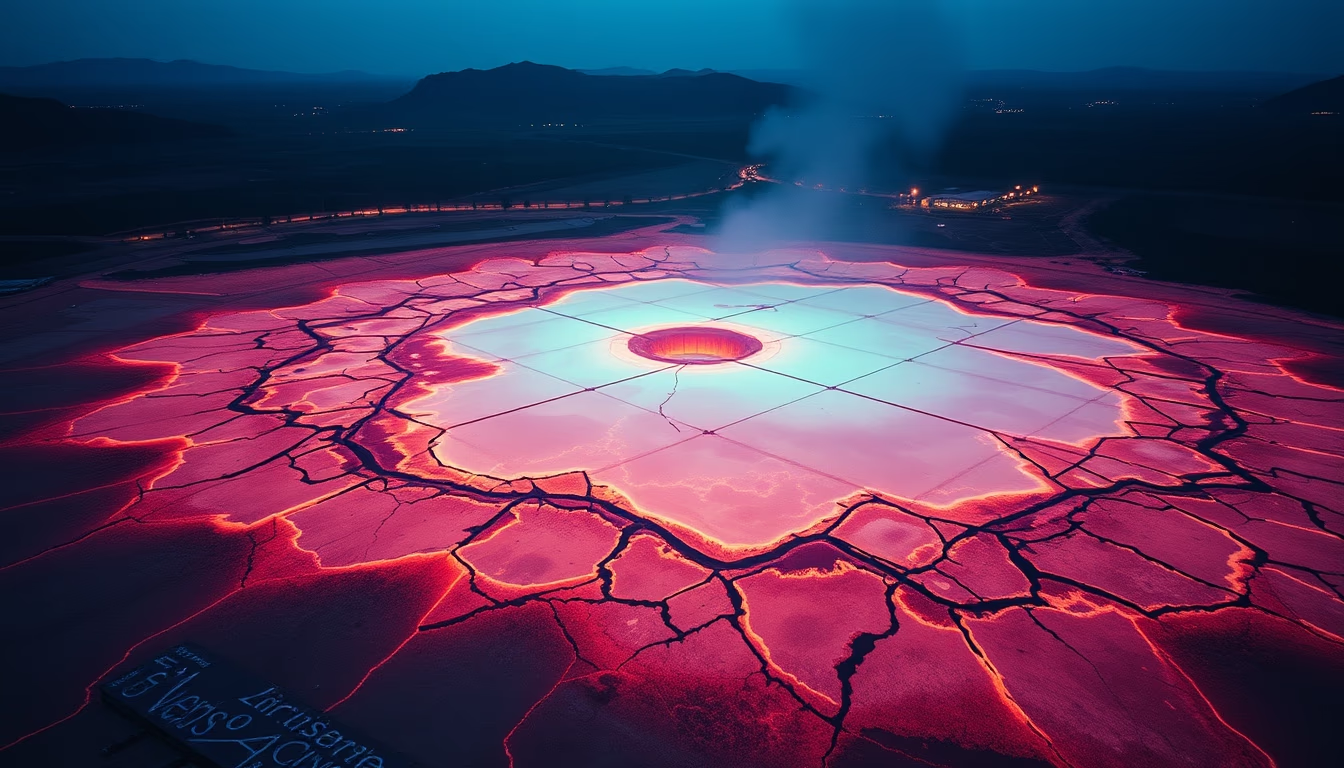
Venus's surface is shrouded in sulfuric acid clouds and suffers from a runaway greenhouse effect, resulting in scorching temperatures and crushing pressure.
About this subject
Venus, the second planet from the Sun, is often called Earth's twin due to its similar size and mass, but surface conditions are radically different. Its atmosphere is composed mainly of carbon dioxide (96.5%) and nitrogen (3.5%), with thick clouds of sulfuric acid enveloping the entire planet. These clouds reflect most sunlight, but the small amount that reaches the surface is trapped, causing a runaway greenhouse effect that drives average temperatures to about 462°C (863°F), hot enough to melt lead.
Surface pressure on Venus is crushing, 92 times Earth's sea-level pressure, comparable to being 900 meters underwater. This combination of extreme heat and high pressure makes long-term exploration extremely challenging. The Soviet Venera missions in the 1960s, 1980s successfully landed probes that survived for a few hours, transmitting data and images of a rocky, reddish landscape before succumbing to the hostile environment.
The Venusian surface is marked by vast volcanic plains, mountains, rifts, and thousands of volcanoes, some possibly still active. Recent research suggests volcanic activity may be comparable to Earth's, with eruptions continuously reshaping the terrain. Unlike Earth, Venus lacks plate tectonics; internal heat escapes mainly through volcanic plumes. This unique geology, combined with the corrosive atmosphere, makes Venus a natural laboratory for understanding the limits of planetary habitability and extreme climatic evolution.
Frequently Asked Questions
Why is Venus's surface so acidic?
Venus's acidity comes from clouds of sulfuric acid, formed by photochemical reactions between sulfur dioxide, water vapor, and sunlight. The acid rains down but evaporates before reaching the ground, recycling the cycle.
Have any missions landed on Venus?
Yes, the Soviet Venera 7, 8, 9, 10, 11, 12, 13, and 14 landers touched down between 1970 and 1982. Venera 13 transmitted color images of the surface for 127 minutes before failing.
Was Venus ever habitable in the past?
Climate models suggest Venus might have had liquid water oceans for a few billion years, but the runaway greenhouse effect evaporated all water, leading to the current hellish state.
Direct URL
https://pub-c7d6a6ea828543ac903a74a341ccb2e1.r2.dev/imagens/venus-surface-acidic-aerial-drone-shot-p7.avifHow to credit
Include a visible link back to UtilizAí. Copy one of the snippets below:
<a href="https://xn--utiliza-eza.com/en/midia/imagens/venus-surface-acidic-aerial-drone-shot-p7">Venus surface acidic</a> by <a href="https://xn--utiliza-eza.com">UtilizAí</a>, licensed under <a href="https://creativecommons.org/licenses/by/4.0/">CC BY 4.0</a>.
[Venus surface acidic](https://xn--utiliza-eza.com/en/midia/imagens/venus-surface-acidic-aerial-drone-shot-p7) by [UtilizAí](https://xn--utiliza-eza.com), CC BY 4.0
License: CC-BY-4.0