Venice carnival mask gold
1344×768 · AVIF · CC BY 4.0
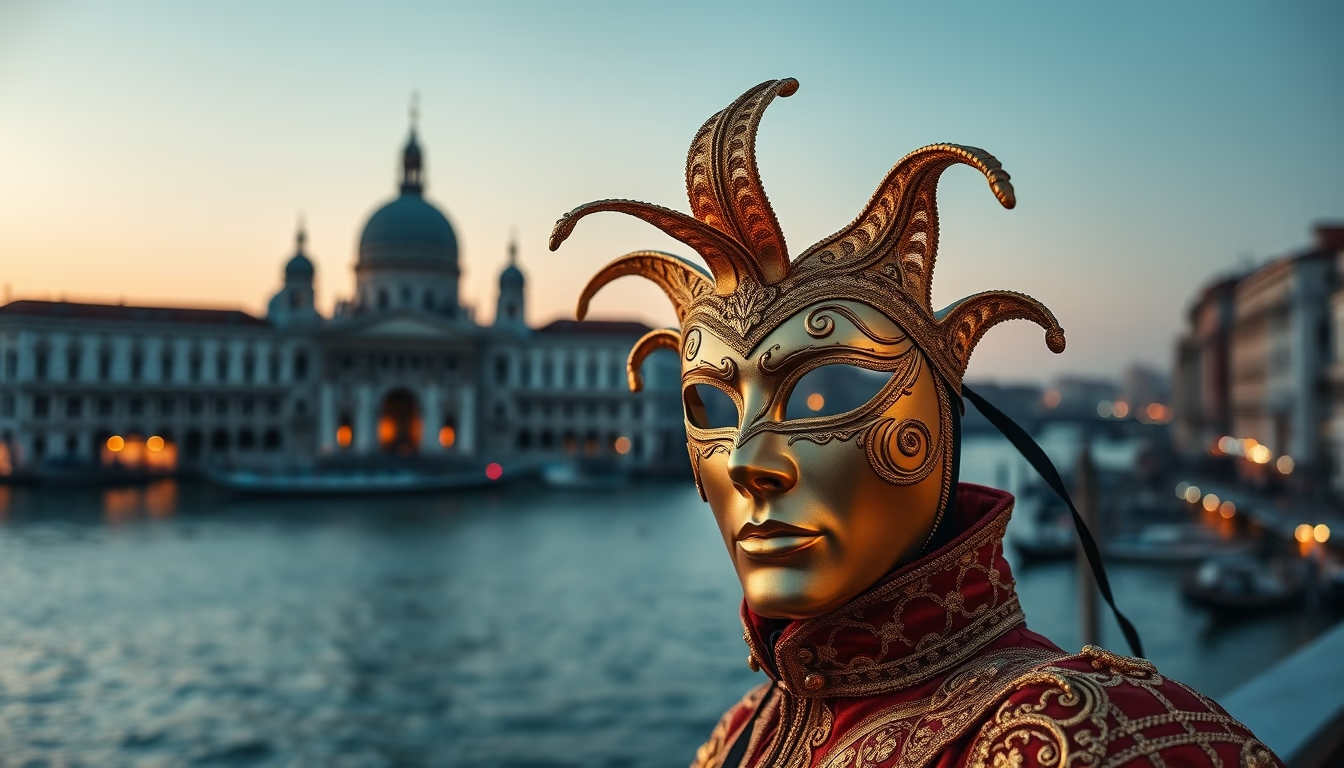
Gold Venetian carnival mask, a symbol of luxury and centuries-old Italian tradition.
About this subject
The gold Venetian mask is one of the most recognizable icons of the Venice Carnival, an event dating back to the 13th century. Originally, masks allowed citizens of different social classes to mingle anonymously during festivities, a custom that survived centuries of prohibitions. The gold color, achieved with gold leaf or metallic paints, was reserved for the most exquisite masks, often worn by nobility or at gala balls. Local craftsmanship employs traditional techniques such as papier-mâché modeling over clay molds, followed by sanding, painting, and decoration with gemstones. Each piece is unique and can take days to complete.
Gold masks frequently replicate the "Volto" or "Larva" model, which covers the entire face without a hinged mouth, allowing the wearer to eat and drink without removing it. Another popular style is the "Bauta", featuring a pronounced chin and a tricorn hat, worn by men. The association of gold color with power and wealth makes these masks the preferred choice for exclusive events such as the historic "Ball del Doge". Today, the Venice Carnival attracts millions of tourists, and artisan masks are sold in specialized shops, with prices ranging from tens to thousands of euros depending on materials.
Production of Venetian masks faces competition from industrial imitations, especially from Asia. However, local artisans keep the tradition alive through workshops in the San Polo district. The use of real gold is rare, with gilding using glitter or acrylic paint being more common. Even so, the symbolism remains: the gold mask represents the pinnacle of artistic expression and the hedonism that characterized Renaissance Venice.
Interestingly, the gold mask also appears in cultural events beyond carnival, such as contemporary artworks and cinema. Stanley Kubrick's film "Eyes Wide Shut" popularized the use of Venetian masks in mysterious parties, and the gold version has become a collector's item. Although centuries old, the tradition continues to evolve, with modern designers incorporating sustainable materials and digital techniques while preserving historical essence.
Frequently Asked Questions
What is the origin of Venetian carnival masks?
Venetian masks originated in the 13th century as a way to provide anonymity during Carnival, allowing people from different social classes to interact freely. The tradition was banned and revived several times but persists to this day.
Are there different types of Venetian masks?
Yes. The main types are the Bauta (covers the face with a prominent chin, worn with a tricorn hat), the Moretta (oval, held in place by a button clenched in the teeth), and the Volto or Larva (full-face mask without a hinged mouth). Gold masks often follow the Volto model.
How are Venetian masks handcrafted?
The traditional process begins with a clay mold onto which layers of paper and glue (papier-mâché) are applied. After drying, it is sanded, painted, and decorated with gold leaf, gems, or feathers. Each mask is unique and can take from one to several days to complete.
Direct URL
https://pub-c7d6a6ea828543ac903a74a341ccb2e1.r2.dev/imagens/venice-carnival-mask-gold-aerial-drone-shot-fresh15.avifHow to credit
Include a visible link back to UtilizAí. Copy one of the snippets below:
<a href="https://xn--utiliza-eza.com/en/midia/imagens/venice-carnival-mask-gold-aerial-drone-shot-fresh15">Venice carnival mask gold</a> by <a href="https://xn--utiliza-eza.com">UtilizAí</a>, licensed under <a href="https://creativecommons.org/licenses/by/4.0/">CC BY 4.0</a>.
[Venice carnival mask gold](https://xn--utiliza-eza.com/en/midia/imagens/venice-carnival-mask-gold-aerial-drone-shot-fresh15) by [UtilizAí](https://xn--utiliza-eza.com), CC BY 4.0
License: CC-BY-4.0