Urban farm vertical building
1344×768 · AVIF · CC BY 4.0
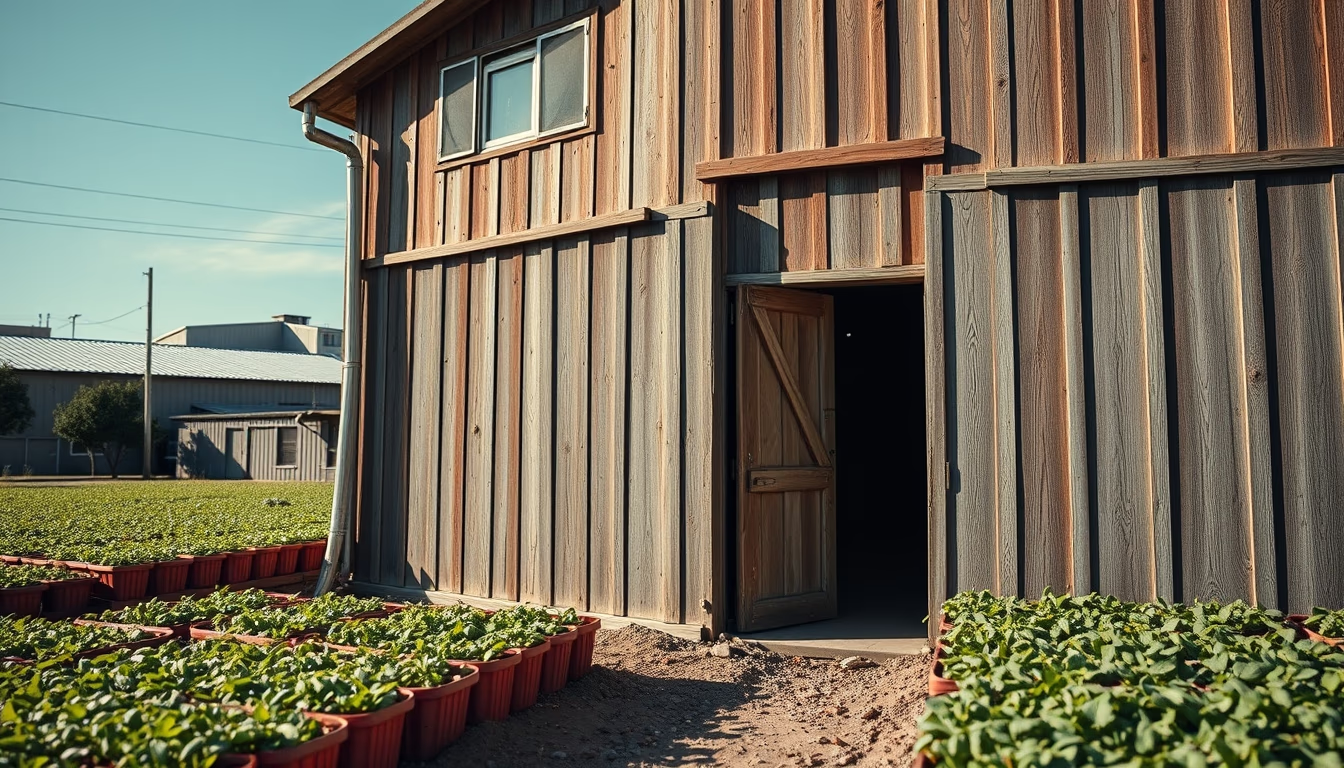
Vertical farms in urban buildings combine hydroponics and LED to produce fresh food in densely populated areas, reducing logistics costs.
About this subject
Vertical farming in urban buildings is one of the most promising solutions for food security in megacities. The concept was popularized by ecologist Dickson Despommier in 1999, who envisioned entire skyscrapers dedicated to food cultivation. Today, the idea materializes in facilities that stack growing trays up to 30 layers high, using closed irrigation systems and artificial lighting.
Technologically, vertical farms rely on hydroponics or aeroponics, where roots receive nutrients in aqueous solution or mist. LED lighting replaces sunlight, with adjustable spectra to optimize photosynthesis. This control allows year-round harvests, independent of outdoor climate. Water consumption is drastically reduced: while traditional agriculture uses about 70% of available freshwater, vertical farming uses 90% less due to recirculation.
Real-world examples demonstrate feasibility. AeroFarms in Newark (USA) operates one of the largest vertical farms, with 65,000 m² of growing area and an annual output of 900 tons of leafy greens. In Singapore, Sky Greens uses rotating towers up to 9 meters high to produce vegetables with low energy consumption. In Sweden, Plantagon designed a 17-story building integrated with an office, where the vertical farm exchanges CO2 and heat with corporate environments.
Despite advances, challenges remain. High electricity consumption for lighting and climate control can account for up to 30% of operating costs. Initial investment per square meter is high, and specialized labor is scarce. However, with falling LED prices and increasing demand for pesticide-free food, vertical farms are becoming more competitive, especially in regions like São Paulo and Rio de Janeiro, where transportation can account for up to 40% of the final price of vegetables.
Frequently Asked Questions
What is a vertical farm?
It is a cultivation system in vertical layers, usually inside buildings, using hydroponics or aeroponics to maximize space and control environmental variables.
Which crops can be grown in vertical farms?
Mainly leafy greens (lettuce, arugula, spinach), herbs (basil, mint), microgreens, tomatoes, and strawberries. Root crops and grains remain challenging due to vertical space and long growth cycles.
What is the main challenge of vertical farming?
High electricity consumption for LED lighting and climate control, which can account for up to one third of operating costs and reduce sustainability if energy comes from fossil fuels.
Direct URL
https://pub-c7d6a6ea828543ac903a74a341ccb2e1.r2.dev/imagens/urban-farm-vertical-building-magazine-editorial-p5.avifHow to credit
Include a visible link back to UtilizAí. Copy one of the snippets below:
<a href="https://xn--utiliza-eza.com/en/midia/imagens/urban-farm-vertical-building-magazine-editorial-p5">Urban farm vertical building</a> by <a href="https://xn--utiliza-eza.com">UtilizAí</a>, licensed under <a href="https://creativecommons.org/licenses/by/4.0/">CC BY 4.0</a>.
[Urban farm vertical building](https://xn--utiliza-eza.com/en/midia/imagens/urban-farm-vertical-building-magazine-editorial-p5) by [UtilizAí](https://xn--utiliza-eza.com), CC BY 4.0
License: CC-BY-4.0