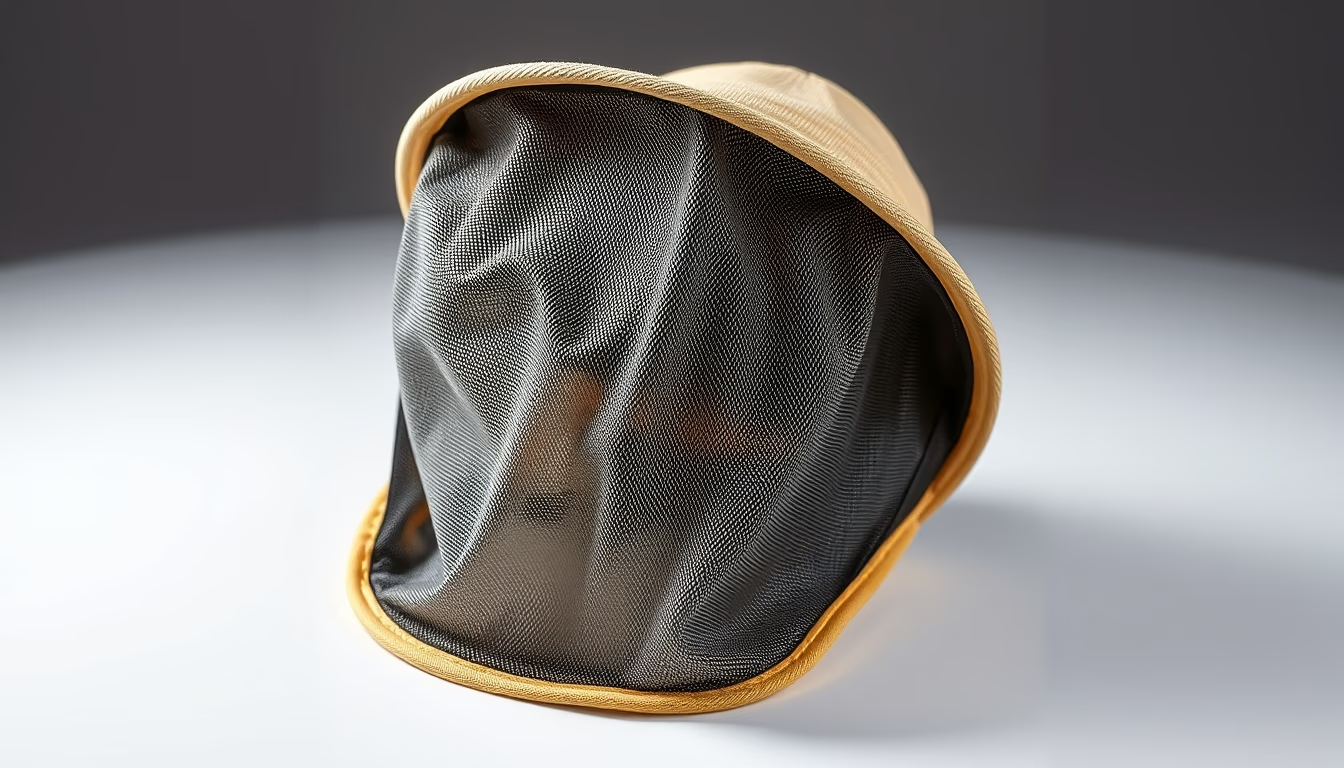
Underwater camera housing
1344×768 · AVIF · CC BY 4.0

Waterproof camera housings enable safe underwater photography, from recreational dives to professional fashion editorial productions.
About this subject
A waterproof camera housing is a sealed enclosure that protects photo and video cameras from pressure, water, sand, and impacts during submerged use. Its invention revolutionized underwater photography, enabling photographers to document the marine world without damaging sensitive equipment. Early prototypes emerged in the 1950s, with French engineer Jacques-Yves Cousteau and his team developing watertight boxes for Rolleiflex cameras. Today, housings are made from anodized aluminum, polycarbonate, or titanium, reaching depths of up to 100 meters or more depending on the model.
In high fashion editorial contexts, underwater housings enabled a distinct visual genre: “aquatic editorials,” where models pose in pools or special tanks, with floating dresses and accessories. Brands like Vogue, Harper's Bazaar, and i-D frequently use this technique for dreamlike, ethereal imagery. American photographer Christy Lee Rogers is a key reference, combining natural light and movement for pictorial effects. This requires robust housings paired with remote triggering systems and underwater lighting.
Fun fact: modern housings feature dual O-ring seals and internal pressure compensation to prevent condensation. Beyond editorial photography, they are widely used in submarine documentaries, marine biology, underwater archaeology, and tourism. The rise of mirrorless cameras and accessories like convex lens ports (domes) allowed greater versatility with wide-angle and macro shots. In Brazil, housings are common along the northeastern coast and in the Amazon region for recording rivers and streams. Careful maintenance, such as rinsing with fresh water after saltwater use, extends equipment lifespan.
Frequently Asked Questions
What is the maximum depth an underwater camera housing can withstand?
It depends on the model. Common recreational dive housings handle up to 40 meters. Professional aluminum or titanium models can reach 100 meters or more, such as those from Nauticam or Sea & Sea.
Can any camera be used inside an underwater housing?
No. Housings are specifically designed for each camera model to align buttons, viewfinder, and lens. There are generic bags for smartphones, but for DSLR or mirrorless cameras, a dedicated housing is required.
How to prevent fogging (condensation) inside the housing during a dive?
Use silica gel or anti-condensation devices (like E-Mist). Also, assemble the housing in a dry environment and avoid opening it in humid places. Some models have a nitrogen purge system.
Direct URL
https://pub-c7d6a6ea828543ac903a74a341ccb2e1.r2.dev/imagens/underwater-camera-housing-high-fashion-editorial-fresh10.avifHow to credit
Include a visible link back to UtilizAí. Copy one of the snippets below:
<a href="https://xn--utiliza-eza.com/en/midia/imagens/underwater-camera-housing-high-fashion-editorial-fresh10">Underwater camera housing</a> by <a href="https://xn--utiliza-eza.com">UtilizAí</a>, licensed under <a href="https://creativecommons.org/licenses/by/4.0/">CC BY 4.0</a>.
[Underwater camera housing](https://xn--utiliza-eza.com/en/midia/imagens/underwater-camera-housing-high-fashion-editorial-fresh10) by [UtilizAí](https://xn--utiliza-eza.com), CC BY 4.0
License: CC-BY-4.0