Tutankhamun mask
1344×768 · AVIF · CC BY 4.0
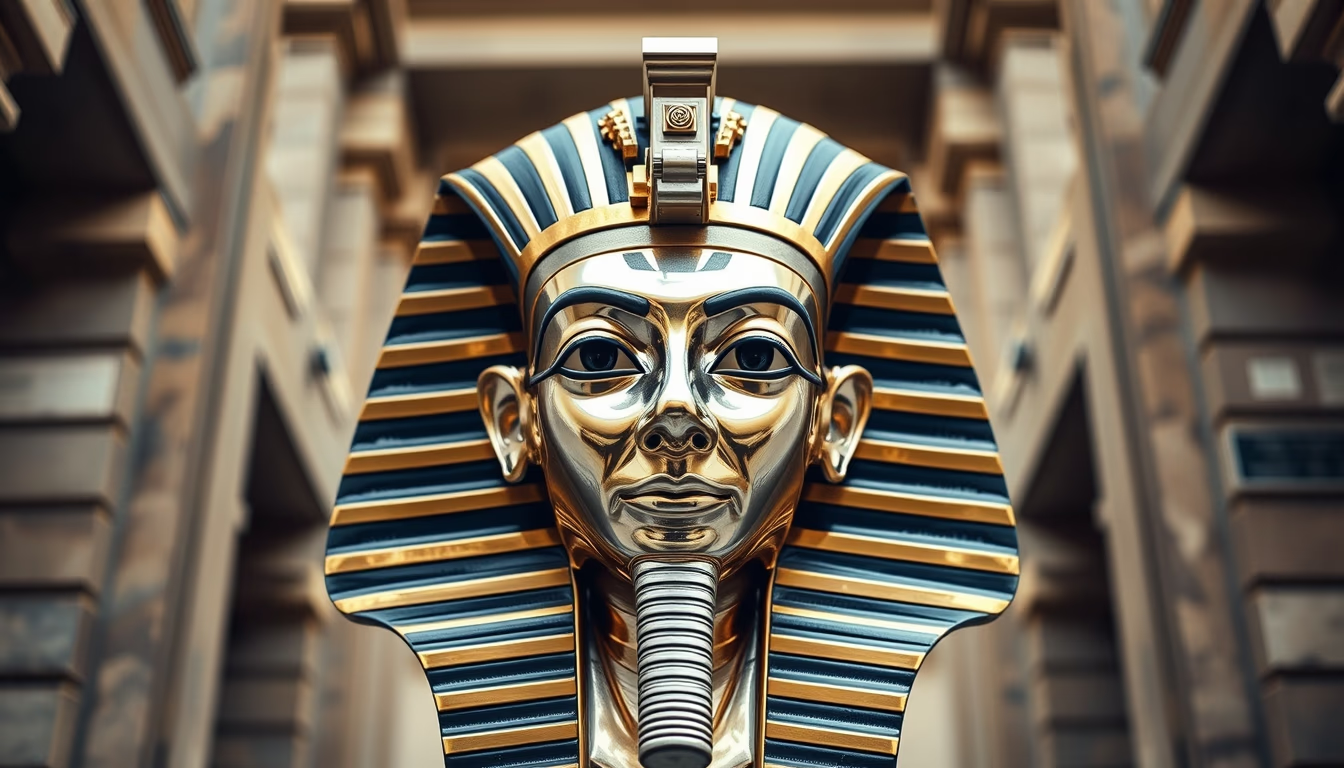
The funerary mask of Tutankhamun, one of the most iconic artifacts of Ancient Egypt, was discovered in the Valley of the Kings in 1922.
About this subject
The mask of Tutankhamun is one of the most emblematic artifacts in Egyptology. Made of solid gold and inlaid with lapis lazuli, carnelian, and other precious stones, it was placed over the pharaoh's face within his sarcophagus. The artifact weighs about 11 kg and measures 54 cm in height, depicting the young king with idealized features of divine royalty. The eyes are made of quartz and obsidian, and the uraeus cobra and vulture on the forehead symbolize Upper and Lower Egypt.
Discovered by Howard Carter in 1922, the mask was part of the funerary equipment of tomb KV62 in the Valley of the Kings. Tutankhamun's tomb was one of the few found almost intact, filled with thousands of objects. The mask specifically was inside a quartzite sarcophagus and three nested coffins, the innermost made of gold. Today, the artifact is displayed at the Egyptian Museum in Cairo, being a major attraction.
Tutankhamun ascended the throne around age 9 and reigned from 1332 BC to 1323 BC, dying young. His mask reflects the art of the Amarna period, with influences from the cult of Aten, but also returns to traditional styles. The restoration of the mask in 2015, after an accident that broke off the beard, sparked controversy among experts. The piece continues to fascinate the public and inspire research on ancient metalworking techniques.
Frequently Asked Questions
Where is Tutankhamun's mask displayed?
The mask is exhibited at the Egyptian Museum in Cairo, in Tahrir Square. It will soon be transferred to the new Grand Egyptian Museum near the Giza pyramids.
What material is Tutankhamun's mask made of?
The mask is made of solid gold, inlaid with lapis lazuli, carnelian, turquoise, and other semi precious stones. The eyes are made of quartz and obsidian.
Why is Tutankhamun's mask so famous?
It is famous for its beauty, rich materials, and because it is one of the few royal artifacts from Ancient Egypt found in an almost intact funerary context. It also symbolizes the mystery of the pharaoh's early death.
Direct URL
https://pub-c7d6a6ea828543ac903a74a341ccb2e1.r2.dev/imagens/tutankhamun-mask-architectural-photography-p11.avifHow to credit
Include a visible link back to UtilizAí. Copy one of the snippets below:
<a href="https://xn--utiliza-eza.com/en/midia/imagens/tutankhamun-mask-architectural-photography-p11">Tutankhamun mask</a> by <a href="https://xn--utiliza-eza.com">UtilizAí</a>, licensed under <a href="https://creativecommons.org/licenses/by/4.0/">CC BY 4.0</a>.
[Tutankhamun mask](https://xn--utiliza-eza.com/en/midia/imagens/tutankhamun-mask-architectural-photography-p11) by [UtilizAí](https://xn--utiliza-eza.com), CC BY 4.0
License: CC-BY-4.0