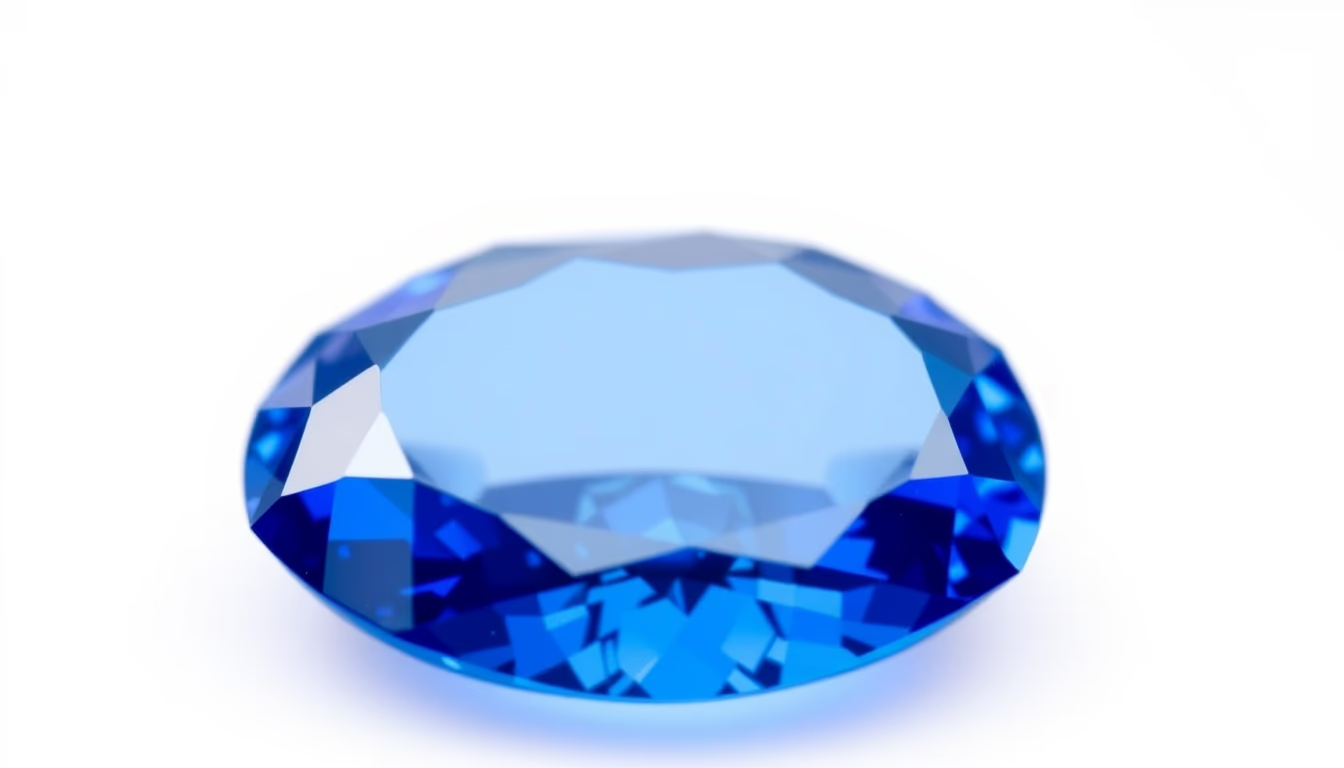
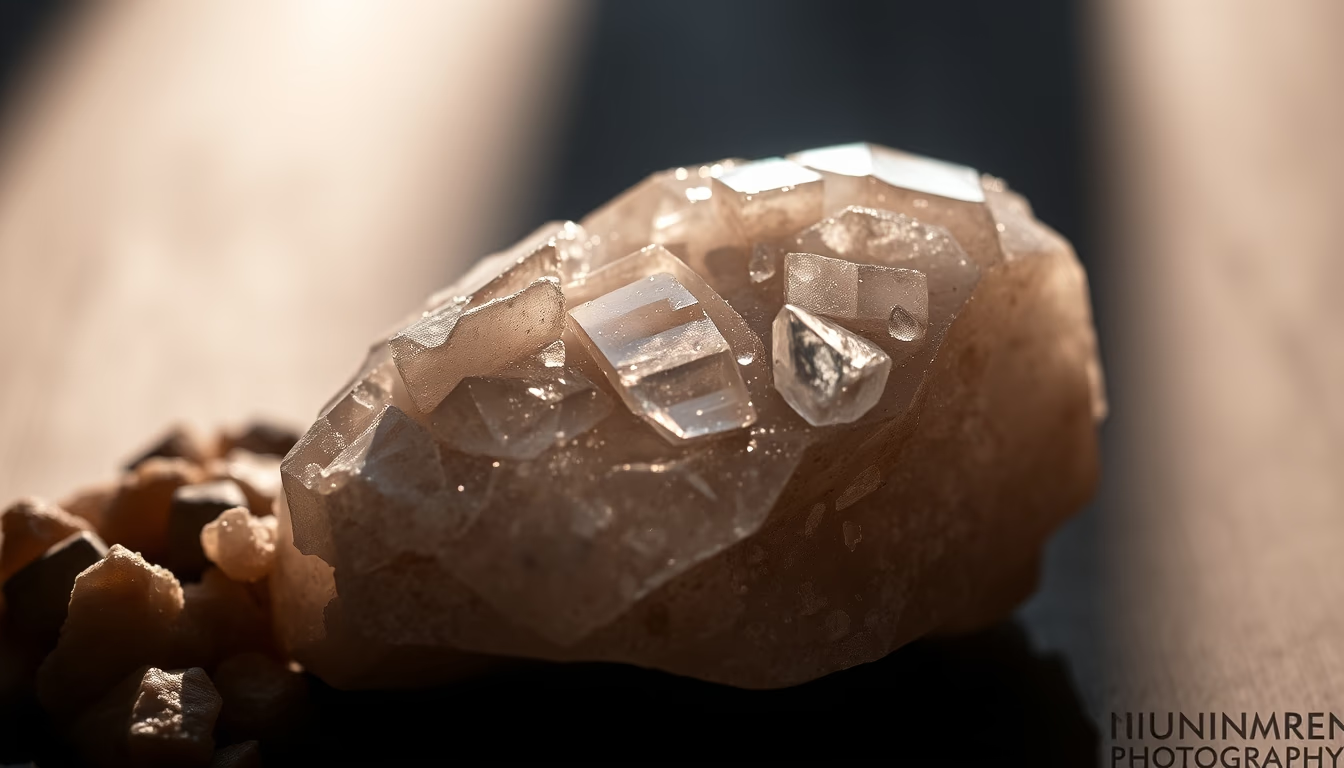
Turquoise polished
1344×768 · AVIF · CC BY 4.0

Polished turquoise: one of the oldest known gemstones, prized for its blue-green color and widely used in jewelry and crafts.
About this subject
Turquoise is a copper aluminum phosphate mineral whose characteristic color ranges from sky blue to apple green, depending on the copper-to-iron ratio. It is one of the earliest gemstones mined by humans, with records of extraction in the Sinai Peninsula dating back to 4000 BCE. Ancient Egyptians, Aztecs, and Persians highly valued the stone, using it for adornment, amulets, and ceremonial objects. The Sinai turquoises were so renowned that they gave rise to the name "turquoise," derived from the French "pierre turquoise" (Turkish stone), as the gems reached Europe via Turkey.
The gem is relatively porous and sensitive to chemicals, heat, and strong sunlight. Therefore, genuine turquoise pieces often undergo stabilization treatments, such as resin impregnation, to improve durability. Current major commercial sources include the Southwestern United States (especially Arizona and Nevada), China, Iran, Mexico, and Afghanistan. Iranian (Persian) turquoise is considered the highest quality, with an intense blue color and minimal inclusions.
Culturally, turquoise is regarded as a stone of protection and wisdom. In Tibet, it is used in traditional jewelry and believed to attract good fortune. Among Native American tribes of the Southwestern US, such as the Navajo and Zuni, turquoise is sacred and employed in ceremonies and crafts, particularly silverwork. The stone is also the birthstone for December in the United States, and while unproven, its medicinal uses include claims of alleviating headaches and stress.
Frequently Asked Questions
How can you tell if turquoise is real?
Real turquoise does not scratch glass easily, has a homogeneous color, and usually shows small inclusions or a dark matrix. Synthetics or imitations tend to be very uniform and can be scratched with a needle.
What is the difference between stabilized and natural turquoise?
Natural turquoise is porous and fragile; stabilized turquoise is impregnated with resin or polymer to fill pores and increase hardness. Most turquoise on the market is stabilized, while natural stones are rare and more expensive.
Why does turquoise change color over time?
The color may darken or become greener due to exposure to skin oils, cosmetics, sunlight, or heat. Loss of water and copper oxidation also alter the hue.
Direct URL
https://pub-c7d6a6ea828543ac903a74a341ccb2e1.r2.dev/imagens/turquoise-polished-magazine-editorial-p1.avifHow to credit
Include a visible link back to UtilizAí. Copy one of the snippets below:
<a href="https://xn--utiliza-eza.com/en/midia/imagens/turquoise-polished-magazine-editorial-p1">Turquoise polished</a> by <a href="https://xn--utiliza-eza.com">UtilizAí</a>, licensed under <a href="https://creativecommons.org/licenses/by/4.0/">CC BY 4.0</a>.
[Turquoise polished](https://xn--utiliza-eza.com/en/midia/imagens/turquoise-polished-magazine-editorial-p1) by [UtilizAí](https://xn--utiliza-eza.com), CC BY 4.0
License: CC-BY-4.0