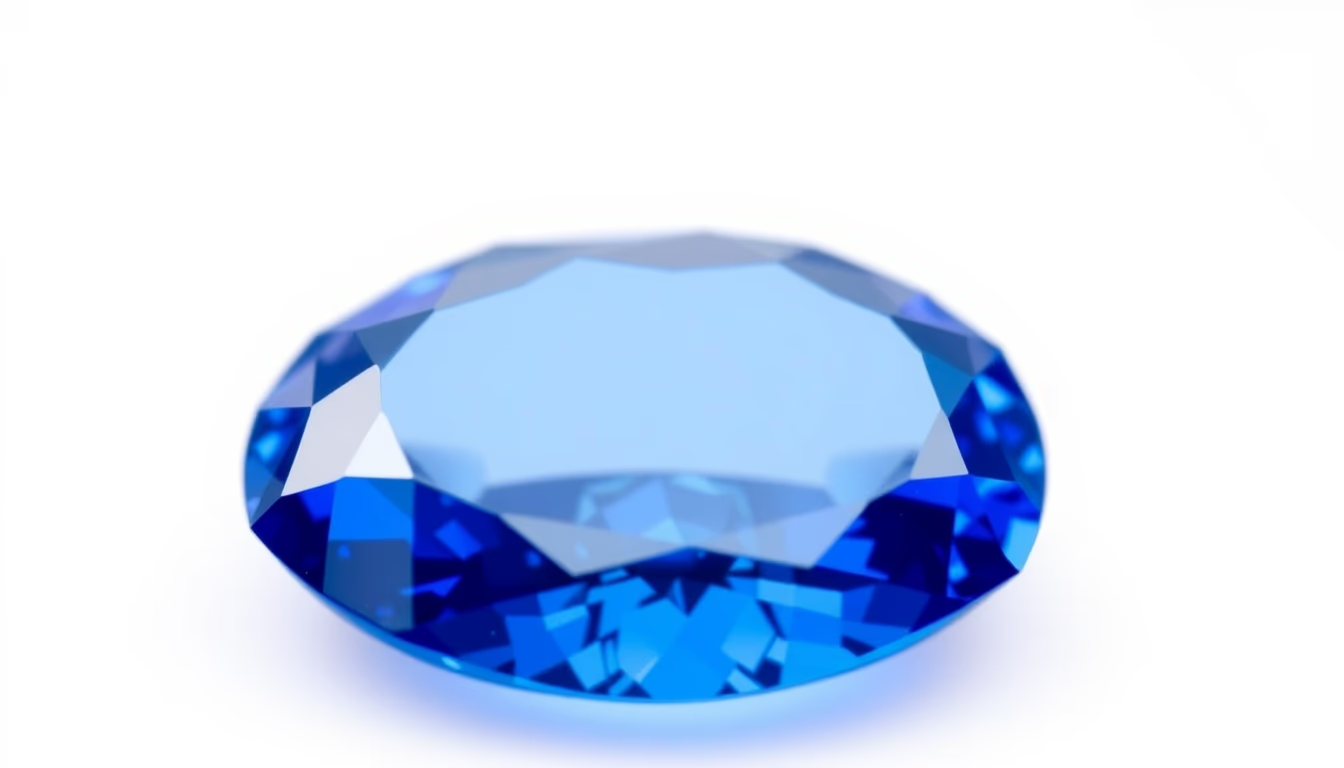
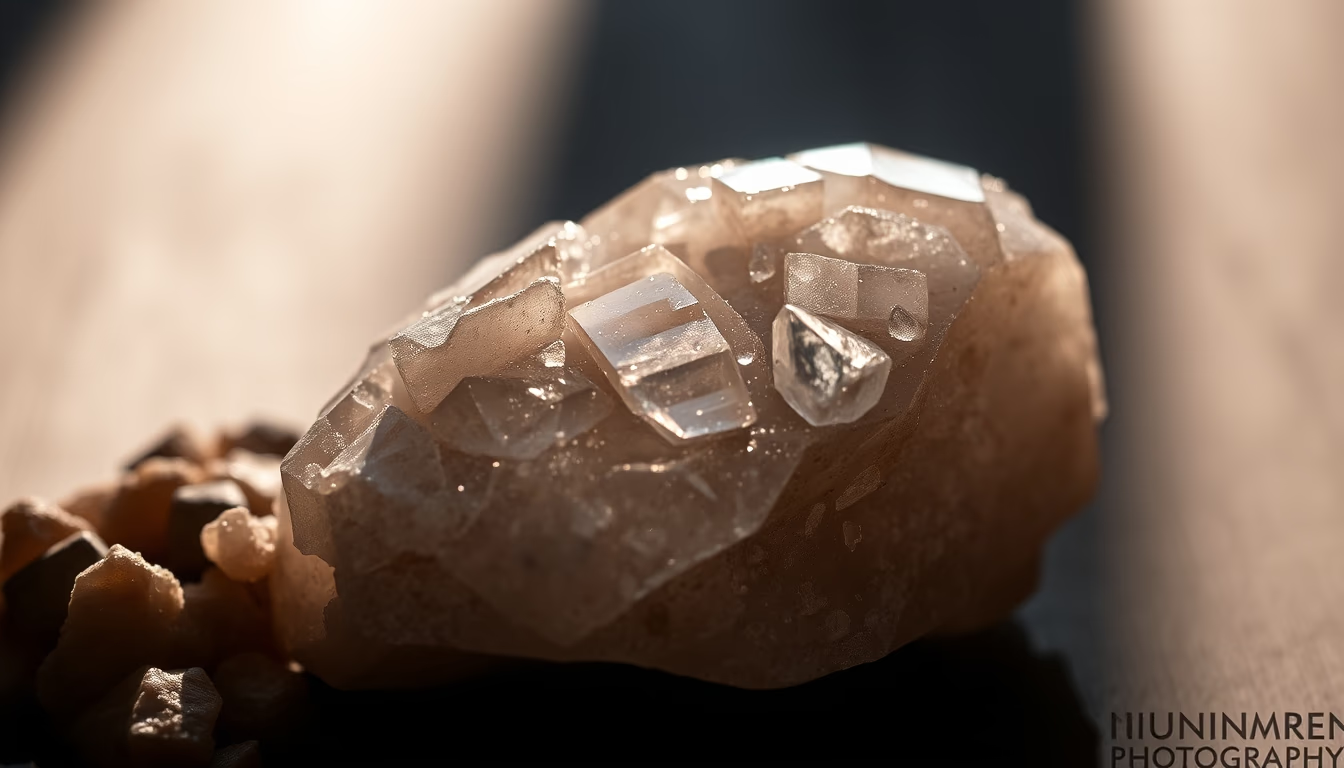
Turquoise polished
1344×768 · AVIF · CC BY 4.0

Polished turquoise is an opaque gemstone ranging from blue to blue-green, valued since antiquity for its beauty and spiritual properties.
About this subject
Turquoise is a copper aluminum phosphate mineral with the chemical formula CuAl6(PO4)4(OH)8·4H2O. Its characteristic blue to apple-green color is due to copper content. One of the earliest gemstones mined, turquoise was used by the ancient Egyptians (in pharaohs' tombs), Persians (modern Iran), and Aztecs, who considered it sacred and used it in ceremonial masks and jewelry.
Major sources include Iran (old Persia), known for fine blue turquoise; the southwestern United States, especially Arizona and Nevada, where it is important to Native American culture; and China, a large producer, though much Chinese turquoise is treated. High-quality natural turquoise is increasingly rare, and stabilization (resin impregnation) or dyeing is common to improve appearance and durability.
Culturally, turquoise is a symbol of protection, good fortune, and spiritual communication. It is the December birthstone and widely used in rings, necklaces, and bracelets. Both homogenous turquoise (without matrix) and with dark brown or black host-rock inclusions are valued. Its Mohs hardness of 5 to 6 makes it relatively soft and sensitive to chemicals and heat, requiring careful storage.
The name 'turquoise' comes from the French 'turquoise' meaning 'Turkish stone', as the gems were traded through Turkey to Europe. Archaeological finds show turquoise artifacts from ancient Egyptian sites dating back 4,500 years, proving its enduring appeal.
Frequently Asked Questions
How can I tell if turquoise is real?
Real turquoise is porous and may stain with acetone. A simple spot test with a cotton swab soaked in acetone should not transfer color. Treated turquoise may look too uniform. For certainty, gemological testing is recommended.
What causes the blue color in turquoise?
The blue color of turquoise is due to copper ions in the mineral structure. Higher copper content yields more intense blue. Greener hues indicate the presence of iron. The water content also influences the exact shade.
Where is turquoise mined?
Major turquoise mines are in Iran (Khorasan Province), the United States (Arizona, Nevada, New Mexico), China (Hubei, Shaanxi), and Mexico. Persian turquoise is highly prized. Brazil has some occurrences in Ceará and Minas Gerais but limited production.
Direct URL
https://pub-c7d6a6ea828543ac903a74a341ccb2e1.r2.dev/imagens/turquoise-polished-lo-fi-disposable-camera-p8.avifHow to credit
Include a visible link back to UtilizAí. Copy one of the snippets below:
<a href="https://xn--utiliza-eza.com/en/midia/imagens/turquoise-polished-lo-fi-disposable-camera-p8">Turquoise polished</a> by <a href="https://xn--utiliza-eza.com">UtilizAí</a>, licensed under <a href="https://creativecommons.org/licenses/by/4.0/">CC BY 4.0</a>.
[Turquoise polished](https://xn--utiliza-eza.com/en/midia/imagens/turquoise-polished-lo-fi-disposable-camera-p8) by [UtilizAí](https://xn--utiliza-eza.com), CC BY 4.0
License: CC-BY-4.0