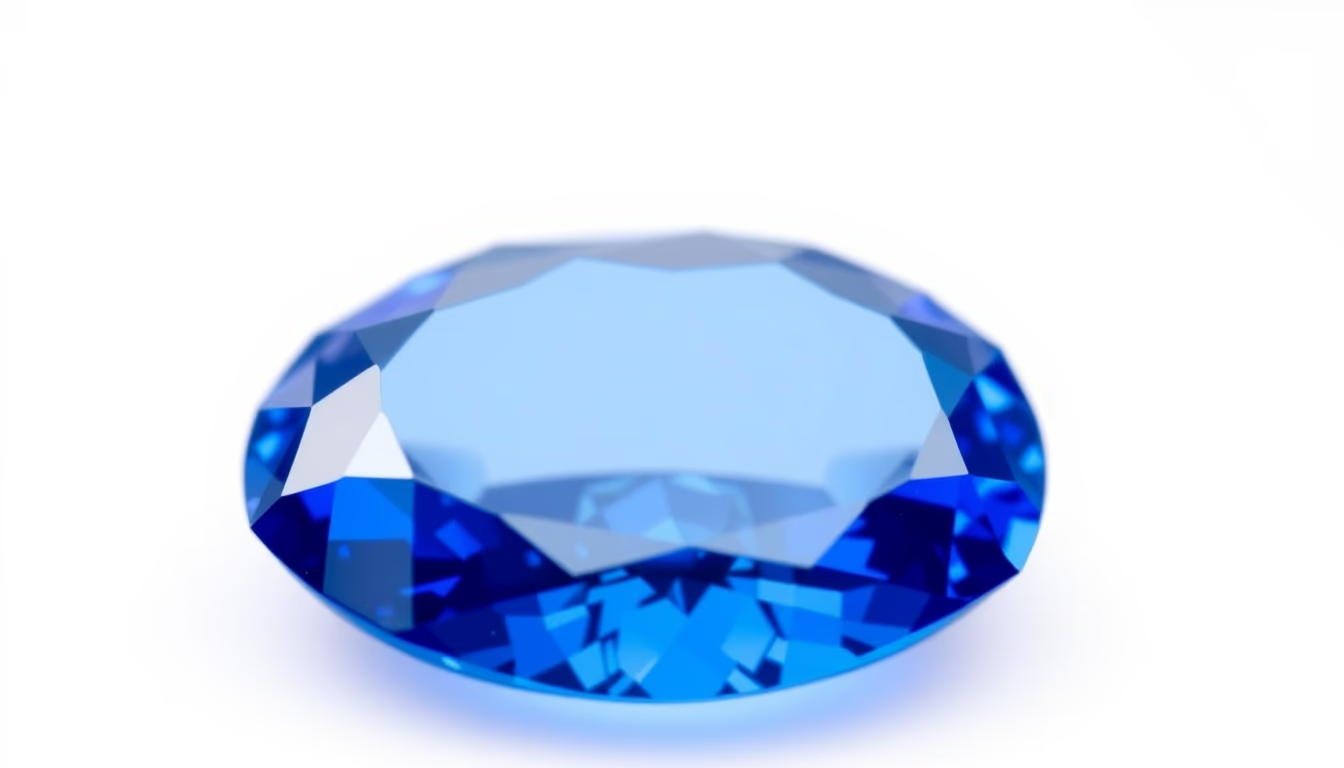
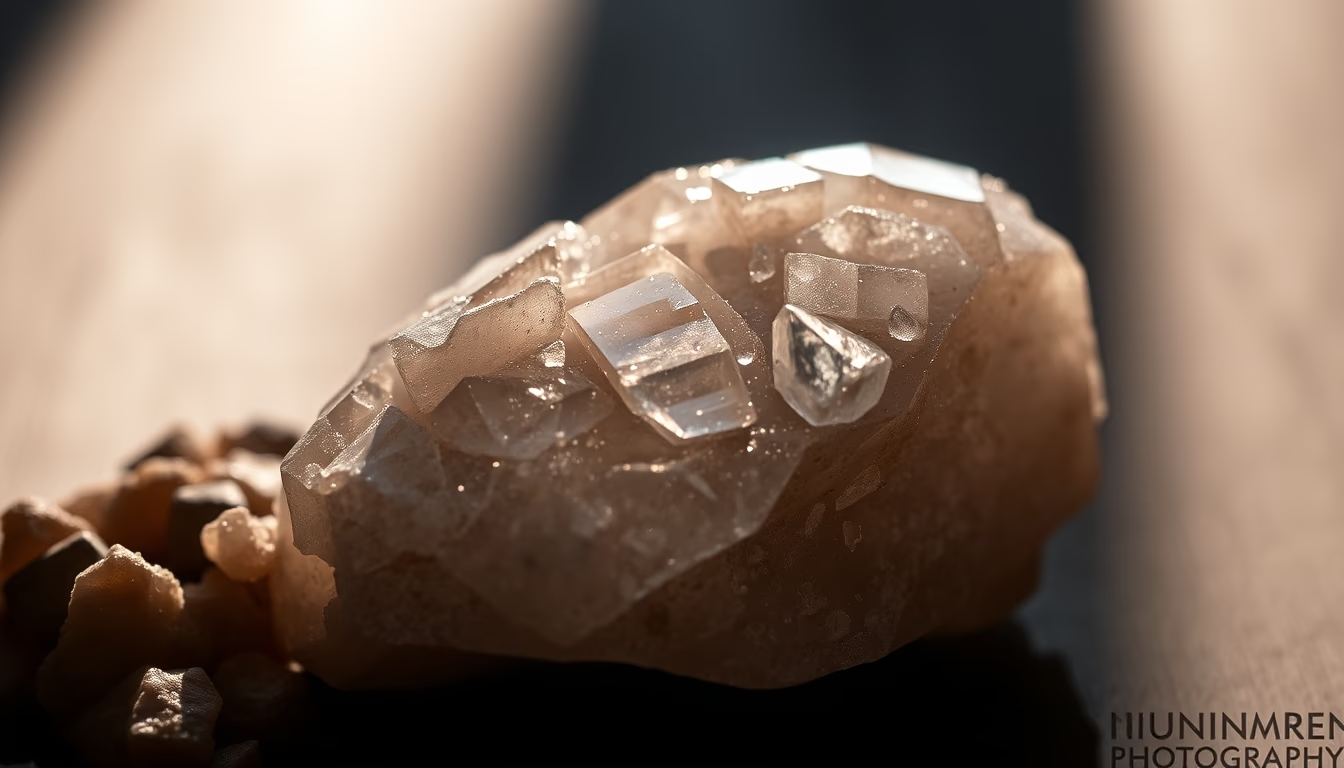
Turquoise polished
1344×768 · AVIF · CC BY 4.0

Turquoise is a phosphate mineral of copper and aluminum, prized for its distinctive blue-green color and use as a gemstone since antiquity, particularly in Persian and Native American cultures.
About this subject
Turquoise is a secondary mineral formed by the alteration of aluminum- and copper-rich rocks, typically in arid environments. Its characteristic color ranges from sky blue to apple green, depending on the ratio of copper and iron. With a hardness between 5 and 6 on the Mohs scale, it is a relatively soft gemstone but highly valued for its beauty and cultural significance.
Since Ancient Egypt, turquoise has been used in jewelry and amulets, such as the famous funerary masks. Persians considered it a protector against evil eyes, and Native Americans used it in ceremonies and ritual objects. In the southwestern United States, mines like Sleeping Beauty (Arizona) and Cerrillos (New Mexico) produce high-quality turquoise.
Current major commercial sources include Iran (ancient Persia), China, Mexico, and the United States. Most turquoise on the market is treated with polymers or resins to improve durability and color, as natural stone can be porous and fade over time. “Recovered” or “reconstituted” turquoise is made from fragments pressed with binders.
To identify genuine turquoise, look for uniform color and a waxy luster. The most common imitation is dyed howlite, which lacks the typical dark veins (called matrix) of natural turquoise. Another test is hardness: turquoise scratches softer surfaces but is scratched by quartz.
Frequently Asked Questions
What is turquoise?
Turquoise is a phosphate mineral of copper and aluminum, ranging in color from blue to green. It forms in arid environments and has a hardness of 5, 6 on the Mohs scale.
What are the main uses of turquoise?
Turquoise is widely used in jewelry (rings, necklaces, earrings) and decorative objects. Historically, it was used in amulets, Egyptian masks, and Native American artifacts.
How can I identify genuine turquoise?
Genuine turquoise has uniform color, waxy luster, and often dark matrix veins. Imitations like dyed howlite are more porous and lack matrix. A hardness test helps: turquoise scratches glass but is scratched by quartz.
Direct URL
https://pub-c7d6a6ea828543ac903a74a341ccb2e1.r2.dev/imagens/turquoise-polished-film-grain-authentic-p7.avifHow to credit
Include a visible link back to UtilizAí. Copy one of the snippets below:
<a href="https://xn--utiliza-eza.com/en/midia/imagens/turquoise-polished-film-grain-authentic-p7">Turquoise polished</a> by <a href="https://xn--utiliza-eza.com">UtilizAí</a>, licensed under <a href="https://creativecommons.org/licenses/by/4.0/">CC BY 4.0</a>.
[Turquoise polished](https://xn--utiliza-eza.com/en/midia/imagens/turquoise-polished-film-grain-authentic-p7) by [UtilizAí](https://xn--utiliza-eza.com), CC BY 4.0
License: CC-BY-4.0