Transistor surface mount
1344×768 · AVIF · CC BY 4.0
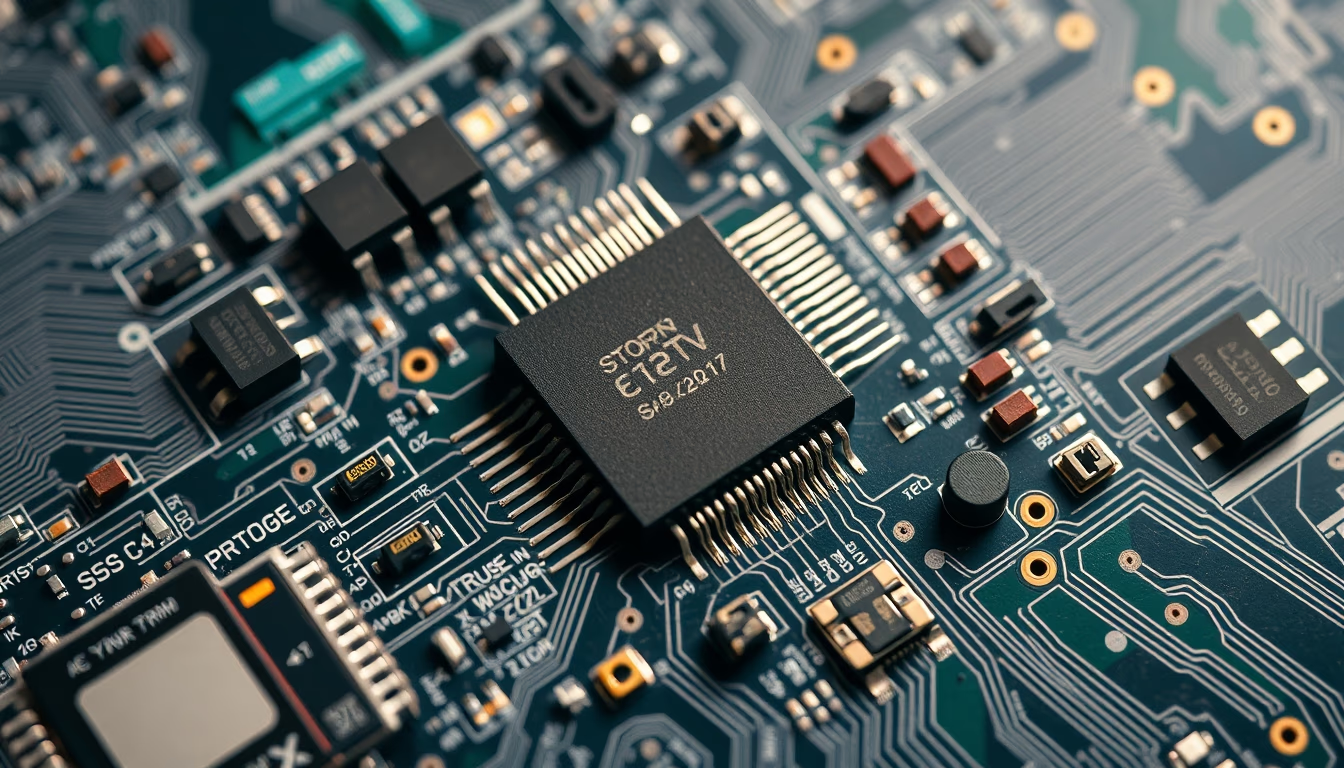
The surface mount transistor (SMD) is a compact electronic component soldered directly onto the printed circuit board (PCB), essential for the miniaturization of modern devices.
About this subject
The surface mount transistor, also known as an SMD (Surface-Mount Device), is a type of transistor designed to be mounted directly onto the surface of a printed circuit board (PCB) without the need for through-holes. This technology emerged in the 1960s and gained popularity in the 1980s, enabling much higher component density and significantly reducing the size of electronic devices.
SMD transistors are manufactured in various standardized packages, such as SOT-23, SOT-223, SOT-89, and TO-252. Each package has a specific number of pins and dimensions, adapting to different power and frequency requirements. For instance, the SOT-23 is widely used in low-power applications, while the TO-252 (DPAK) supports higher currents, commonly found in power supplies and voltage regulators.
The main advantage of surface mount transistors over traditional through-hole types is the boost in productivity and miniaturization. They can be assembled automatically by pick-and-place machines, which position thousands of components per hour with high accuracy. Additionally, the absence of holes in the PCB frees up space for trace routing and enables more complex multilayer boards. This drove the development of compact devices such as smartphones, tablets, and wearables.
Interestingly, the evolution of SMD transistors is closely tied to advancements in reflow soldering technology, where solder paste is applied to the PCB, components are placed, and the board is heated in an oven to form connections. This process creates robust and reliable electrical joints, even for tiny components. Today, it's hard to find a modern electronic device that does not use surface mount transistors in its circuitry.
Frequently Asked Questions
What is a surface mount transistor?
It is a transistor designed to be soldered directly onto the surface of a printed circuit board, without through-holes. Also called SMD, it allows high component density and automated assembly.
What is the difference between SMD and through-hole transistors?
SMD is smaller, does not require holes in the board, and is placed by pick-and-place machines. Through-hole has long leads inserted into holes and soldered on the opposite side, being mechanically stronger but taking up more space.
What are the most common packages for SMD transistors?
The most common include SOT-23, SOT-223, SOT-89, and TO-252 (DPAK). Each has different dimensions and current handling, suitable for low to high power applications.
Direct URL
https://pub-c7d6a6ea828543ac903a74a341ccb2e1.r2.dev/imagens/transistor-surface-mount-isometric-flat-lay-p10.avifHow to credit
Include a visible link back to UtilizAí. Copy one of the snippets below:
<a href="https://xn--utiliza-eza.com/en/midia/imagens/transistor-surface-mount-isometric-flat-lay-p10">Transistor surface mount</a> by <a href="https://xn--utiliza-eza.com">UtilizAí</a>, licensed under <a href="https://creativecommons.org/licenses/by/4.0/">CC BY 4.0</a>.
[Transistor surface mount](https://xn--utiliza-eza.com/en/midia/imagens/transistor-surface-mount-isometric-flat-lay-p10) by [UtilizAí](https://xn--utiliza-eza.com), CC BY 4.0
License: CC-BY-4.0