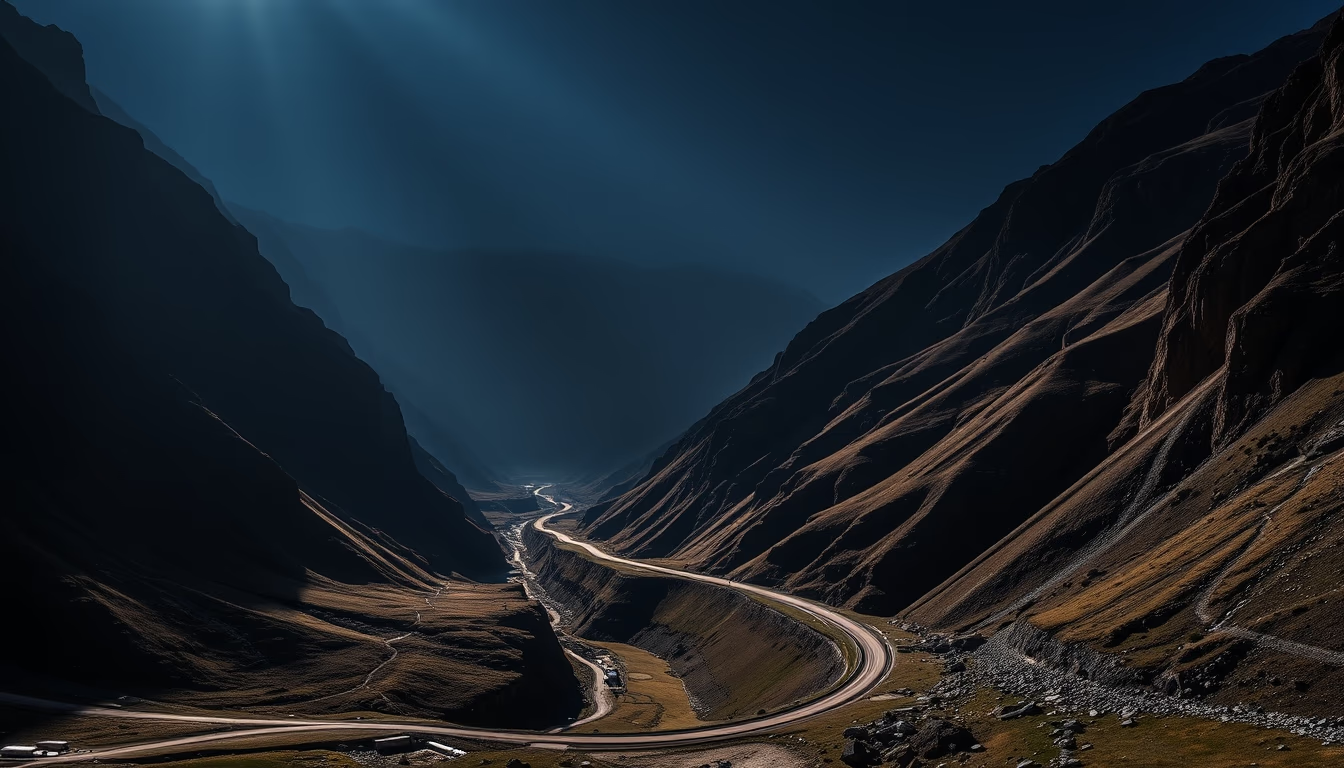
Transfagarasan romania
1344×768 · AVIF · CC BY 4.0
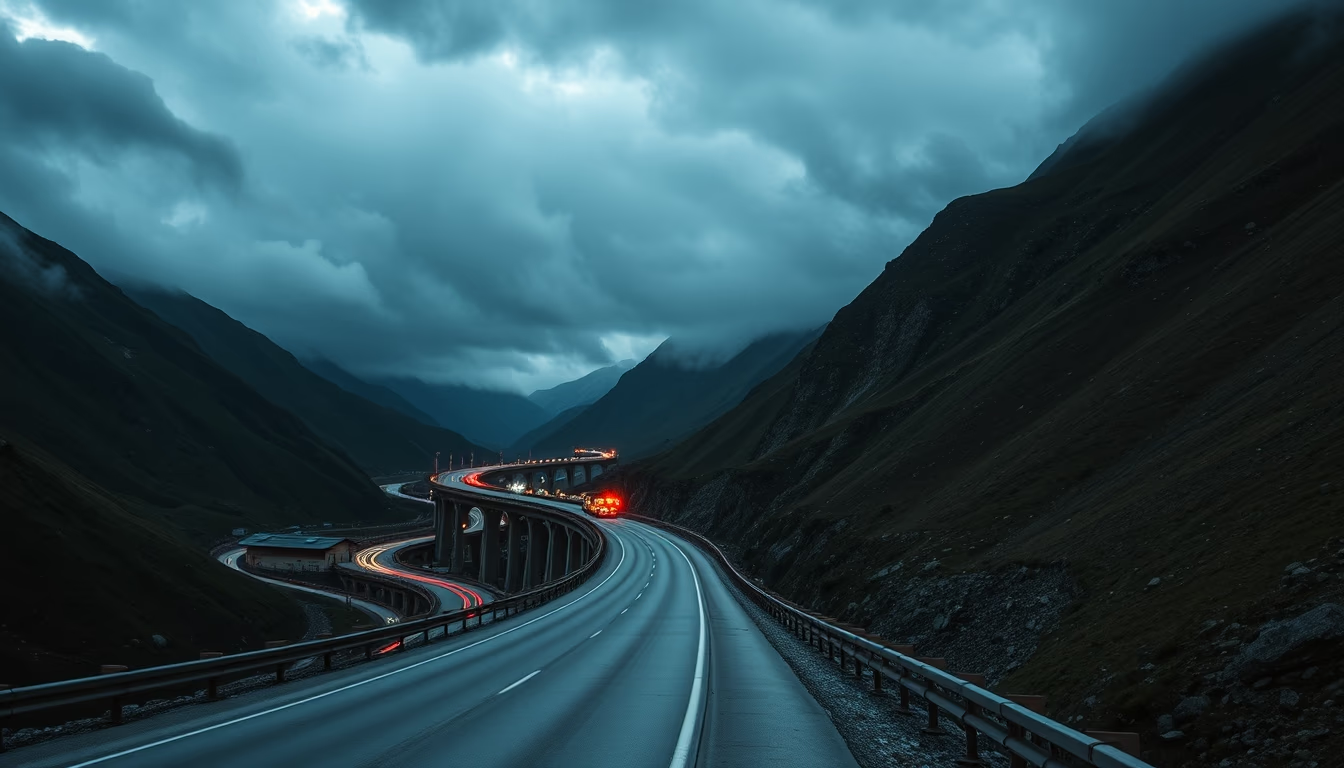
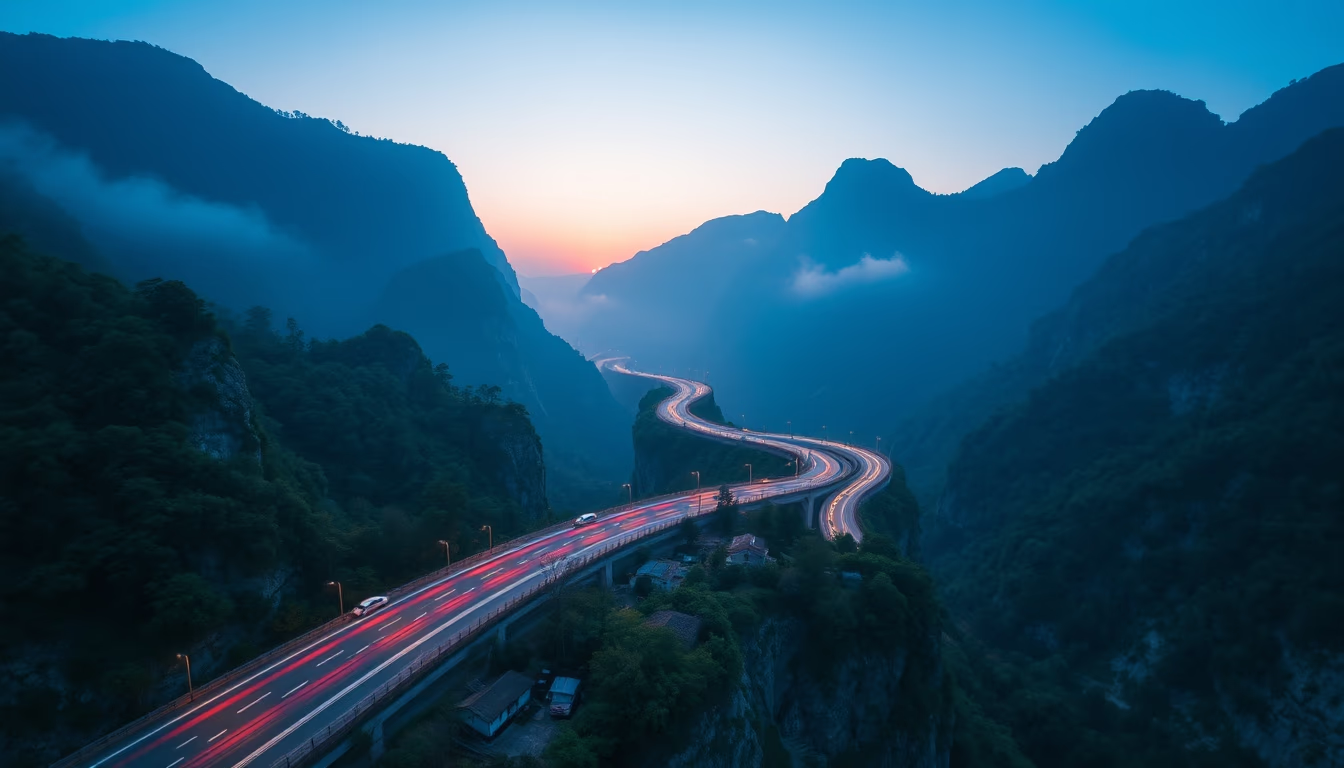
The Transfăgărășan is a scenic road in the Romanian Carpathians, renowned for its winding curves and spectacular alpine landscapes.
About this subject
Built between 1970 and 1974 under the orders of dictator Nicolae Ceaușescu, the Transfăgărășan (DN7C) was designed as a strategic military route through the Făgăraș Mountains. Spanning 90 km, the road connects the historical regions of Transylvania and Wallachia, crossing Romania's highest point, Bâlea Lake, at 2,034 meters above sea level. The construction involved thousands of soldiers and civilian workers, resulting in over 30 tunnels and viaducts that wind through breathtaking alpine scenery.
Today, the Transfăgărășan is an international tourist attraction, having been named the world's most beautiful road by BBC's Top Gear program. Its operating season is limited: typically open from June to October due to heavy winter snowfall. The most famous section is the serpentine of tight hairpin turns ascending to Bâlea Lake, featuring a waterfall and a cable car that leads to the Bâlea Lac ski resort. In summer, the road attracts cyclists and motorcyclists who challenge gradients of up to 10%.
Geologically, the Southern Carpathians are dominated by metamorphic rocks and glacial formations, with peaks exceeding 2,500 meters (such as Moldoveanu, Romania's highest point). Local wildlife includes brown bears, lynx, and golden eagles, often spotted in the adjacent forests. The Transfăgărășan also provides access to medieval castles like Poenari Castle (fortress of Vlad the Impaler) and Bran Castle (associated with the Dracula myth).
Frequently Asked Questions
What is the best time to drive the Transfăgărășan?
The road is only open from June to October due to snow. Summer (July-August) offers the best weather but also more tourist traffic. September is ideal for avoiding crowds and enjoying autumn colors.
How long does it take to drive the entire Transfăgărășan?
The 90 km can be driven in about 2-3 hours without stops, but most visitors take half a day or more due to photo stops, visits to Bâlea Lake, and viewpoints.
Is the Transfăgărășan dangerous for inexperienced drivers?
Yes, especially the serpentine section (between Curtea de Argeș and Bâlea Lac), with tight hairpins, steep gradients, and some sections lacking guardrails. Caution, low gears, and awareness of cyclists/motorcyclists are advised.
Direct URL
https://pub-c7d6a6ea828543ac903a74a341ccb2e1.r2.dev/imagens/transfagarasan-romania-fine-art-photography-fresh5.avifHow to credit
Include a visible link back to UtilizAí. Copy one of the snippets below:
<a href="https://xn--utiliza-eza.com/en/midia/imagens/transfagarasan-romania-fine-art-photography-fresh5">Transfagarasan romania</a> by <a href="https://xn--utiliza-eza.com">UtilizAí</a>, licensed under <a href="https://creativecommons.org/licenses/by/4.0/">CC BY 4.0</a>.
[Transfagarasan romania](https://xn--utiliza-eza.com/en/midia/imagens/transfagarasan-romania-fine-art-photography-fresh5) by [UtilizAí](https://xn--utiliza-eza.com), CC BY 4.0
License: CC-BY-4.0