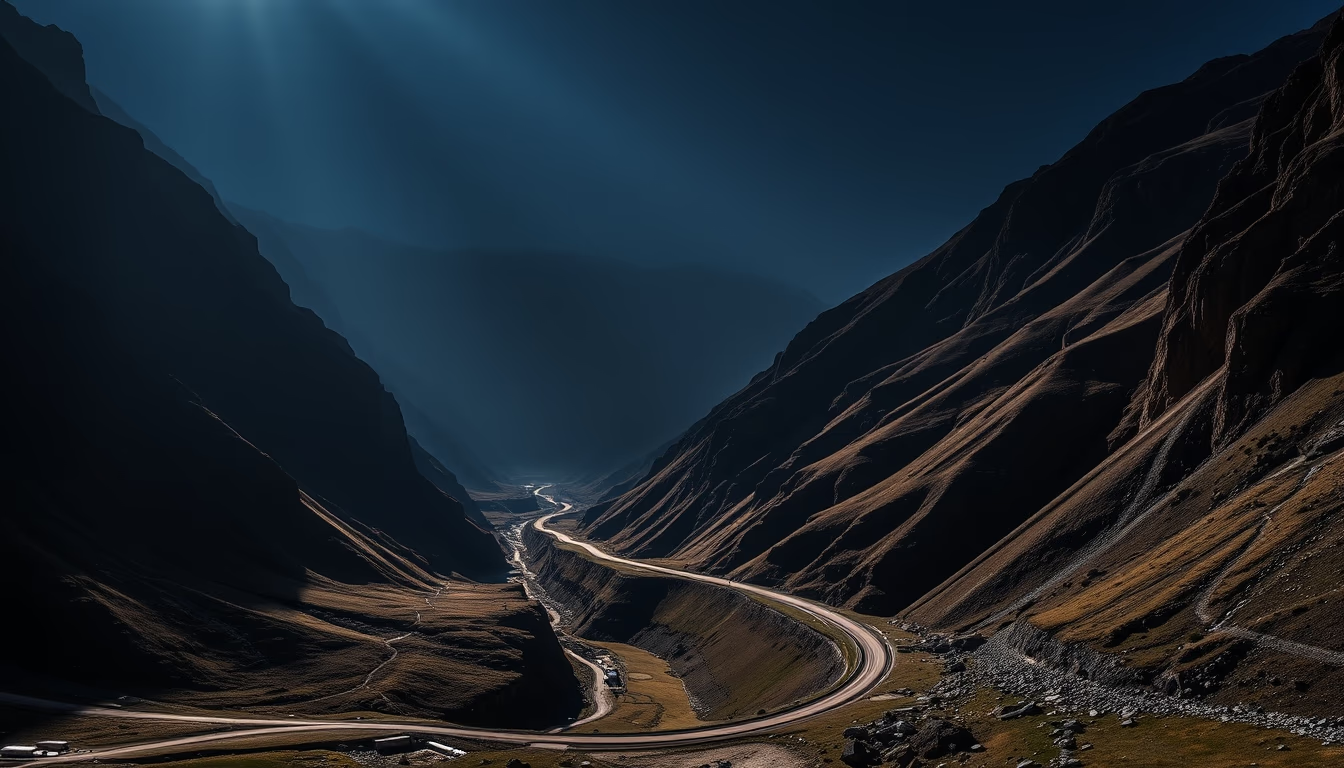
Transfagarasan romania
1344×768 · AVIF · CC BY 4.0
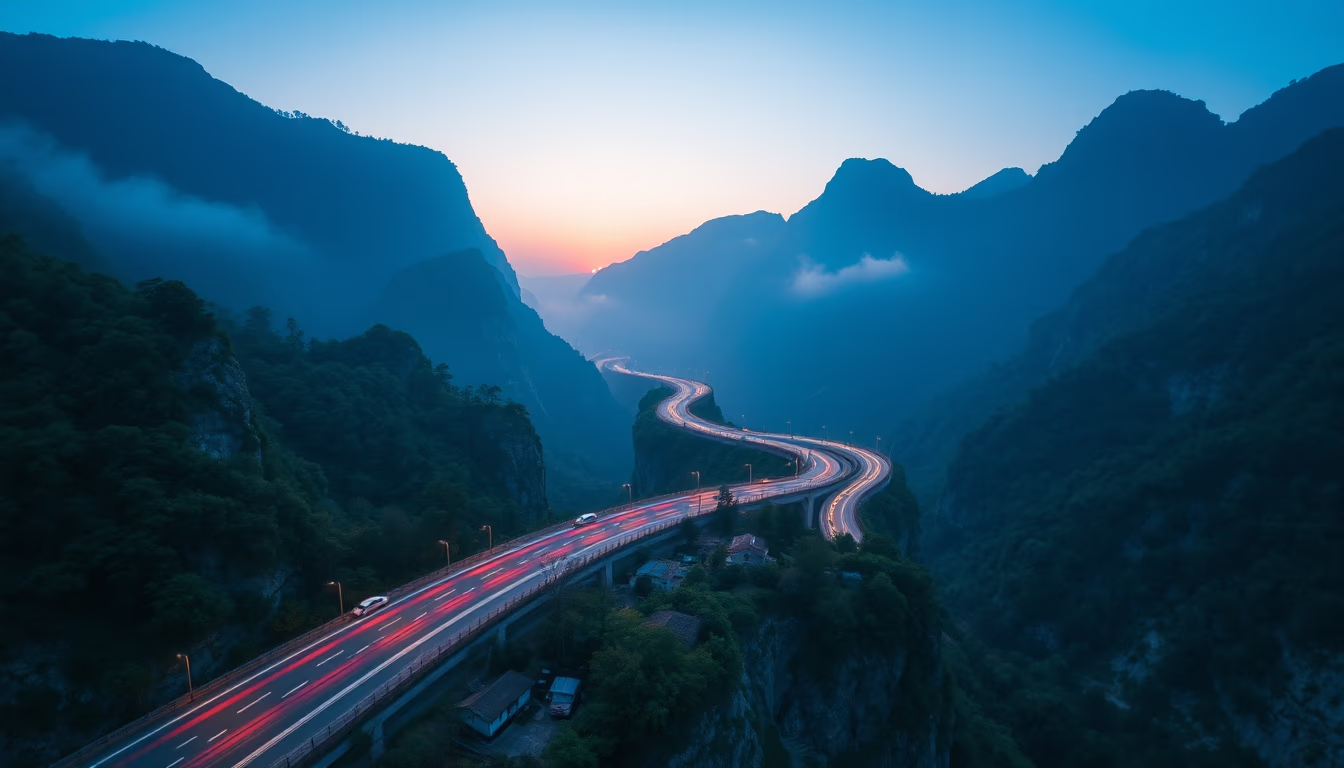
The Transfăgărășan in Romania is one of the world's most spectacular roads, winding through the Carpathians with impressive viaducts and tunnels.
About this subject
The Transfăgărășan, officially designated DN7C, is a mountain road that crosses the Southern Carpathians in Romania, connecting the historic regions of Transylvania and Wallachia. Built between 1970 and 1974 during Nicolae Ceaușescu's regime, the road was initially planned for military purposes, to ensure a rapid crossing of the mountains in case of a Soviet invasion. A colossal project, it consumed about 6,000 tons of dynamite and required the labor of thousands of soldiers and civilians, resulting in one of the most spectacular road segments on the planet.
The road stretches approximately 90 kilometers, reaching its highest point at Lake Bâlea at an altitude of 2,034 meters, where the Capra Tunnel is located, over 800 meters long. The route includes 5 tunnels, 27 viaducts, and countless tight zigzag curves, offering breathtaking panoramic views. The most famous viaduct is Piscul Negru, which stands out for its reinforced concrete architectural structure, designed by engineer Ioan Popescu. The road is open only from June to October due to severe weather conditions, with snow that can reach several meters in winter.
Beyond its original strategic value, the Transfăgărășan has become an icon of Romanian and global tourism, often listed among the best driving roads, such as on the British show Top Gear. The region hosts diverse wildlife, including bears, wolves, and lynxes, and is surrounded by glacial landscapes and high-altitude lakes. Lake Bâlea, formed by glaciers, is a popular destination for hiking and, in winter, for snow sports, with a cable car connecting the road to the valley. The architecture of the road, with its retaining walls and bridges, is a testament to 20th-century Romanian engineering and harmoniously integrates with the rugged relief of the Carpathians.
Frequently Asked Questions
What is the best time to drive the Transfăgărășan?
The road is open only from June to October, as winter conditions are extremely severe with snow and ice blocking the route. Summer is the ideal time, with long days and mild weather.
How many tunnels and viaducts are on the Transfăgărășan?
The Transfăgărășan has 5 tunnels and 27 viaducts along its approximately 90 kilometers, including the Capra Tunnel and the Piscul Negru Viaduct.
Why was the Transfăgărășan built during Ceaușescu's regime?
The road was built for strategic military purposes, to allow rapid troop movement across the Carpathians in case of an invasion by the Warsaw Pact.
Direct URL
https://pub-c7d6a6ea828543ac903a74a341ccb2e1.r2.dev/imagens/transfagarasan-romania-architectural-photography-fresh10.avifHow to credit
Include a visible link back to UtilizAí. Copy one of the snippets below:
<a href="https://xn--utiliza-eza.com/en/midia/imagens/transfagarasan-romania-architectural-photography-fresh10">Transfagarasan romania</a> by <a href="https://xn--utiliza-eza.com">UtilizAí</a>, licensed under <a href="https://creativecommons.org/licenses/by/4.0/">CC BY 4.0</a>.
[Transfagarasan romania](https://xn--utiliza-eza.com/en/midia/imagens/transfagarasan-romania-architectural-photography-fresh10) by [UtilizAí](https://xn--utiliza-eza.com), CC BY 4.0
License: CC-BY-4.0