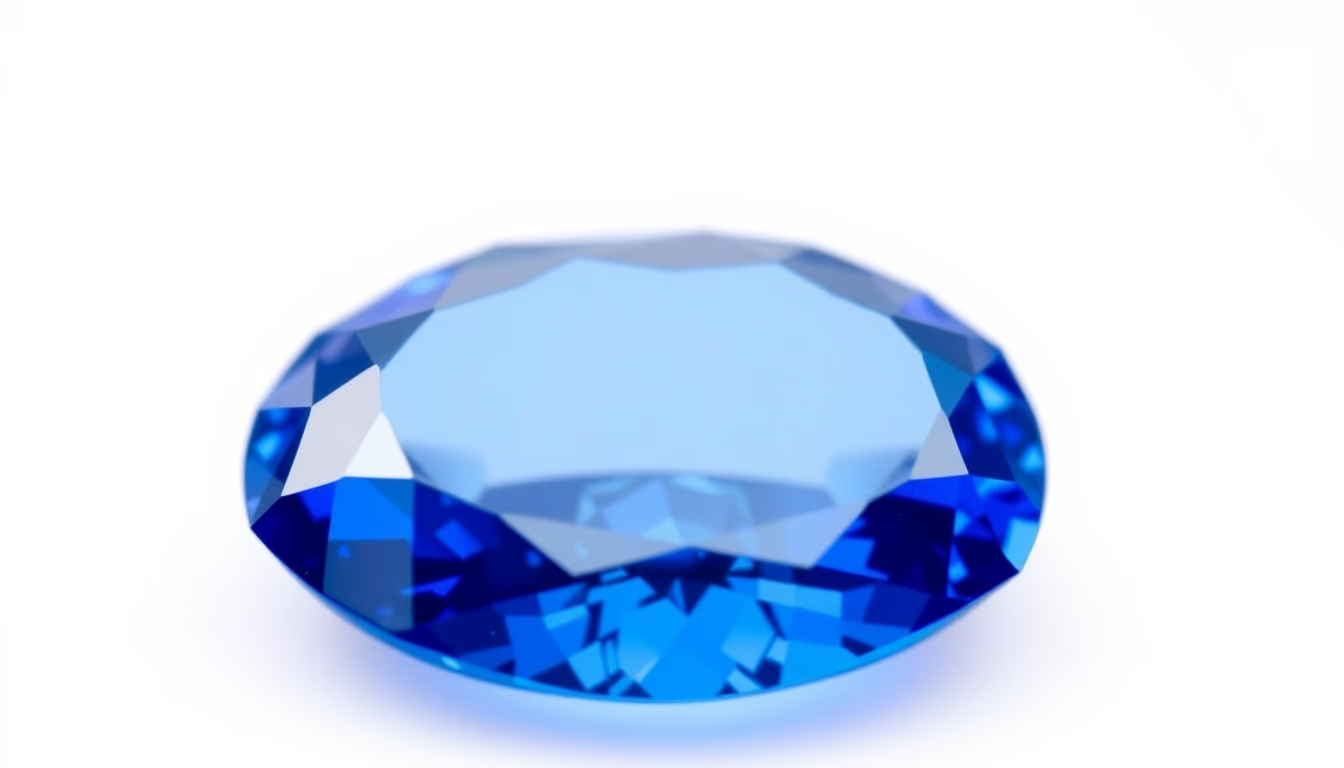
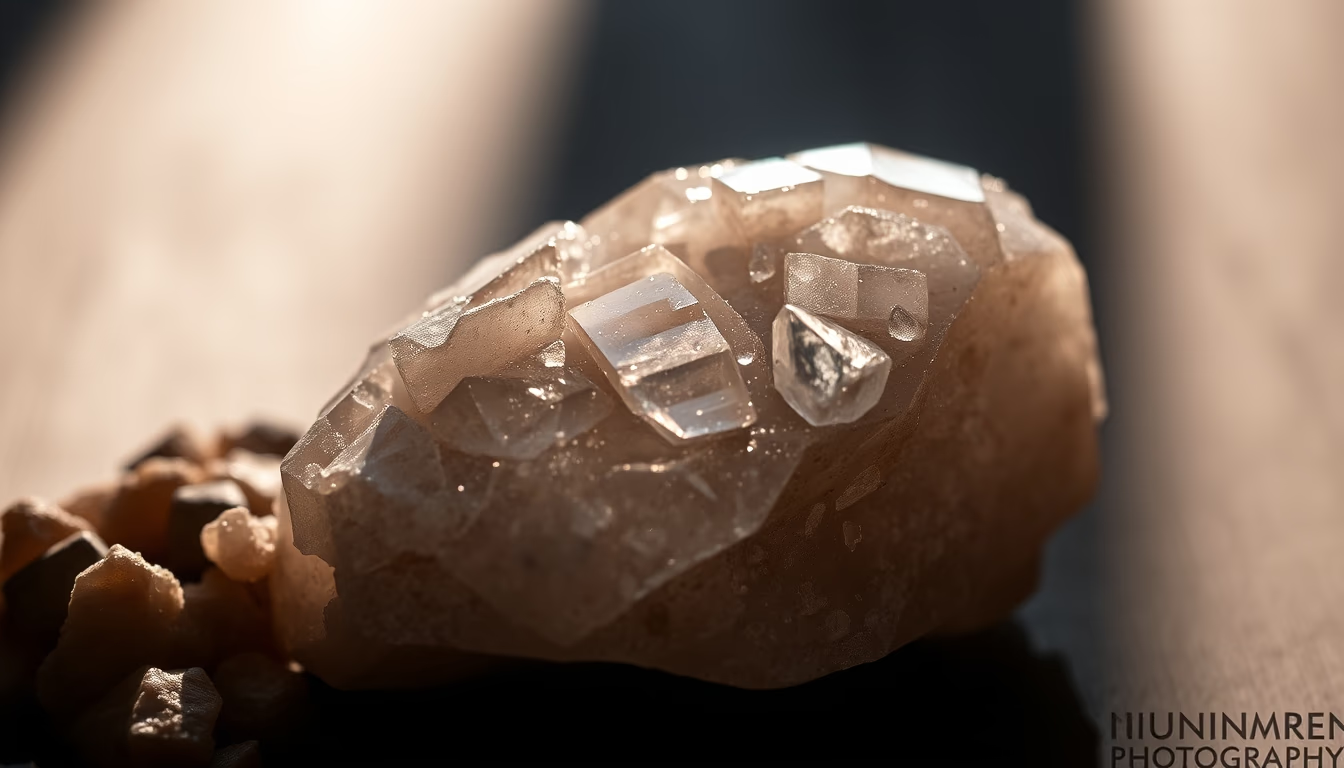
Topaz blue gemstone
1344×768 · AVIF · CC BY 4.0
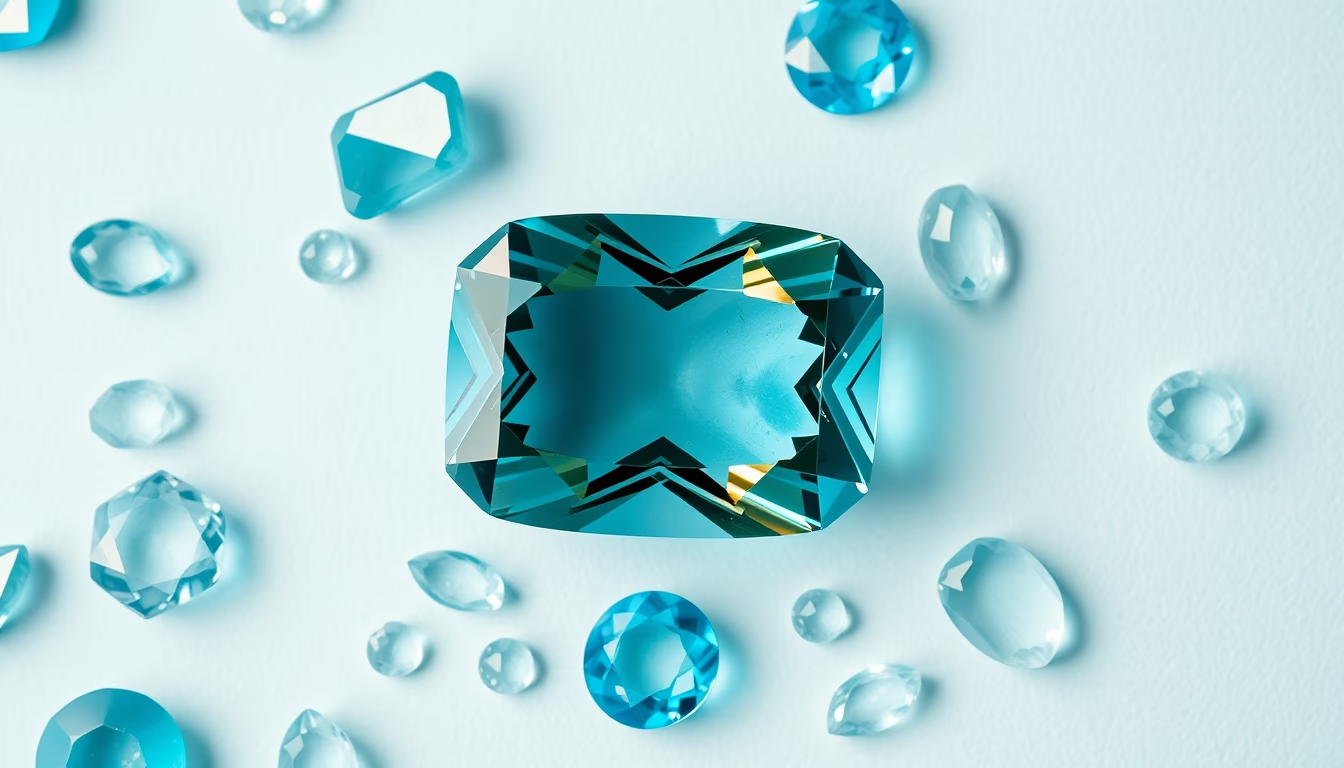
Blue topaz is one of the world's most popular gemstones, known for its vibrant color and affordability. Learn about its varieties, origins, and curiosities.
About this subject
Blue topaz is a variety of the mineral aluminum silicate fluoride, chemically Al2SiO4(F,OH)2. Its blue color rarely occurs naturally, mostly achieved through irradiation and heat treatment of colorless or pale yellowish crystals. Natural blue topaz deposits are rare and usually lighter in tone, such as those found in Ouro Preto, Minas Gerais, Brazil. Most blue topaz on the market is treated, a process discovered in the 1970s that revolutionized the gemstone industry.
There are three main varieties of blue topaz in the market: Sky Blue, Swiss Blue, and London Blue. Sky Blue is the lightest, with a soft and airy hue. Swiss Blue has a more intense and vibrant blue, often compared to the blue of topaz itself. London Blue is the darkest, with a deep tone that leans towards gray or green, and it is the most valued among the three. The color differences are achieved by varying the time and intensity of the treatment.
The main sources of colorless topaz used for treatment include Brazil, especially the states of Minas Gerais and Rio Grande do Sul, as well as Sri Lanka, Nigeria, and Pakistan. Brazil is the world's largest producer of topaz, both natural and treated. The gem has a hardness of 8 on the Mohs scale, making it durable enough for daily wear in rings, earrings, and necklaces, though it may chip under strong impacts. It is the birthstone for December and also associated with the zodiac sign Sagittarius.
Interestingly, blue topaz is often confused with other blue gems such as aquamarine, blue sapphire, and blue zircon. The differences can be noted by its vitreous luster, hardness, and refractive index. Additionally, blue topaz should not be exposed to sudden temperature changes or direct sunlight for long periods, as it may fade over time. Despite being an affordable gem, large well-cut specimens with London Blue color can fetch high prices.
Frequently Asked Questions
What is the difference between natural and treated blue topaz?
Natural blue topaz is extremely rare and has a soft blue color, while treated blue topaz is produced from colorless or slightly colored topaz through irradiation and heating to achieve more vivid hues. Treated topaz is common and affordable, but may fade with prolonged sun exposure.
What are the types of blue topaz?
The main types are Sky Blue (light blue), Swiss Blue (vibrant blue), and London Blue (dark blue). The color intensity depends on the treatment. London Blue is the darkest and most valued.
Is blue topaz an expensive gemstone?
No, treated blue topaz is one of the most affordable blue gems. However, natural stones or those with intense London Blue color, flawless cut, and large size can command high prices.
Direct URL
https://pub-c7d6a6ea828543ac903a74a341ccb2e1.r2.dev/imagens/topaz-blue-gemstone-isometric-flat-lay-p6.avifHow to credit
Include a visible link back to UtilizAí. Copy one of the snippets below:
<a href="https://xn--utiliza-eza.com/en/midia/imagens/topaz-blue-gemstone-isometric-flat-lay-p6">Topaz blue gemstone</a> by <a href="https://xn--utiliza-eza.com">UtilizAí</a>, licensed under <a href="https://creativecommons.org/licenses/by/4.0/">CC BY 4.0</a>.
[Topaz blue gemstone](https://xn--utiliza-eza.com/en/midia/imagens/topaz-blue-gemstone-isometric-flat-lay-p6) by [UtilizAí](https://xn--utiliza-eza.com), CC BY 4.0
License: CC-BY-4.0