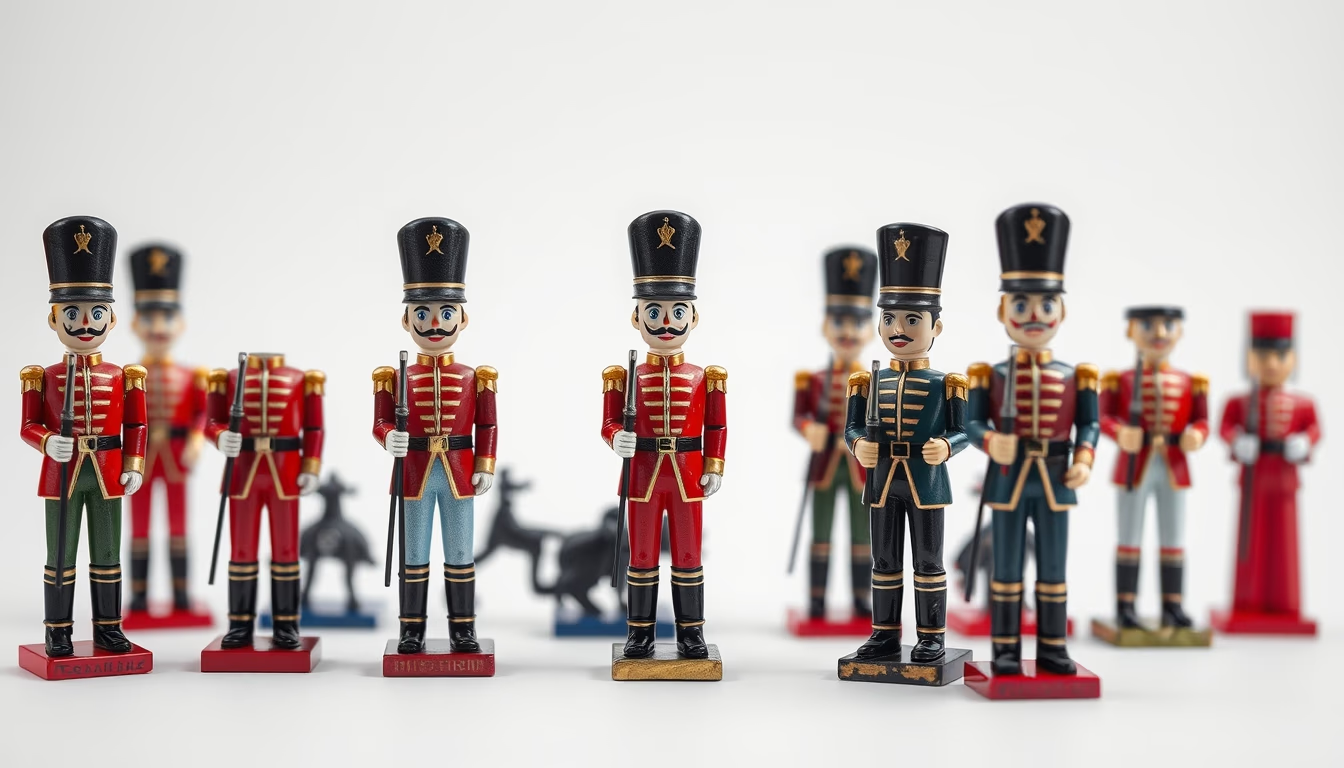
Tin soldier set
1344×768 · AVIF · CC BY 4.0

Tin soldiers are collectible miniatures that marked generations, handcrafted in Europe since the 18th century.
About this subject
Tin soldiers are miniature figures traditionally made from an alloy of tin and lead, representing soldiers from various eras and armies. Their origins date back to the late 18th century in Germany, where tin founders began producing military toys for the children of nobility. Over time, manufacturing spread across Europe, especially in France and England, where companies like Britains Ltd. popularized the use of cast metal molds.
Each soldier was hand-painted with vibrant colors, reproducing historical uniforms with remarkable detail. During the 19th and early 20th centuries, these toys served both as educational entertainment and as a teaching tool for military history. In Brazil, tin soldiers arrived with European immigrants and became rare collectibles, especially those made by the German company Heyde or the French firm Mignot.
With the decline of lead in toy manufacturing due to health concerns, industrial production of metal soldiers virtually ceased in the 1960s and 1970s. Today, antique specimens are highly valued by collectors, sometimes fetching hundreds of dollars at specialized auctions. The handcrafted technique is maintained by small workshops in Europe, producing limited runs for enthusiasts.
A curious fact: the term "tin soldier" was immortalized in Hans Christian Andersen's fairy tale "The Steadfast Tin Soldier", published in 1838. The story helped cement the romantic imagery of these miniatures, symbolizing bravery and nostalgia.
Frequently Asked Questions
What are tin soldiers made of?
Originally, they were made of a tin and lead alloy, giving them weight and durability. Modern models use lead-free alloys for safety.
When did mass production of tin soldiers begin?
Mass production started in the 19th century, with the British company Britains Ltd. leading the market from 1893, using cast metal molds.
What is the value of an antique tin soldier?
It depends on rarity and condition. Common pieces can be worth $10 to $50, while rare specimens, such as those from Heyde, can fetch thousands of dollars.
Direct URL
https://pub-c7d6a6ea828543ac903a74a341ccb2e1.r2.dev/imagens/tin-soldier-set-macro-closeup-fresh13.avifHow to credit
Include a visible link back to UtilizAí. Copy one of the snippets below:
<a href="https://xn--utiliza-eza.com/en/midia/imagens/tin-soldier-set-macro-closeup-fresh13">Tin soldier set</a> by <a href="https://xn--utiliza-eza.com">UtilizAí</a>, licensed under <a href="https://creativecommons.org/licenses/by/4.0/">CC BY 4.0</a>.
[Tin soldier set](https://xn--utiliza-eza.com/en/midia/imagens/tin-soldier-set-macro-closeup-fresh13) by [UtilizAí](https://xn--utiliza-eza.com), CC BY 4.0
License: CC-BY-4.0