Tin soldier set
1344×768 · AVIF · CC BY 4.0
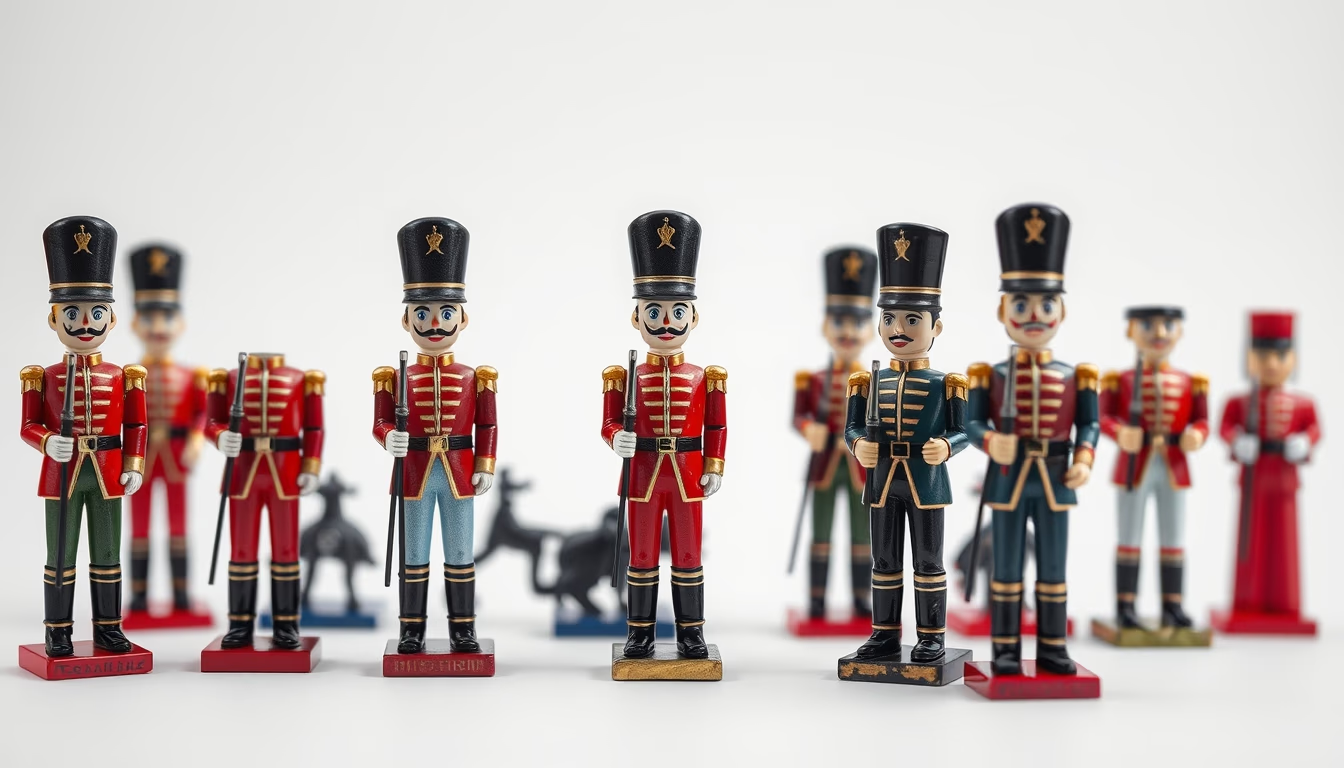
Tin soldier set: historical collectible miniatures that represent military culture and craftsmanship since the 18th century.
About this subject
Tin soldiers are metal miniatures depicting military figures, typically in combat or marching poses. Their origins date back to the 18th century in Germany, where artisans began casting tin into sand molds to create durable and detailed toys. Mass production expanded in the 19th century, especially in the Saxony region, with factories like Heyde & Company becoming benchmarks. Each piece underwent modeling, casting, deburring, and hand-painting, resulting in vibrant colors and historically accurate uniforms.
During the 20th century, tin soldiers gained popularity as educational toys and collector's items. They were used to teach military tactics, recreate famous battles, and stimulate children's imagination. However, the toxicity of lead led to replacement by materials such as plastic and zinc alloys, especially after World War II. Nevertheless, antique tin soldier sets are prized for their artistry and rarity, with 19th-century pieces fetching high prices at auctions.
Collecting tin soldiers involves criteria such as conservation state, paint originality, and model rarity. There are specialized associations and fairs, like the London Toy Soldier Show and the Spartan Toy Soldier Show. Handcrafted production continues in small European workshops, producing limited editions for enthusiasts. Historical accuracy of uniforms and armaments is a differentiator, with collectors often cross-referencing period sources to validate the miniatures.
Frequently Asked Questions
What is the difference between tin soldiers and plastic ones?
Tin soldiers are heavier, more detailed and durable, but toxic. Plastic ones are lightweight, cheap, and safe for children, though less realistic.
How to identify an original tin soldier?
Check for manufacturer marks on the base (e.g., Heyde, Mignot), heavy weight, and hand-painting with brush strokes. Magnets do not attract tin, and the metal has a matte finish.
Are tin soldiers still produced today?
Yes, but on a small scale using alternative alloys (tin and antimony). Brands like Britains and King & Country manufacture limited editions for adult collectors.
Direct URL
https://pub-c7d6a6ea828543ac903a74a341ccb2e1.r2.dev/imagens/tin-soldier-set-commercial-product-photography-fresh17.avifHow to credit
Include a visible link back to UtilizAí. Copy one of the snippets below:
<a href="https://xn--utiliza-eza.com/en/midia/imagens/tin-soldier-set-commercial-product-photography-fresh17">Tin soldier set</a> by <a href="https://xn--utiliza-eza.com">UtilizAí</a>, licensed under <a href="https://creativecommons.org/licenses/by/4.0/">CC BY 4.0</a>.
[Tin soldier set](https://xn--utiliza-eza.com/en/midia/imagens/tin-soldier-set-commercial-product-photography-fresh17) by [UtilizAí](https://xn--utiliza-eza.com), CC BY 4.0
License: CC-BY-4.0