Thai script ornate
1344×768 · AVIF · CC BY 4.0
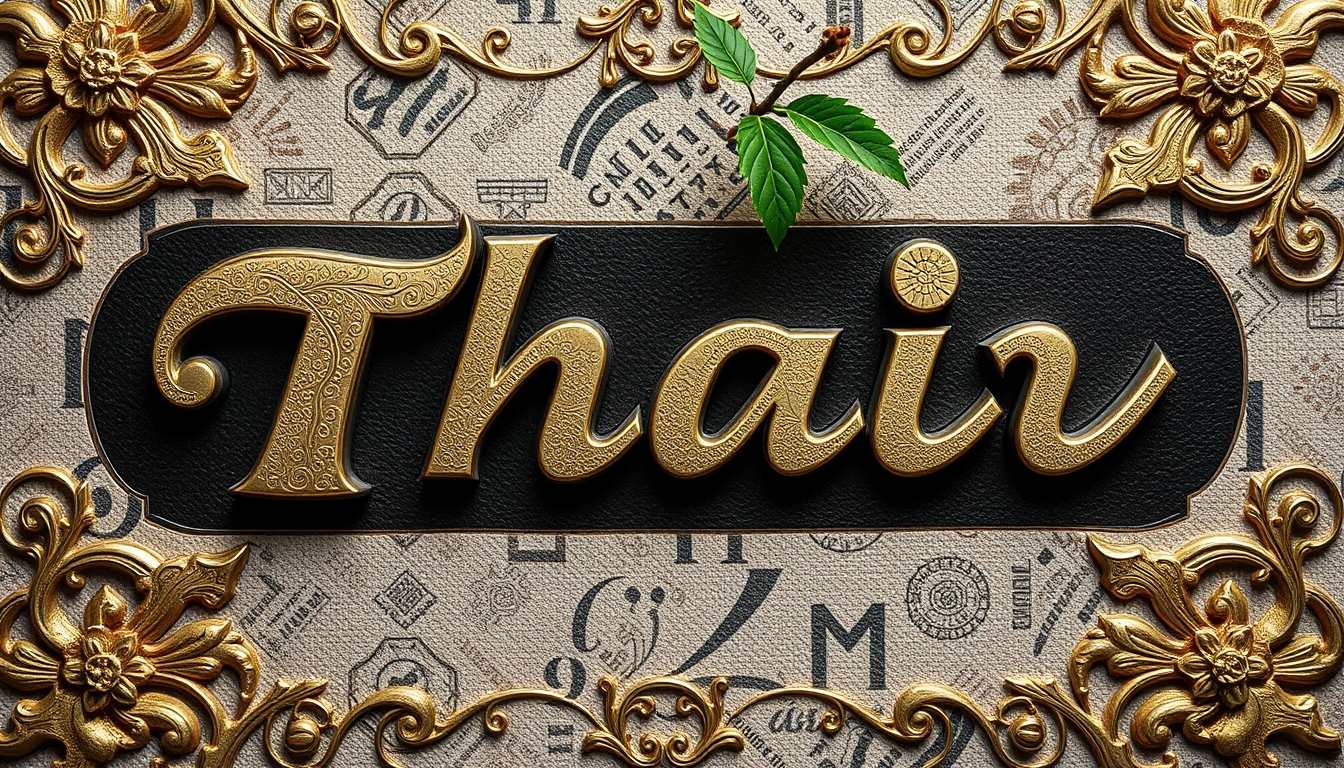
The Thai script is an abugida derived from the ancient Khmer alphabet, known for its curved and ornamental forms that reflect centuries of cultural evolution.
About this subject
The Thai alphabet, used to write the Thai language, originated in the 13th century, evolving from the Khmer script, which itself derived from Indian Brahmi. Tradition attributes its creation to King Ramkhamhaeng of the Sukhothai Kingdom, who adapted characters to represent Thai tones and sounds. The system is an abugida, where each consonant carries an inherent vowel (usually 'a' or 'o'), modified by diacritics for other vowels and tones.
With 44 consonants and 32 vowels (though represented by 16 symbols), the script is notoriously complex for learners. The rounded, flowing shapes were influenced by the use of palm leaves as a writing medium, which required curved lines to avoid tearing. This ornamental aesthetic elevated Thai calligraphy into a revered art form, found in temples, manuscripts, and sacred tattoos (sak yant), which combine text with geometric symbols.
Culturally, the script is a symbol of national identity and religiosity, used in Buddhist texts, royal decrees, and contemporary art. Stylistic variations include more angular forms for print and cursive versions for handwriting. Today, Thai is the official language of Thailand, with about 60 million speakers, and the script continues to evolve in digital use while preserving its ornamental essence.
Frequently Asked Questions
How many letters are there in the Thai alphabet?
The Thai alphabet has 44 consonants and 32 vowels (represented by 16 symbols), plus 4 tone markers.
What is the origin of the Thai script?
The Thai script derives from the Khmer alphabet, which came from Indian Brahmi. It was adapted in the 13th century by King Ramkhamhaeng to represent the Thai language.
Why does the Thai script have such ornate forms?
The curved and ornate forms were influenced by the use of palm leaves as a writing medium, which required rounded strokes to avoid tearing. This aesthetic became a hallmark of Thai calligraphy.
Direct URL
https://pub-c7d6a6ea828543ac903a74a341ccb2e1.r2.dev/imagens/thai-script-ornate-isometric-flat-lay-fresh15.avifHow to credit
Include a visible link back to UtilizAí. Copy one of the snippets below:
<a href="https://xn--utiliza-eza.com/en/midia/imagens/thai-script-ornate-isometric-flat-lay-fresh15">Thai script ornate</a> by <a href="https://xn--utiliza-eza.com">UtilizAí</a>, licensed under <a href="https://creativecommons.org/licenses/by/4.0/">CC BY 4.0</a>.
[Thai script ornate](https://xn--utiliza-eza.com/en/midia/imagens/thai-script-ornate-isometric-flat-lay-fresh15) by [UtilizAí](https://xn--utiliza-eza.com), CC BY 4.0
License: CC-BY-4.0