Thai script ornate
1344×768 · AVIF · CC BY 4.0
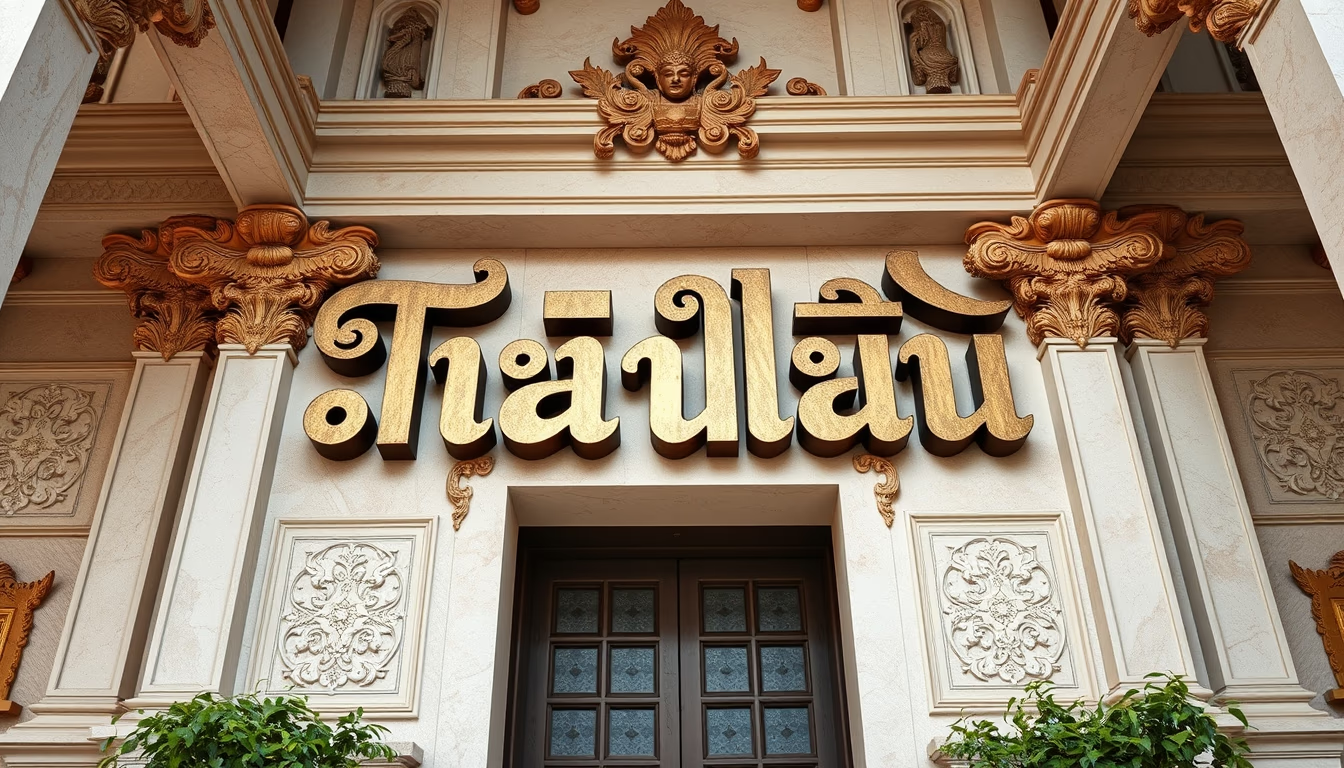
Ornate Thai script is a central element of sacred and royal architecture in Thailand, combining calligraphy and religious symbolism on temple facades and monuments.
About this subject
The Thai script (อักษรไทย, akson thai) was developed in the 13th century by King Ramkhamhaeng, based on Khmer and Mon scripts. Its ornate forms, known as "อักษรหัวกลม" (akson hua klom, round-headed letters) or "อักษรวิจิตร" (akson wichit, decorative letters), are especially used in architectural contexts. Buddhist temples like Wat Phra Kaew in Bangkok and Wat Phra Singh in Chiang Mai display carved panels with excerpts from the Tripitaka in gilded, detailed characters, often on black or red lacquer backgrounds.
Ornamentation of Thai script follows precise rules of proportion and curvature, inherited from the art of calligraphy using rice straw and soot ink. Each consonant has a rounded head (hua) and ascending/descending strokes that can be stylized with arabesques and leaves. In architecture, these inscriptions are not merely decorative: the presence of sacred text is believed to protect the space and radiate merit (bun) to the faithful.
Historically, ornate script were also used in royal documents and official seals during the Ayutthaya Kingdom (14th-18th centuries). In the Rattanakosin period, European influence introduced baroque frames and scrolls that merged with Thai calligraphy, creating hybrid styles seen in palaces like the Grand Palace of Bangkok. Today, artisans preserve this technique in restorations and in contemporary graphic design works and signage of luxury hotels.
A curious fact: in Thai tradition, the beauty of calligraphy is linked to the scribe's mental clarity. Therefore, learned monks are often responsible for ornate inscriptions in temples, as their concentration is believed to transmit positive energy to the environment. Ornate Thai script thus transcends its communicative function and becomes a vehicle of spiritual expression and national identity.
Frequently Asked Questions
What is the origin of ornate Thai script?
Thai script was created in the 13th century by King Ramkhamhaeng. Its ornate form emerged from traditional calligraphy styles and influences from Khmer art and European Baroque, mainly used in temples and palaces.
Where can I see examples of ornate Thai script in architecture?
The best examples are in historic Buddhist temples like Wat Phra Kaew and Wat Pho in Bangkok, as well as Wat Phra Singh in Chiang Mai and the Grand Palace of Bangkok. Many of these inscriptions are gilded on lacquer backgrounds.
What is the spiritual meaning of ornate inscriptions in Thai temples?
Inscriptions are considered protective and merit-generating (bun). It is believed that well-executed calligraphy, especially by monks, attracts positive energy and blesses the sacred space.
Direct URL
https://pub-c7d6a6ea828543ac903a74a341ccb2e1.r2.dev/imagens/thai-script-ornate-architectural-photography-fresh10.avifHow to credit
Include a visible link back to UtilizAí. Copy one of the snippets below:
<a href="https://xn--utiliza-eza.com/en/midia/imagens/thai-script-ornate-architectural-photography-fresh10">Thai script ornate</a> by <a href="https://xn--utiliza-eza.com">UtilizAí</a>, licensed under <a href="https://creativecommons.org/licenses/by/4.0/">CC BY 4.0</a>.
[Thai script ornate](https://xn--utiliza-eza.com/en/midia/imagens/thai-script-ornate-architectural-photography-fresh10) by [UtilizAí](https://xn--utiliza-eza.com), CC BY 4.0
License: CC-BY-4.0