Telescope observatory dome
1344×768 · AVIF · CC BY 4.0
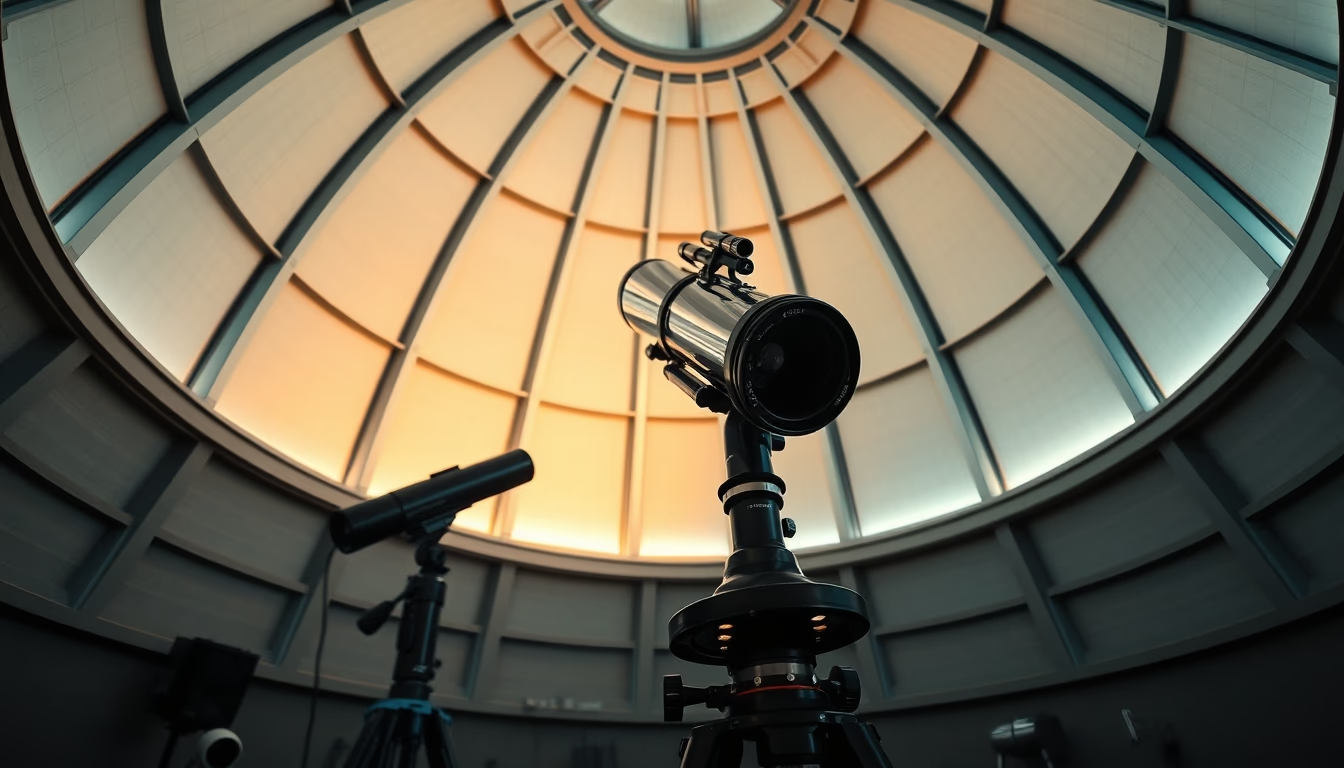
Observatórios astronômicos utilizam cúpulas giratórias para proteger telescópios e permitir observação precisa do céu noturno.
Sobre o tema
Cúpulas de observatórios astronômicos são estruturas projetadas para abrigar telescópios, protegendo os instrumentos de intempéries e variações térmicas enquanto permitem acesso ao céu. A maioria das cúpulas é hemisférica, construída em alumínio, fibra de vidro ou aço, e possui uma abertura longitudinal (fenda) que se abre para expor o telescópio. Essa fenda é coberta por abas ou painéis que se deslocam lateralmente ou para cima. A rotação da cúpula é feita sobre trilhos ou roldanas, geralmente com motores elétricos de precisão, para acompanhar o movimento do telescópio. Grandes observatórios como o do Mauna Kea (Havaí) e o do Cerro Paranal (Chile) possuem cúpulas que chegam a 30 metros de diâmetro.
Historicamente, as primeiras cúpulas foram desenvolvidas no século XIX, quando telescópios fixos deram lugar a montagens equatoriais. A cúpula do Observatório de Pulkovo (1839) é um marco inicial. A cor branca das cúpulas não é apenas estética; serve para refletir a radiação solar e evitar aquecimento interno, o que causaria distorções nas observações. Muitas cúpulas modernas são equipadas com sistemas de ventilação ativos para equalizar a temperatura interna com o ar externo, minimizando a turbulência atmosférica local.
Curiosamente, o maior observatório em funcionamento com cúpula única é o Gran Telescopio Canarias (Espanha), com 10,4 metros de diâmetro. Já o Observatório de Arecibo, que possuía uma cúpula fixa sobre um radiotelescópio de 305 metros, foi desativado em 2020. No Brasil, o Observatório do Pico dos Dias (LNA) em Minas Gerais utiliza cúpulas de concreto e aço. A manutenção das cúpulas é crucial para o funcionamento contínuo dos telescópios, incluindo a lubrificação dos mecanismos de rotação e a substituição de painéis danificados.
Perguntas frequentes
Por que as cúpulas dos observatórios são brancas?
A cor branca reflete a luz solar, reduzindo o aquecimento interno da cúpula. Isso evita que o ar quente próximo ao telescópio cause distorções nas imagens observadas, um fenômeno conhecido como "seeing" térmico.
Como as cúpulas de observatórios giram?
Elas giram sobre trilhos ou roldanas, acionadas por motores elétricos de passo ou servomotores. O movimento é sincronizado com a rotação do telescópio para manter a fenda sempre alinhada com o objeto observado.
Qual é a maior cúpula de observatório do mundo?
A maior cúpula abriga o Gran Telescopio Canárias, com 10,4 metros de espelho primário. A estrutura externa tem cerca de 30 metros de diâmetro. Outras gigantes incluem o Observatório Keck e o Very Large Telescope (VLT).
URL direta
https://pub-c7d6a6ea828543ac903a74a341ccb2e1.r2.dev/imagens/telescope-observatory-dome-studio-editorial-portrait-p1.avifComo creditar
Inclua um link visível de volta pro UtilizAí. Copie um dos snippets abaixo:
<a href="https://xn--utiliza-eza.com/midia/imagens/telescope-observatory-dome-studio-editorial-portrait-p1">Telescope observatory dome</a> by <a href="https://xn--utiliza-eza.com">UtilizAí</a>, licensed under <a href="https://creativecommons.org/licenses/by/4.0/">CC BY 4.0</a>.
[Telescope observatory dome](https://xn--utiliza-eza.com/midia/imagens/telescope-observatory-dome-studio-editorial-portrait-p1) by [UtilizAí](https://xn--utiliza-eza.com), CC BY 4.0
Licença: CC-BY-4.0