Telescope observatory dome
1344×768 · AVIF · CC BY 4.0
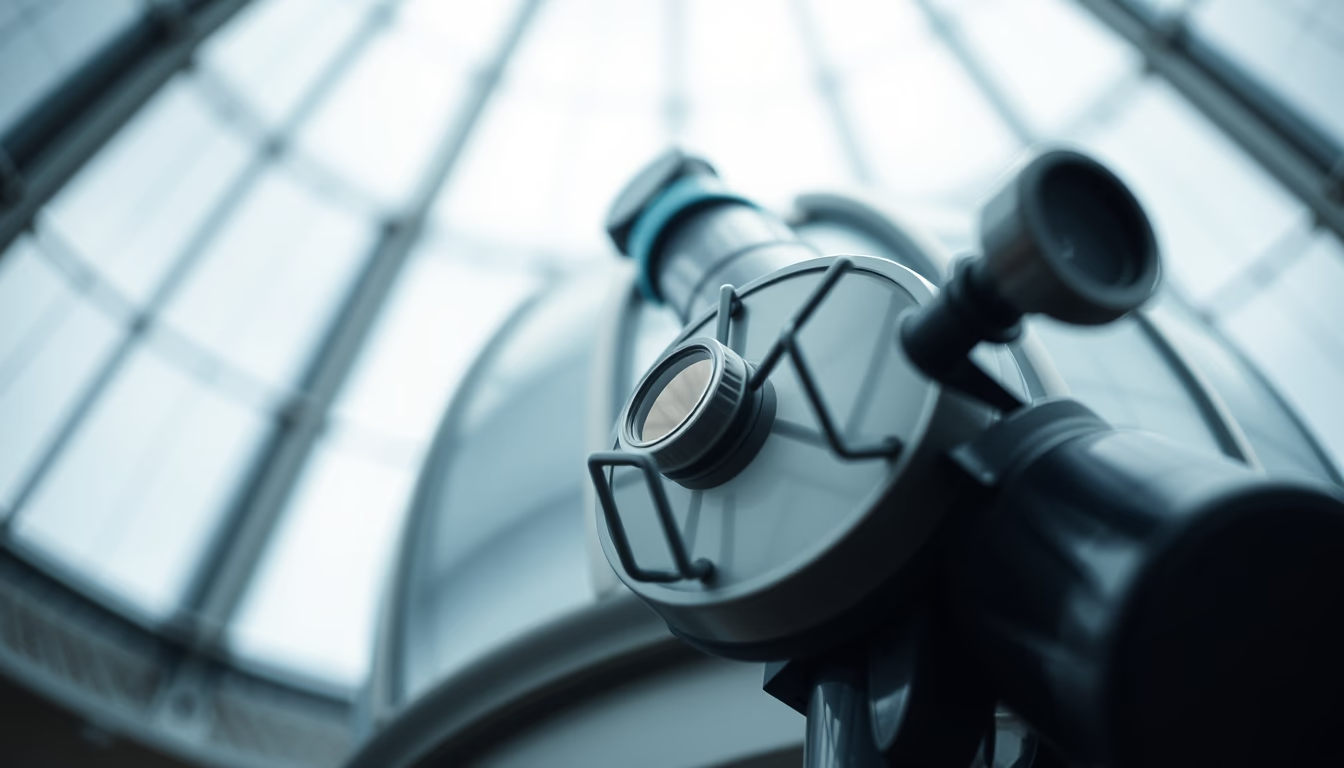
The dome of an astronomical observatory is a rotating structure that protects the telescope and opens to allow observation of the night sky.
About this subject
Observatory domes are designed to protect telescopes from weather and light pollution while allowing precise movement. Typically made of steel or aluminum, they have hemispherical or cylindrical shapes and rotate on rails to align the slit with the celestial target. The first rotating dome was built at the Berlin Observatory in 1835, and since then designs evolved to minimize thermal turbulence that can distort images.
These structures are iconic in scientific architecture. Notable examples include the Hale Telescope dome at Palomar Observatory, 41 meters in diameter, and the domes of the Very Large Telescope in Chile, which operate at high altitude. The largest dome ever built was the Arecibo radio telescope in Puerto Rico, 305 meters across, which collapsed in 2020. The under-construction Giant Magellan Telescope will have a 56-meter dome.
Interestingly, not all modern telescopes use domes: some, like the Extremely Large Telescope, employ more open structures to reduce local heating. However, most still rely on domes to block stray light and wind. The slit slides open or opens like petals, and the white color reflects sunlight to prevent overheating. At sites like Mauna Kea in Hawaii, white domes contrast with the volcanic horizon, creating an iconic astronomical landscape.
Frequently Asked Questions
Why do observatories use domes instead of open structures?
Domes protect telescopes from weather, wind, and light pollution, and minimize thermal turbulence that could degrade image quality. The rotating structure allows precise pointing.
What is the largest telescope dome in the world currently?
The largest dome ever built was the Arecibo radio telescope at 305 meters in diameter, but it collapsed in 2020. Currently, the largest operational dome is the Green Bank Telescope at 100 meters, and the future Giant Magellan Telescope will have a 56-meter dome.
How do domes protect telescopes from light and weather?
The opaque structure blocks unwanted external light, while the white coating reflects solar radiation to prevent overheating. The slit closes tightly during daytime or bad weather, and a ventilation system regulates internal temperature.
Direct URL
https://pub-c7d6a6ea828543ac903a74a341ccb2e1.r2.dev/imagens/telescope-observatory-dome-macro-closeup-p3.avifHow to credit
Include a visible link back to UtilizAí. Copy one of the snippets below:
<a href="https://xn--utiliza-eza.com/en/midia/imagens/telescope-observatory-dome-macro-closeup-p3">Telescope observatory dome</a> by <a href="https://xn--utiliza-eza.com">UtilizAí</a>, licensed under <a href="https://creativecommons.org/licenses/by/4.0/">CC BY 4.0</a>.
[Telescope observatory dome](https://xn--utiliza-eza.com/en/midia/imagens/telescope-observatory-dome-macro-closeup-p3) by [UtilizAí](https://xn--utiliza-eza.com), CC BY 4.0
License: CC-BY-4.0