Tanzanite blue purple
1344×768 · AVIF · CC BY 4.0

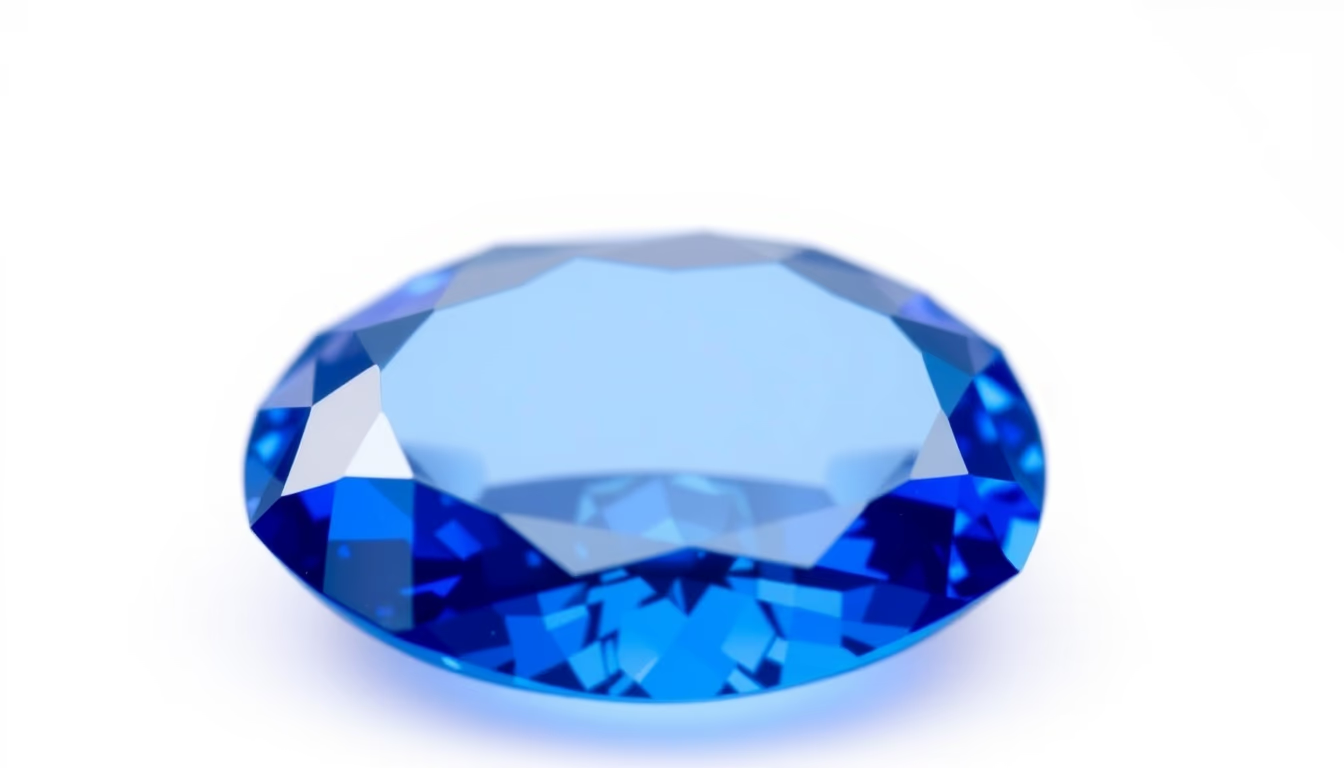
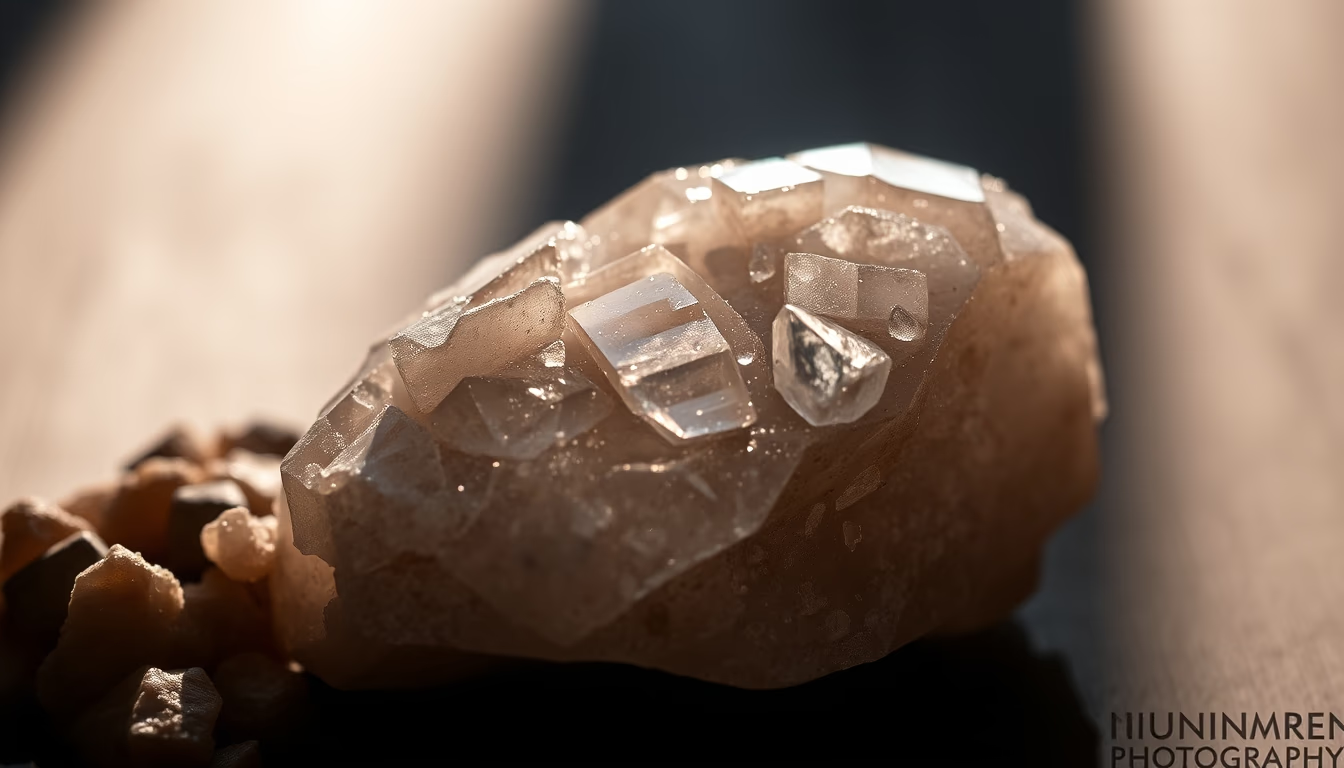
Tanzanite is a blue-purple variety of the mineral zoisite, discovered in Tanzania in 1967 and known for its rare trichroic coloration.
About this subject
Tanzanite is a precious gemstone belonging to the silicate group, specifically the zoisite family. Its intense blue-purple coloration results from the presence of vanadium in its crystal structure, combined with specific geological processes. Discovered in 1967 in the Merelani Hills of northern Tanzania, tanzanite quickly became one of the world's most valued gemstones, considered 1,000 times rarer than diamond.
The main feature of tanzanite is trichroism, an optical phenomenon that displays different colors (blue, violet, and red) when viewed from different angles. After low-temperature heat treatment, the blue-purple color intensifies and the trichroism reduces, making it even more desirable. The gem is exclusively mined in an area of about 20 km² in Tanzania, limiting supply and contributing to its rarity.
With a hardness of 6.5 to 7 on the Mohs scale, tanzanite is relatively durable but requires care to avoid scratches. It is often cut into faceted shapes to enhance its brilliance and color play. The gem is the national stone of Tanzania and is used in fine jewelry, especially rings and pendants. In 1969, Tiffany & Co. internationally promoted tanzanite, coining the trade name from the country of origin.
A curiosity: tanzanite is considered a December birthstone for some modern zodiac systems, and is believed to promote calm and mental clarity. Its blue-purple color is often compared to the twilight sky over the African savanna. Due to geographic exclusivity, known reserves may be depleted within decades, further increasing its value in the gem market.
Frequently Asked Questions
Where is tanzanite found?
Tanzanite is exclusively found in the Merelani Hills of the Manyara region in northern Tanzania. This area of about 20 km² is the only known source of the gem in the world.
What is the natural color of tanzanite?
Natural tanzanite exhibits trichroism, displaying blue, violet, and red colors depending on the angle. After heat treatment, the color stabilizes into an intense blue-purple, which is the most valued.
Is tanzanite a rare gemstone?
Yes, tanzanite is considered 1,000 times rarer than diamond due to its unique geographic source and limited known deposits.
Direct URL
https://pub-c7d6a6ea828543ac903a74a341ccb2e1.r2.dev/imagens/tanzanite-blue-purple-film-grain-authentic-p1.avifHow to credit
Include a visible link back to UtilizAí. Copy one of the snippets below:
<a href="https://xn--utiliza-eza.com/en/midia/imagens/tanzanite-blue-purple-film-grain-authentic-p1">Tanzanite blue purple</a> by <a href="https://xn--utiliza-eza.com">UtilizAí</a>, licensed under <a href="https://creativecommons.org/licenses/by/4.0/">CC BY 4.0</a>.
[Tanzanite blue purple](https://xn--utiliza-eza.com/en/midia/imagens/tanzanite-blue-purple-film-grain-authentic-p1) by [UtilizAí](https://xn--utiliza-eza.com), CC BY 4.0
License: CC-BY-4.0