Tagine moroccan clay
1344×768 · AVIF · CC BY 4.0
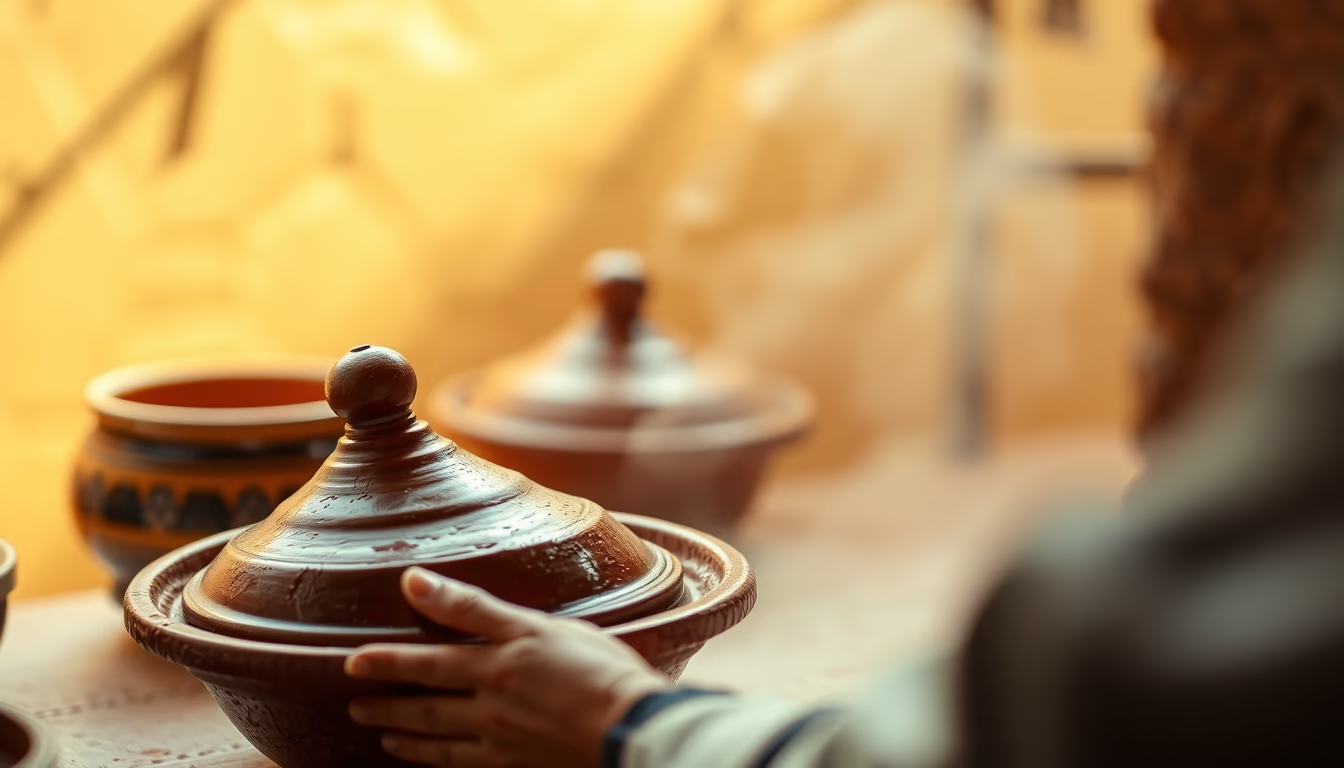
The Moroccan clay tagine is a traditional cooking vessel, essential for slow, aromatic stews, with centuries of history in North Africa.
About this subject
The tagine is a conical earthenware cooking vessel widely used in Moroccan, Algerian, and Tunisian cuisine. Its distinctive shape, with a wide base and a cone-shaped lid, allows steam to circulate and condense, returning to the dish and keeping food moist and flavorful. This slow-cooking method is ideal for meats, poultry, vegetables, and dried fruits, resulting in iconic dishes like chicken tagine with preserved lemon and olives or lamb with prunes.
Handcrafting clay tagines is an ancient art. Clay is sourced from specific Moroccan regions, such as Fez and Meknès, and shaped by hand or wheel. After drying, pieces are fired in wood kilns and often decorated with colorful glazes. Unglazed clay is the most traditional, as it absorbs flavors and gives a earthy texture to the food. However, glazed tagines are more common for modern use, being easier to clean.
Culturally, the tagine transcends cooking. In Moroccan society, sharing a tagine is an act of hospitality and community. Dishes are served directly in the tagine base, with bread for dipping. The tagine is also a symbol of Berber and Arab identity, present in festivities, celebrations, and daily life. UNESCO has recognized the art of making clay tagines as intangible cultural heritage in some regions.
Regional variations exist: coastal areas use seafood; mountain regions use game. The tagine has also adapted to global cuisines, used for slow-cooked recipes worldwide. To prepare a tagine, it is important to season it before first use and avoid thermal shocks, which can crack the clay.
Frequently Asked Questions
What is the difference between a glazed and unglazed clay tagine?
Unglazed tagines absorb flavors and impart an earthy taste, ideal for traditional recipes. Glazed ones are easier to clean and do not retain odors, making them more practical for daily use.
Do I need to season a new tagine before using it?
Yes, especially if it is unglazed. Wash it, dry it, and rub the inside with olive oil. Then heat it in a low oven for a few hours or cook a mixture of water and flour to seal the pores.
Can a tagine be used on any stove?
Traditionally used on embers or gas stoves with a heat diffuser to prevent cracking. Modern glazed models can go in an electric oven, but never in a microwave or induction cooktop without a metal base.
Direct URL
https://pub-c7d6a6ea828543ac903a74a341ccb2e1.r2.dev/imagens/tagine-moroccan-clay-documentary-photography-fresh17.avifHow to credit
Include a visible link back to UtilizAí. Copy one of the snippets below:
<a href="https://xn--utiliza-eza.com/en/midia/imagens/tagine-moroccan-clay-documentary-photography-fresh17">Tagine moroccan clay</a> by <a href="https://xn--utiliza-eza.com">UtilizAí</a>, licensed under <a href="https://creativecommons.org/licenses/by/4.0/">CC BY 4.0</a>.
[Tagine moroccan clay](https://xn--utiliza-eza.com/en/midia/imagens/tagine-moroccan-clay-documentary-photography-fresh17) by [UtilizAí](https://xn--utiliza-eza.com), CC BY 4.0
License: CC-BY-4.0