Swimming pool olympic empty
1344×768 · AVIF · CC BY 4.0
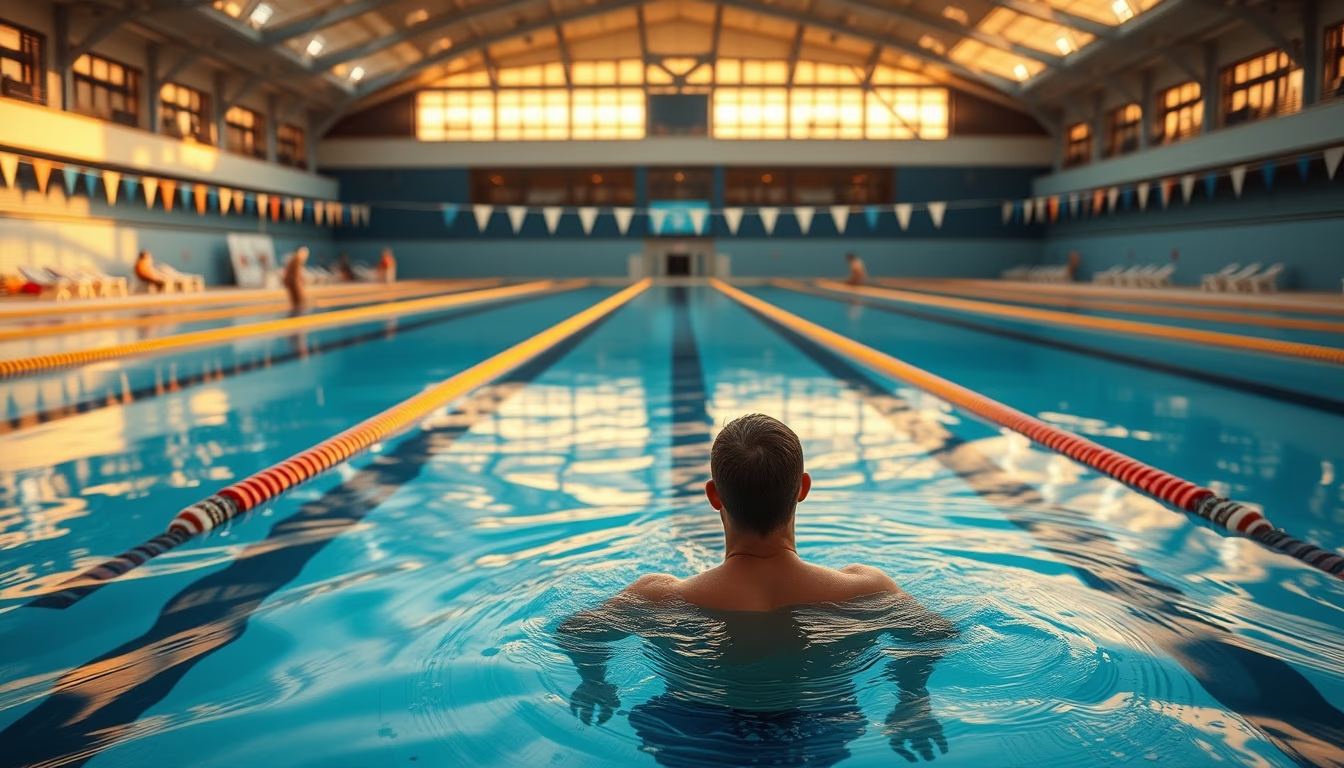
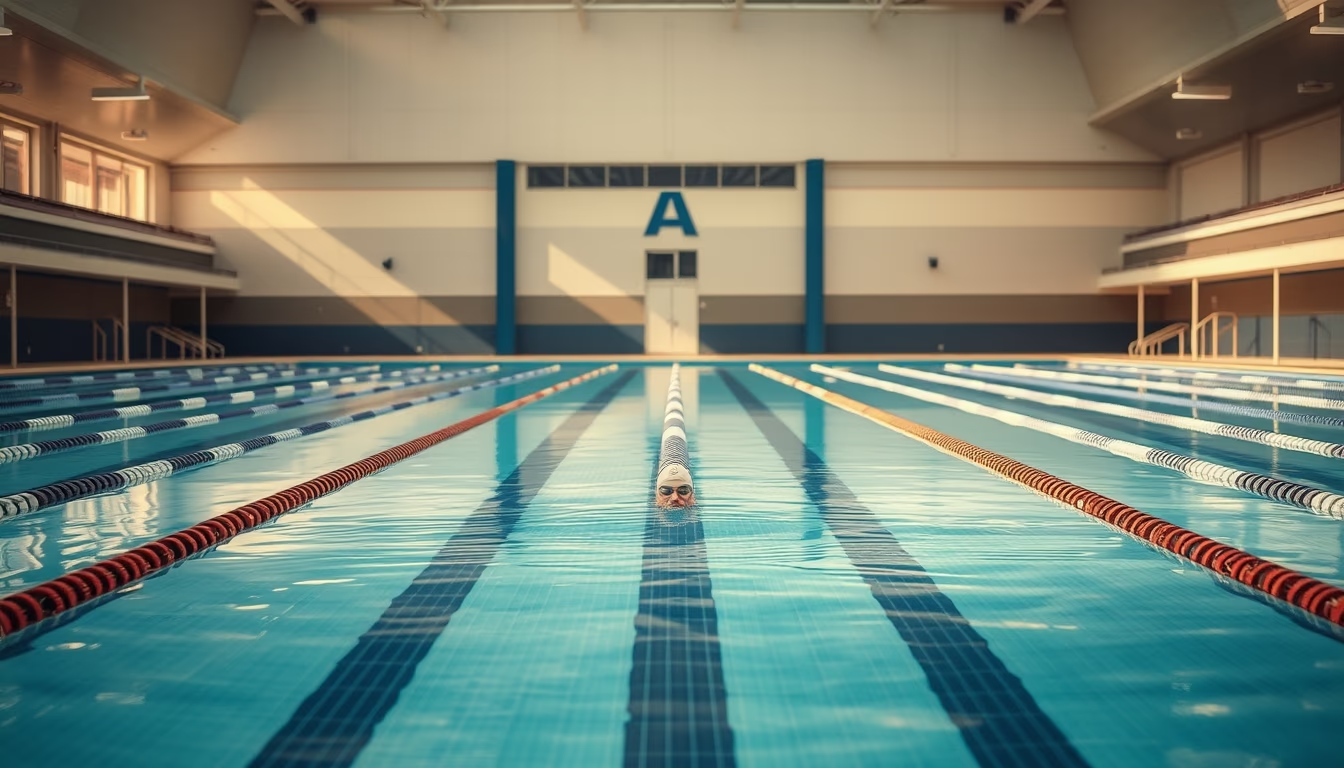
Empty Olympic swimming pools reveal the precise engineering of 50 meters length, 25 meters width, and minimum 2 meters depth, with 10 lanes.
About this subject
Olympic swimming pools follow strict standards set by FINA, the International Swimming Federation. They must be 50 meters long, 25 meters wide, and at least 2 meters deep, with a tolerance of only 0.01 meter. They have 10 lanes, each 2.5 meters wide, and water temperature is maintained between 25°C and 28°C. The total volume of an Olympic pool is approximately 2,500 cubic meters, equivalent to 2.5 million liters of water.
Historically, the 50-meter length was adopted at the 1908 London Olympics, replacing variable distances. Since then, pools like the National Aquatics Center in Beijing, known as the Water Cube, and the London Aquatics Centre, designed by Zaha Hadid, have become architectural icons. These facilities host competitions, serve elite athletes for training, and after the Games, are opened to the public for recreational swimming.
An empty Olympic pool reveals details such as lane markings on the floor, starting blocks, and drainage systems. Maintenance involves continuous filtration, pH and chlorine control, and regular inspections to ensure dimensions meet standards. The minimum depth of 2 meters is crucial to prevent return waves that could slow swimmers, ensuring accurate times in competitions.
Swimming has been an Olympic sport since 1896. Empty Olympic pools symbolize potential competition and the technical rigor required for world records. Every detail, from edges to starting platforms, is designed to minimize resistance and maximize performance.
Frequently Asked Questions
Why are Olympic swimming pools 50 meters long?
The 50-meter length was standardized at the 1908 London Olympics to unify competitions. Before that, distances varied from 25 to 100 meters depending on the venue.
How deep is an Olympic swimming pool?
The minimum depth is 2 meters, but many pools are 3 meters deep to reduce waves. This depth prevents reflected waves from the bottom from interfering with swimmers.
How many liters of water does an Olympic pool hold?
Approximately 2.5 million liters, based on official dimensions of 50m x 25m x 2m. This is equivalent to the daily water consumption of about 50,000 people.
Direct URL
https://pub-c7d6a6ea828543ac903a74a341ccb2e1.r2.dev/imagens/swimming-pool-olympic-empty-cinematic-wide-shot-p0.avifHow to credit
Include a visible link back to UtilizAí. Copy one of the snippets below:
<a href="https://xn--utiliza-eza.com/en/midia/imagens/swimming-pool-olympic-empty-cinematic-wide-shot-p0">Swimming pool olympic empty</a> by <a href="https://xn--utiliza-eza.com">UtilizAí</a>, licensed under <a href="https://creativecommons.org/licenses/by/4.0/">CC BY 4.0</a>.
[Swimming pool olympic empty](https://xn--utiliza-eza.com/en/midia/imagens/swimming-pool-olympic-empty-cinematic-wide-shot-p0) by [UtilizAí](https://xn--utiliza-eza.com), CC BY 4.0
License: CC-BY-4.0