Sugarcane field with controlled burn at sunset in countryside
1344×768 · AVIF · CC BY 4.0
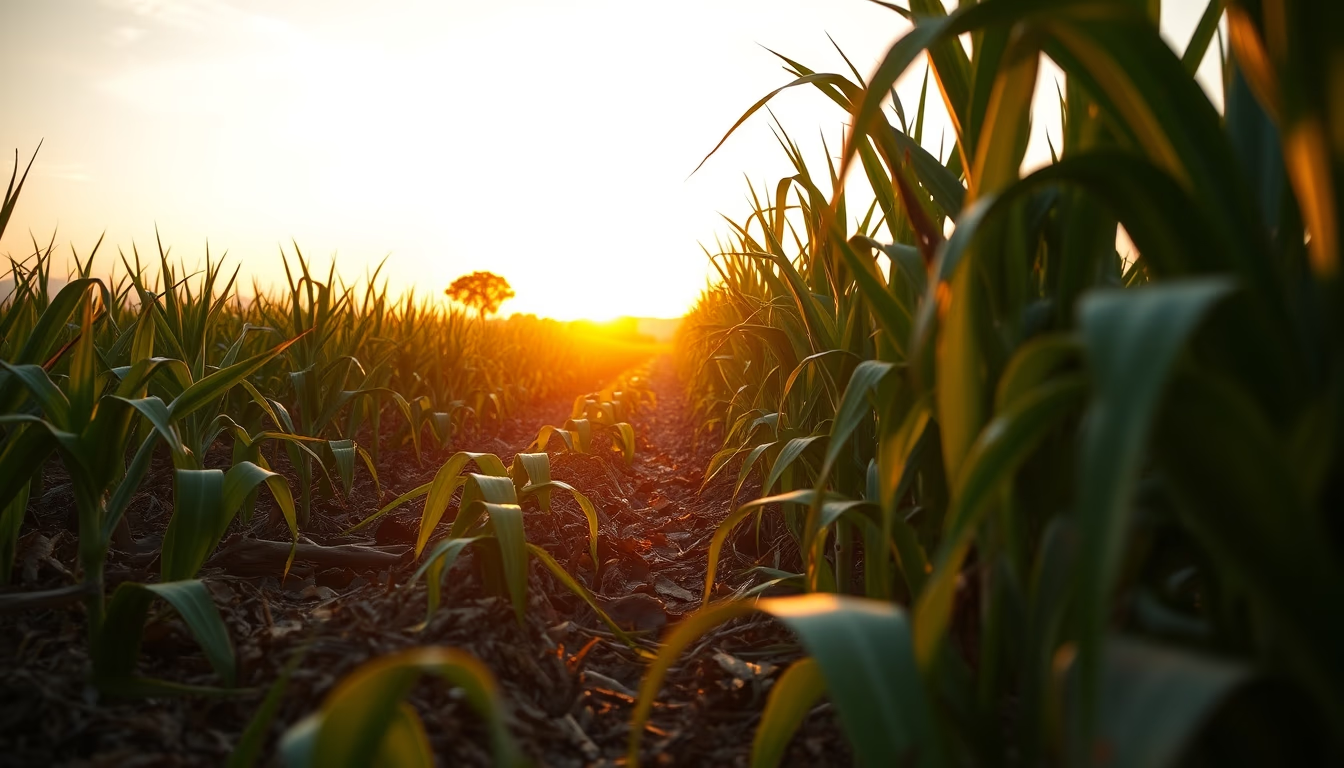
Controlled burning of sugarcane straw at sunset in São Paulo countryside, an agricultural practice that prepares the field for mechanical harvesting.
About this subject
In the interior of São Paulo state, controlled burning of sugarcane straw is still used in areas where mechanical harvesting is not feasible, such as steep or uneven terrain. The practice involves setting fire to the dry leaves of the sugarcane, removing the straw and facilitating manual or semi-mechanized cutting. Although controversial due to pollutant emissions and health risks, burning is regulated by state laws in São Paulo, which establish schedules and minimum distances from urban areas and highways. The sunset, with its golden light, contrasts with the orange flames and dark smoke, creating a typical landscape of the sugarcane cycle.
Sugarcane is one of Brazil's main crops, accounting for about 20% of global sugar and ethanol production. The state of São Paulo concentrates approximately 60% of national production, with highlights in the regions of Ribeirão Preto, Piracicaba, and Araçatuba. Controlled burning, although declining, still occurs in about 30% of São Paulo's sugarcane fields, according to data from the Sugarcane Industry Union (UNICA). The practice is usually carried out in the late afternoon, when weather conditions (wind and humidity) are more favorable for controlling the fire.
The controversy surrounding burning led to laws such as State Law 11.241/2002, which provides for the gradual elimination of burning by 2031 for mechanizable areas. In non-mechanizable areas, the deadline extends to 2037. Despite this, burning remains an important tool for small farmers and in regions with irregular terrain. The image captures this moment of transition between traditional management and agricultural modernization, where fire and sun meet on the horizon.
Frequently Asked Questions
Why is sugarcane burning done at sunset?
Burning is carried out in the late afternoon because weather conditions are more favorable: milder winds and higher relative humidity, which helps control the fire and reduces the risk of spreading to neighboring areas.
Is controlled sugarcane burning allowed by law?
Yes, it is allowed but with restrictions. In São Paulo, State Law 11.241/2002 regulates the practice, establishing a gradual elimination schedule by 2031 for mechanizable areas and 2037 for non-mechanizable ones, as well as minimum safety distances.
What is the environmental impact of sugarcane burning?
Burning releases pollutants such as CO2 and particulate matter, contributing to respiratory problems in nearby communities. However, the practice is declining due to the mechanization of harvesting, which eliminates the need for burning.
Direct URL
https://pub-c7d6a6ea828543ac903a74a341ccb2e1.r2.dev/imagens/sugarcane-field-on-fire-being-controlled-at-sunset-in-sao-paulo-countryside-wide-late-afternoon-6.avifHow to credit
Include a visible link back to UtilizAí. Copy one of the snippets below:
<a href="https://xn--utiliza-eza.com/en/midia/imagens/sugarcane-field-on-fire-being-controlled-at-sunset-in-sao-paulo-countryside-wide-late-afternoon-6">Sugarcane field with controlled burn at sunset in countryside</a> by <a href="https://xn--utiliza-eza.com">UtilizAí</a>, licensed under <a href="https://creativecommons.org/licenses/by/4.0/">CC BY 4.0</a>.
[Sugarcane field with controlled burn at sunset in countryside](https://xn--utiliza-eza.com/en/midia/imagens/sugarcane-field-on-fire-being-controlled-at-sunset-in-sao-paulo-countryside-wide-late-afternoon-6) by [UtilizAí](https://xn--utiliza-eza.com), CC BY 4.0
License: CC-BY-4.0