Storyboard sketches
1344×768 · AVIF · CC BY 4.0
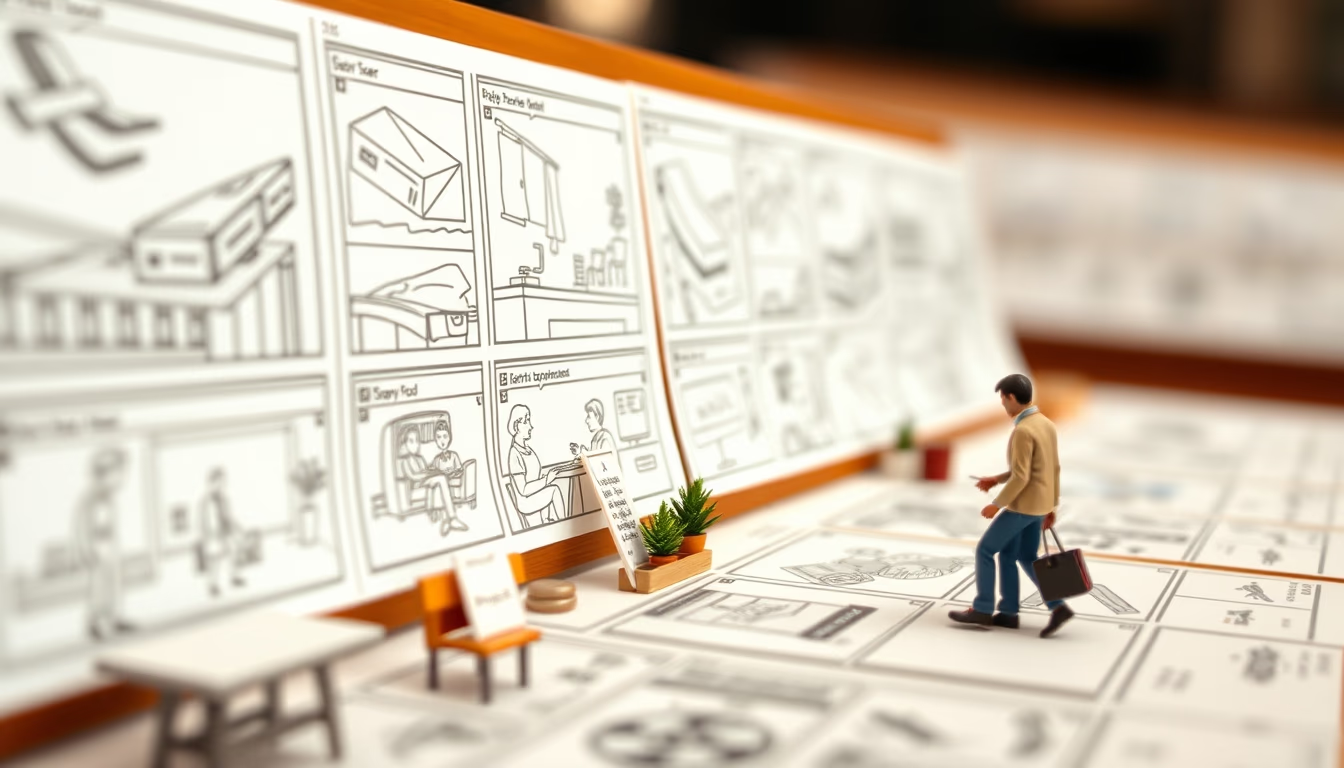
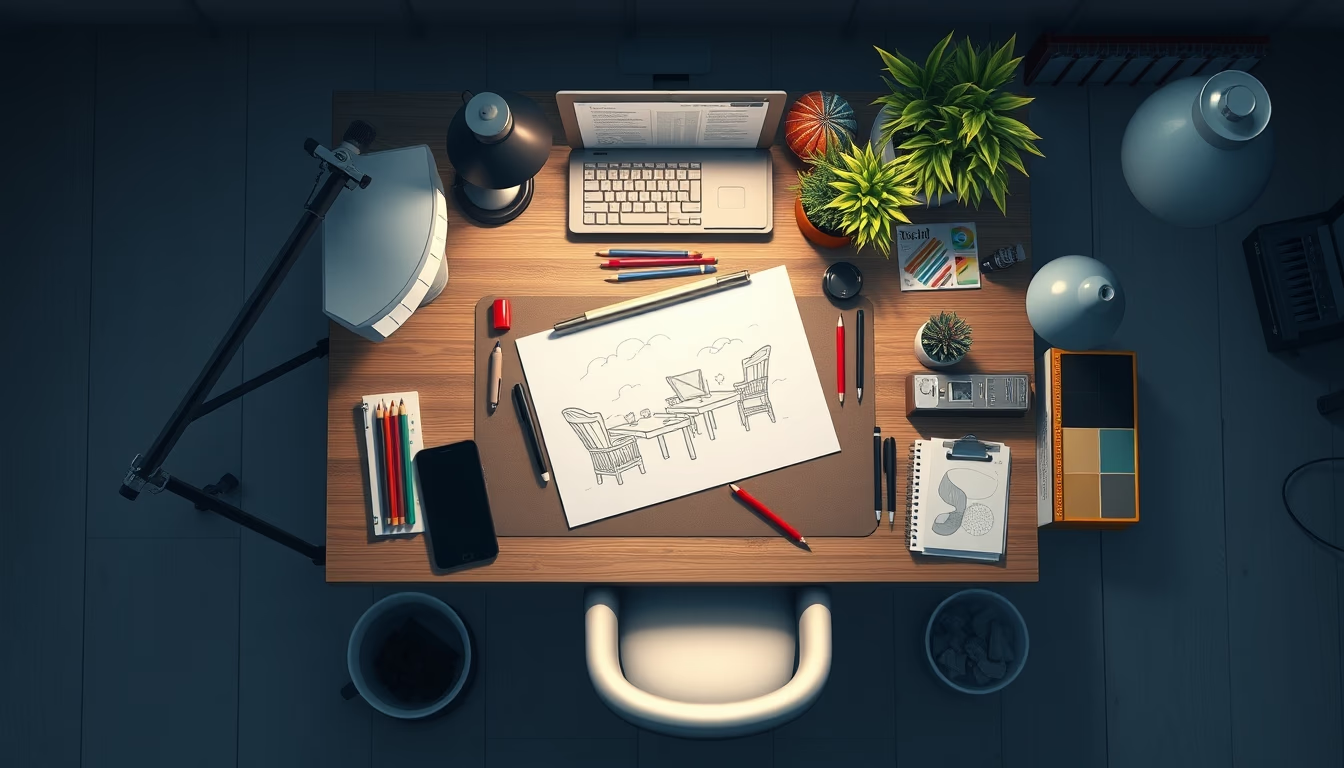
Storyboards are sequential sketches that plan scenes for films, animations, and commercials, essential in pre-production.
About this subject
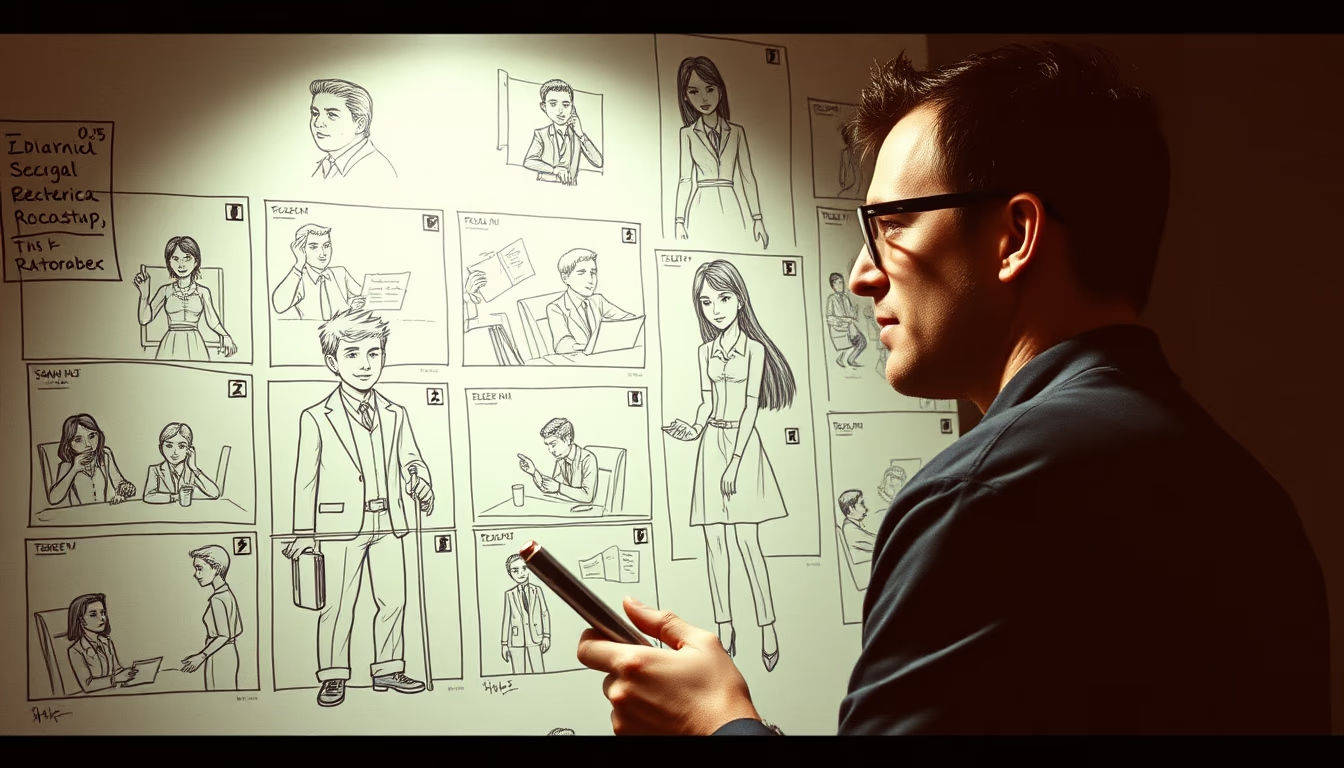
Storyboards are fundamental tools in the audiovisual creation process. They consist of a series of drawings representing each shot of a scene, including camera angles, movements, dialogue, and transitions. This technique emerged at Disney studios in the 1930s, when animator Webb Smith began drawing sequences on paper to coordinate the team's work. Since then, storyboards have become standard in the film industry, used in both live-action and animation.
In practice, storyboards function as a visual script. They allow directors, cinematographers, and production designers to visualize the narrative flow before filming, saving time and resources. There are different levels of detail: thumbnails are quick, loose sketches, while clean storyboards have more defined lines and sometimes color. Today, many artists work digitally, using tablets and software like Storyboard Pro, but the essence remains the same.
Interestingly, some famous directors like Alfred Hitchcock were known for storyboarding their scenes extremely meticulously, essentially filming on paper. In animation, storyboards often include timing and sound cues, serving as a guide for animators. The tilt-shift technique, which simulates a reduced depth of field, is occasionally applied to photographs of storyboards to give a miniature feel, but this is more a stylistic choice than a standard practice.
Storyboards are also used in advertising, music videos, and even video games, showcasing their versatility. They not only facilitate communication among teams but also help identify continuity or pacing issues before production. In summary, storyboards are the bridge between idea and screen, an indispensable step for any successful visual project.
Frequently Asked Questions
What are storyboards and what is their main function?
Storyboards are sequences of drawings that visually represent each scene of a film, animation, or commercial. Their main function is to plan the narrative, camera angles, and movements before production, saving time and resources.
What is the difference between thumbnails and clean storyboards?
Thumbnails are quick, simple sketches used to explore initial ideas. Clean storyboards are more detailed and refined drawings, often with colors and precise indications, ready to guide production.
How does the tilt-shift technique relate to storyboards?
The tilt-shift technique creates a reduced depth-of-field effect that makes objects appear miniature. In images of storyboards, it can be applied for a stylized model-like look, but it is not a common practice in professional storyboard development.
Direct URL
https://pub-c7d6a6ea828543ac903a74a341ccb2e1.r2.dev/imagens/storyboard-sketches-tilt-shift-miniature-fresh3.avifHow to credit
Include a visible link back to UtilizAí. Copy one of the snippets below:
<a href="https://xn--utiliza-eza.com/en/midia/imagens/storyboard-sketches-tilt-shift-miniature-fresh3">Storyboard sketches</a> by <a href="https://xn--utiliza-eza.com">UtilizAí</a>, licensed under <a href="https://creativecommons.org/licenses/by/4.0/">CC BY 4.0</a>.
[Storyboard sketches](https://xn--utiliza-eza.com/en/midia/imagens/storyboard-sketches-tilt-shift-miniature-fresh3) by [UtilizAí](https://xn--utiliza-eza.com), CC BY 4.0
License: CC-BY-4.0