Storyboard sketches
1344×768 · AVIF · CC BY 4.0

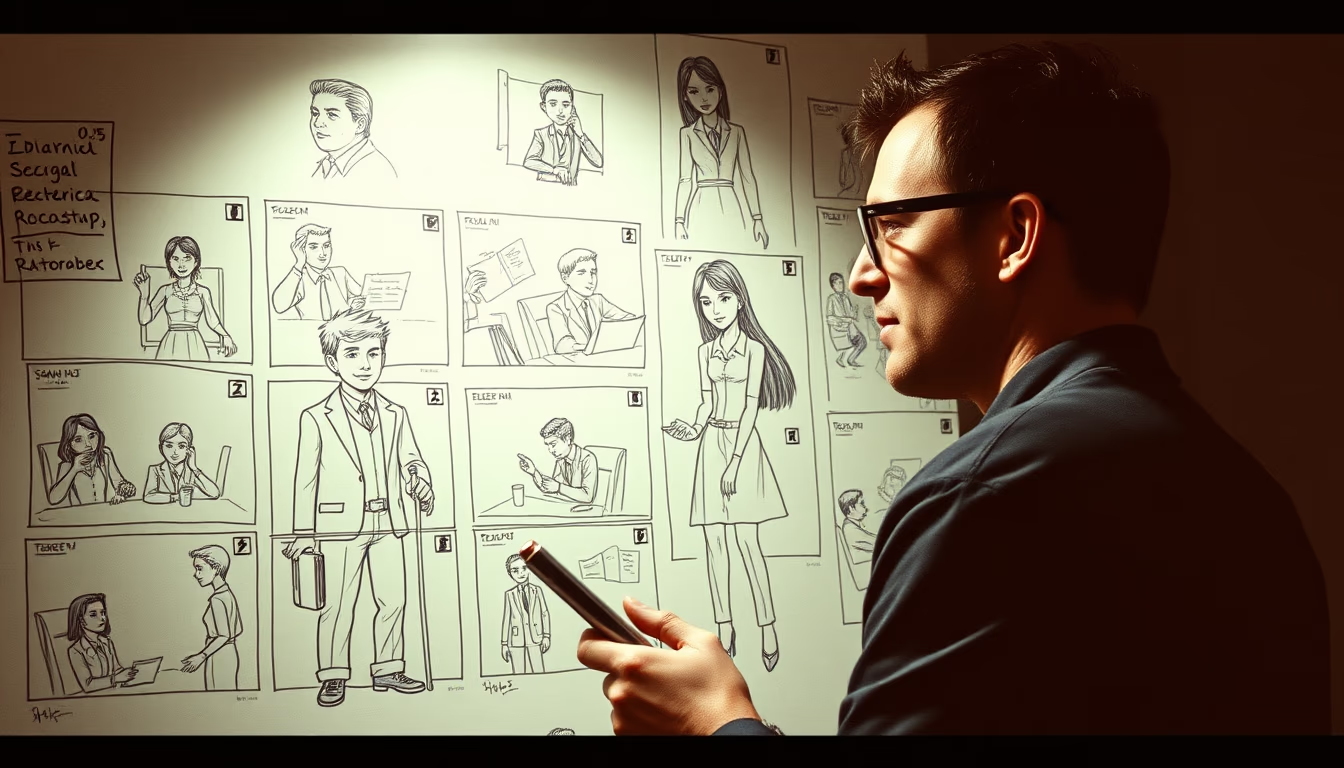
Storyboards are sequences of drawings that plan scenes for films, videos or animations, essential in audiovisual pre-production.
About this subject
Storyboards, or sequential sketches, are tools used in planning audiovisual productions such as films, series, animations, and even commercials. Each panel represents a specific scene or shot, with indications of framing, camera movement, dialogue, and action. They serve as a visual guide for directors, cinematographers, and production designers.
The origin of storyboards dates back to early silent cinema, but it was popularized by Walt Disney in the 1930s at his animation studio. The term "storyboard" came from the practice of pinning drawings on a board to tell a story. Today, they are used worldwide, from Hollywood to independent audiovisual projects.
In documentaries, storyboards help structure interviews, action sequences, and visual narratives, even though improvisation is common. They allow the crew to anticipate problems with continuity, lighting, and composition before filming. Many documentary filmmakers combine storyboards with reference photographs to create a precise visual script.
Interestingly, storyboards share techniques with comic books: use of shots, angles, and cuts to tell a story efficiently. Storyboard artists usually have training in illustration or animation and need to think in terms of movement and time. Digital tools like Storyboard Pro and Toon Boom assist in creation, but hand-drawn sketches are still valued for their speed and expressiveness.
Frequently Asked Questions
What is the difference between a storyboard and concept art?
A storyboard focuses on the narrative sequence and scene planning, while concept art develops the visual look of characters, settings, and props, not necessarily in chronological order.
Is it mandatory to use storyboards in small productions?
Not mandatory, but it greatly helps save time and resources, especially with a small crew. Even a simple storyboard aligns everyone's creative vision.
Have digital programs replaced hand-drawn storyboards?
Not completely. Many professionals still prefer hand-drawn sketches for speed and organic feel. Software offers advantages like easy editing and remote sharing.
Direct URL
https://pub-c7d6a6ea828543ac903a74a341ccb2e1.r2.dev/imagens/storyboard-sketches-documentary-photography-fresh5.avifHow to credit
Include a visible link back to UtilizAí. Copy one of the snippets below:
<a href="https://xn--utiliza-eza.com/en/midia/imagens/storyboard-sketches-documentary-photography-fresh5">Storyboard sketches</a> by <a href="https://xn--utiliza-eza.com">UtilizAí</a>, licensed under <a href="https://creativecommons.org/licenses/by/4.0/">CC BY 4.0</a>.
[Storyboard sketches](https://xn--utiliza-eza.com/en/midia/imagens/storyboard-sketches-documentary-photography-fresh5) by [UtilizAí](https://xn--utiliza-eza.com), CC BY 4.0
License: CC-BY-4.0