Stone tools paleolithic
1344×768 · AVIF · CC BY 4.0

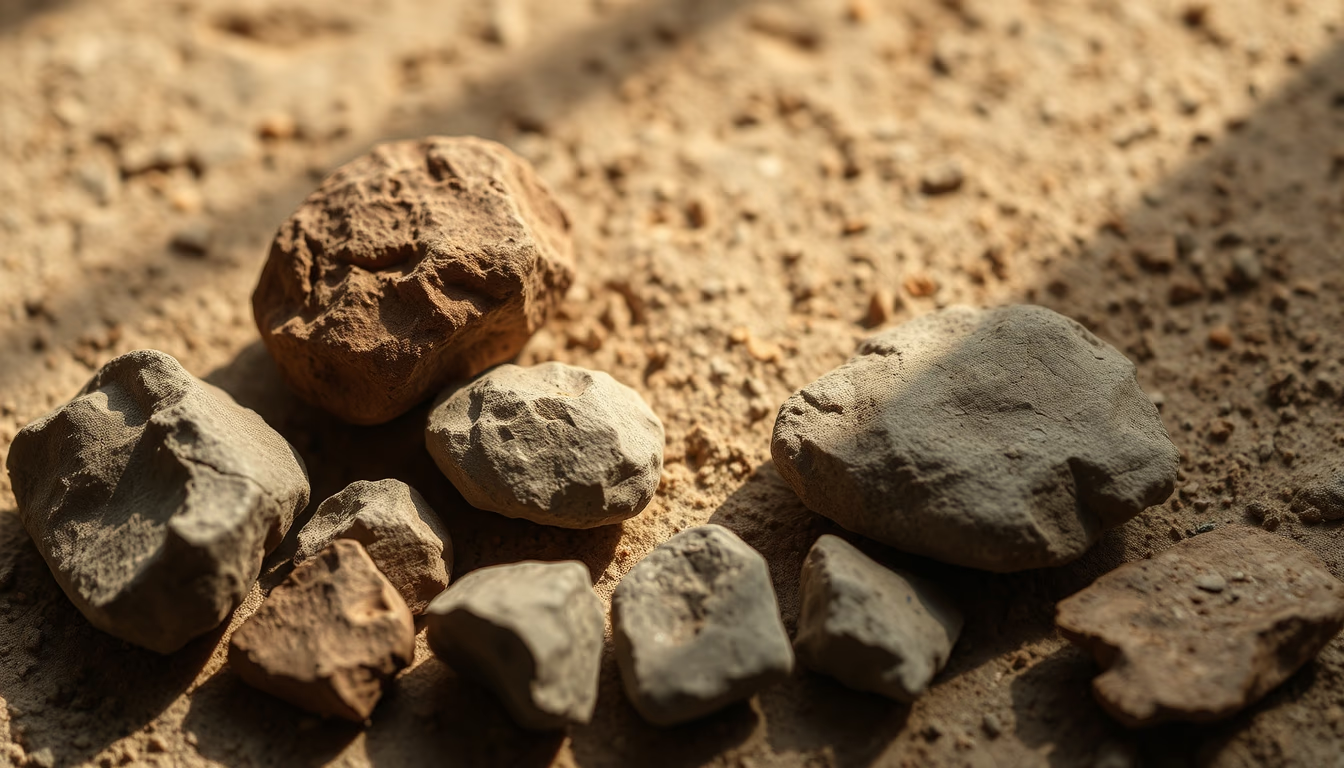
Paleolithic stone tools, including handaxes and flakes, represent the earliest human technology, dating back over 2.5 million years.
About this subject
Paleolithic stone tools constitute the earliest record of human technology. Dating back approximately 2.5 million years to the Lower Paleolithic, these tools were created by hominins such as Homo habilis. The earliest examples belong to the Oldowan industry, characterized by simple flakes and worked pebbles. Over time, more advanced techniques emerged, such as the Acheulean, which produced symmetrical bifaces and handaxes associated with Homo erectus.
These tools were manufactured through percussion, where a hammerstone struck a core of flint or quartzite to remove sharp flakes. Mastering this technique required specific knowledge of the conchoidal fracture of rocks. The most famous archaeological sites include Olduvai Gorge in Tanzania, where Louis Leakey made fundamental discoveries, and the East African Rift Valley. In Europe, caves such as Lascaux revealed tools alongside cave paintings.
The function of these implements varied: cutting meat, scraping hides, breaking bones, or working wood. The presence of tools across different regions indicates hominin adaptation to diverse environments. Additionally, the standardization of forms suggests cultural transmission of knowledge between groups. The evolution of techniques throughout the Paleolithic reflects increasing cognitive and social complexity among our ancestors.
Interestingly, sites like Monte Verde in Chile show that similar tools were used by prehistoric peoples in the Americas around 14,000 years ago. The study of these artifacts helps understand human migration, diet, and manual skills of early hominins. Lithic technology remained essential until the advent of metallurgy in the Neolithic.
Frequently Asked Questions
What is the difference between Oldowan and Acheulean industries?
The Oldowan industry is the oldest, with simple tools like flakes and pebbles. The later Acheulean produced more symmetrical tools, such as handaxes and bifaces, with greater standardization.
How do archaeologists date Paleolithic stone tools?
They use methods like potassium-argon dating on associated volcanic layers, luminescence dating, or relative stratigraphy. They also analyze animal fossils and sediments.
What types of rock were preferred for making these tools?
Flint, quartzite, obsidian, and basalt were common due to their conchoidal fracture, allowing sharp edges. Local availability influenced the choice.
Direct URL
https://pub-c7d6a6ea828543ac903a74a341ccb2e1.r2.dev/imagens/stone-tools-paleolithic-macro-closeup-p8.avifHow to credit
Include a visible link back to UtilizAí. Copy one of the snippets below:
<a href="https://xn--utiliza-eza.com/en/midia/imagens/stone-tools-paleolithic-macro-closeup-p8">Stone tools paleolithic</a> by <a href="https://xn--utiliza-eza.com">UtilizAí</a>, licensed under <a href="https://creativecommons.org/licenses/by/4.0/">CC BY 4.0</a>.
[Stone tools paleolithic](https://xn--utiliza-eza.com/en/midia/imagens/stone-tools-paleolithic-macro-closeup-p8) by [UtilizAí](https://xn--utiliza-eza.com), CC BY 4.0
License: CC-BY-4.0