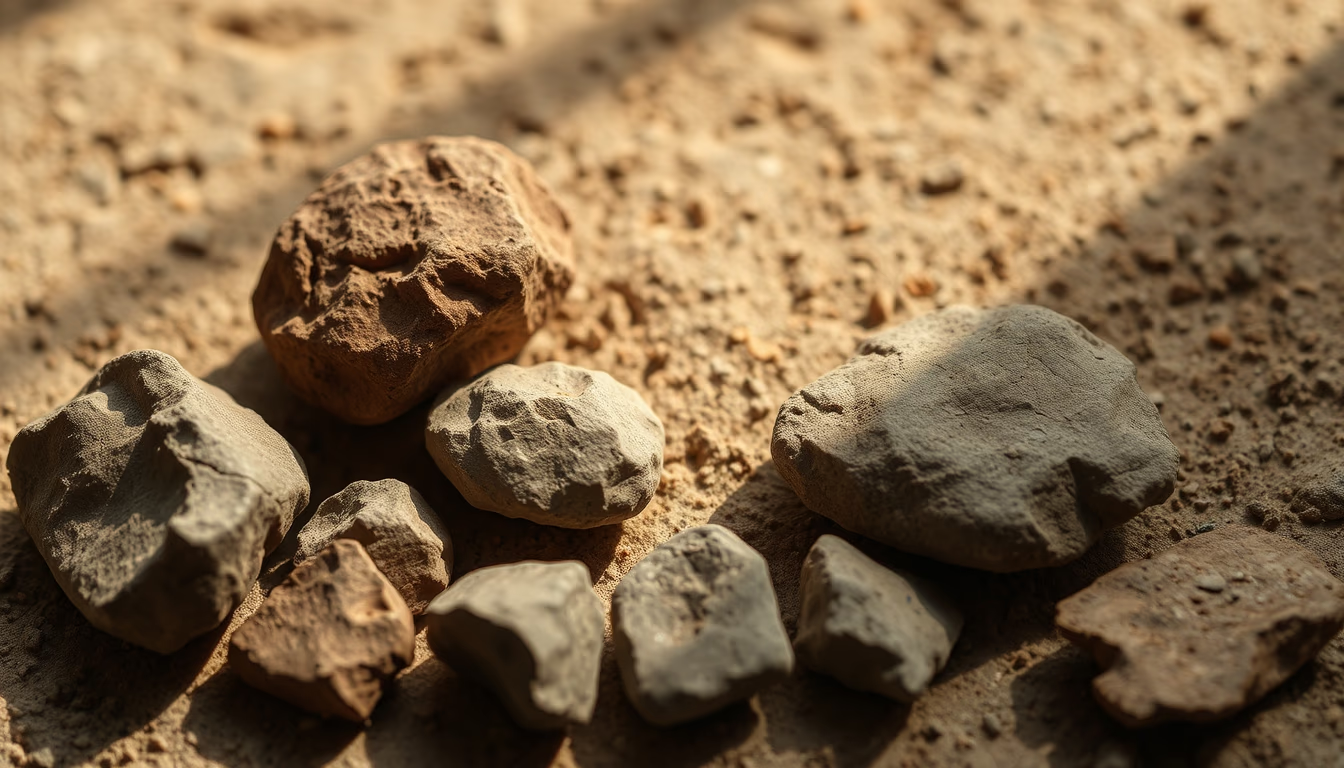
Stone tools paleolithic
1344×768 · AVIF · CC BY 4.0
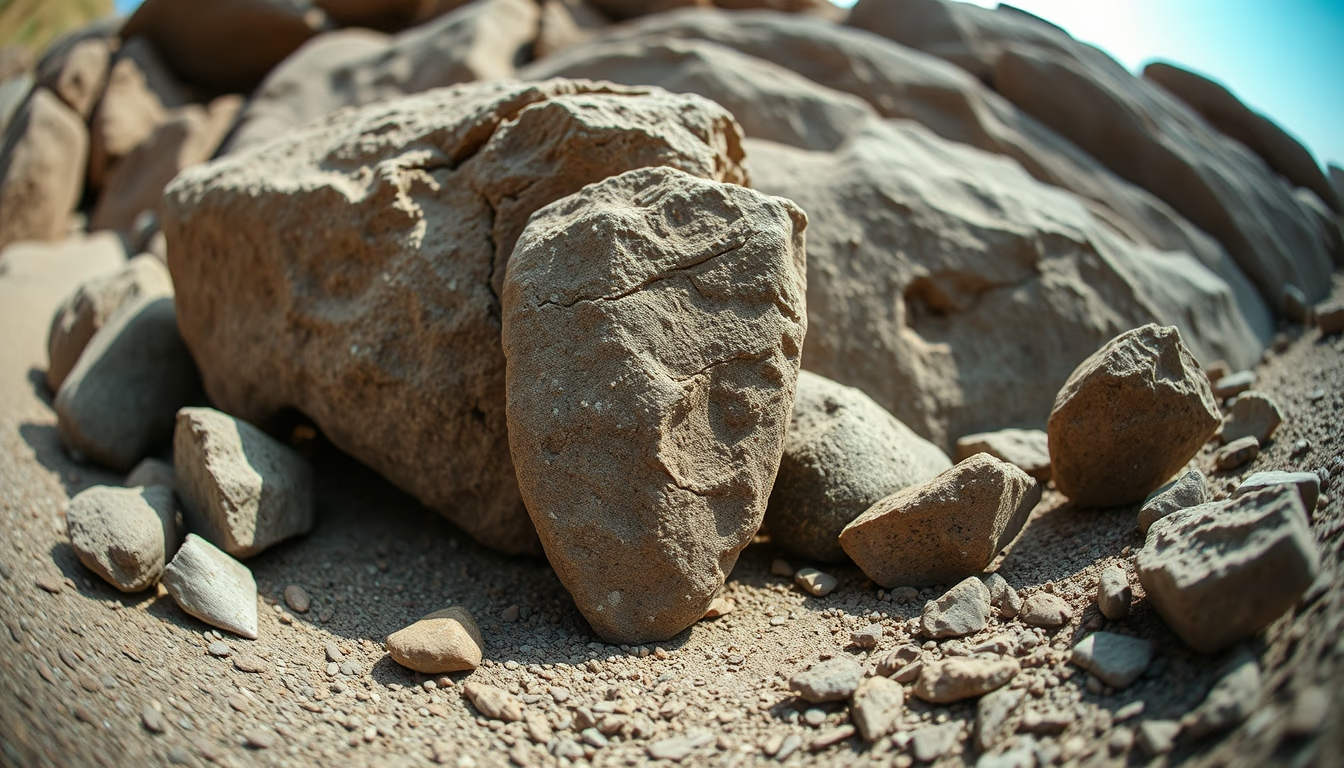
Paleolithic stone tools reveal the ingenuity of early hominids in tool making.
About this subject
Paleolithic stone tools represent the earliest known human technology, dating back approximately 3.3 million years to discoveries at Lomekwi, Kenya. These artifacts, such as those found in Olduvai Gorge, Tanzania, are associated with the genus Homo and mark the beginning of the Oldowan culture, characterized by simple flakes and stone cores. The direct percussion technique, where one stone was struck against another to produce sharp edges, required knowledge of conchoidal fracture of rocks like flint and quartzite.
Over time, lithic technology evolved into the Acheulean industry around 1.7 million years ago, introducing symmetrical handaxes and bifaces. These tools not only served for cutting meat, scraping hides, and breaking bones but also indicate advanced cognitive planning. Sites like Boxgrove, England, show that hominids selected high-quality raw materials and transported them over long distances.
Micro-wear analysis of Paleolithic tools reveals their use in diverse activities: from plant processing to wood and bone working. Controlled flake production, as seen at Zhoukoudian, China, associated with Homo erectus, demonstrates cultural transmission of techniques across generations. These artifacts are crucial for understanding human cognitive evolution, adaptation to different environments, and the emergence of complex behaviors.
Interestingly, potassium-argon dating and paleomagnetism have allowed these tools to be placed in time, while modern experimental archaeology recreates flaking techniques to understand the gestures and learning involved. The longevity of stone tool use, persisting into the Neolithic and beyond, attests to their effectiveness and the accumulated wisdom of our ancestors.
Frequently Asked Questions
What are Paleolithic stone tools?
They are implements made from knapped stone by early hominins during the Paleolithic period, starting about 3.3 million years ago. They include flakes, cores, handaxes, and cleavers, used for cutting, scraping, piercing, and breaking materials.
What is the difference between Oldowan and Acheulean industries?
The Oldowan is the oldest, with simple tools like flakes and modified cobbles. The Acheulean, emerging around 1.7 million years ago, features symmetrical, more refined bifaces, indicating greater planning and technical skill.
How do archaeologists determine the function of stone tools?
Through microwear analysis (use-wear), which studies damage on edges, and experimental archaeology recreating techniques. Contextual clues like association with animal bones or plant residues also help.
Direct URL
https://pub-c7d6a6ea828543ac903a74a341ccb2e1.r2.dev/imagens/stone-tools-paleolithic-fish-eye-wide-angle-p2.avifHow to credit
Include a visible link back to UtilizAí. Copy one of the snippets below:
<a href="https://xn--utiliza-eza.com/en/midia/imagens/stone-tools-paleolithic-fish-eye-wide-angle-p2">Stone tools paleolithic</a> by <a href="https://xn--utiliza-eza.com">UtilizAí</a>, licensed under <a href="https://creativecommons.org/licenses/by/4.0/">CC BY 4.0</a>.
[Stone tools paleolithic](https://xn--utiliza-eza.com/en/midia/imagens/stone-tools-paleolithic-fish-eye-wide-angle-p2) by [UtilizAí](https://xn--utiliza-eza.com), CC BY 4.0
License: CC-BY-4.0