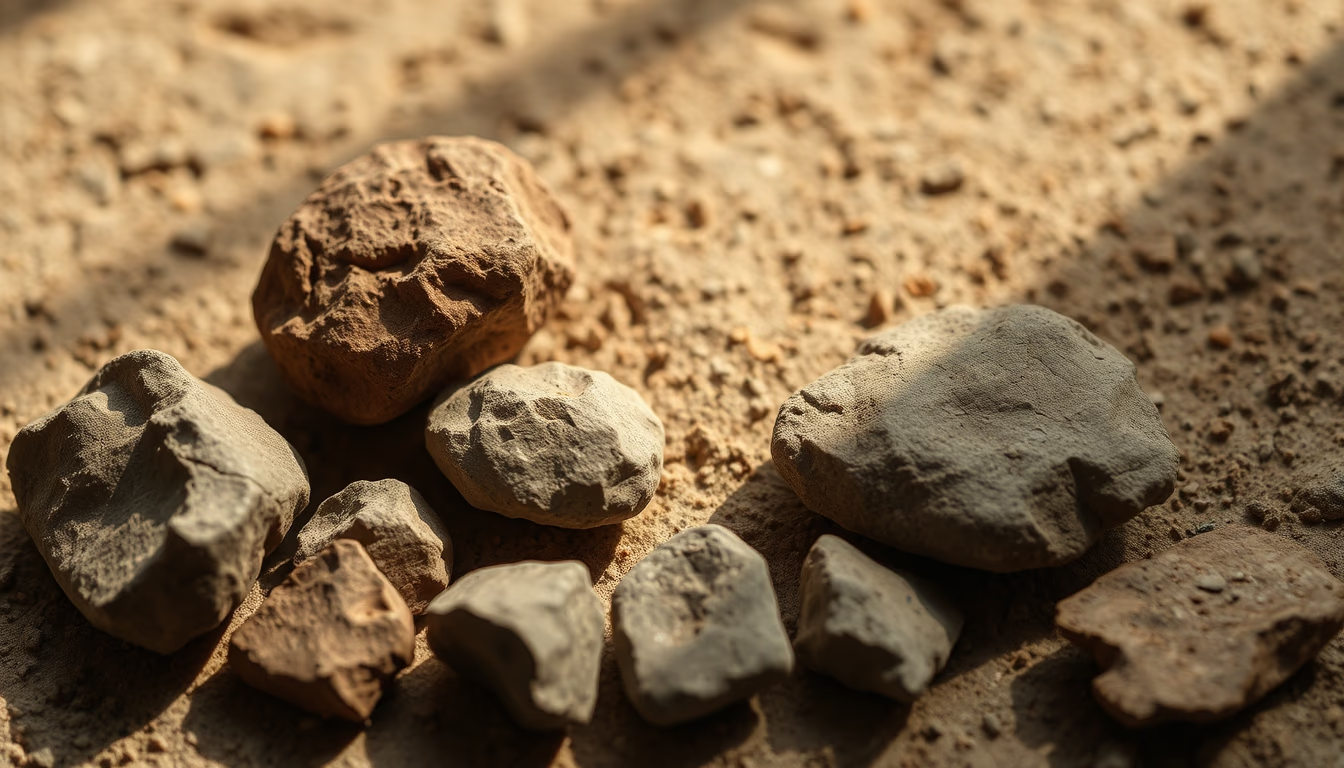
Stone tools paleolithic
1344×768 · AVIF · CC BY 4.0
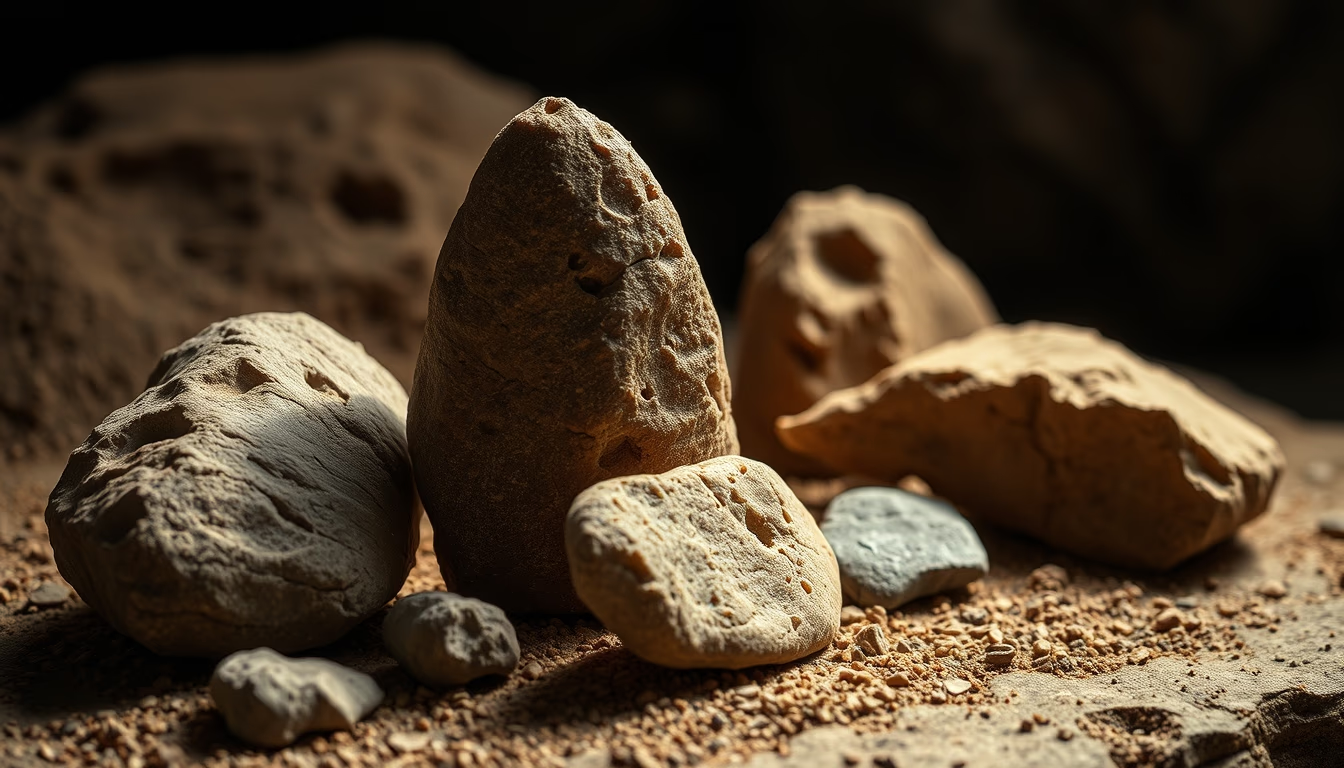
Paleolithic stone tools represent the earliest human technologies, crucial for hominid evolution and survival.
About this subject
Paleolithic stone tools are the oldest artifacts made by hominins, dating back about 3.3 million years, as seen at Lomekwi, Kenya. They represent the dawn of human technology, used for butchering, woodworking, and processing plants. Key lithic industries include the Oldowan (simple pebble tools like choppers), the Acheulean (symmetrical hand axes), and the Mousterian (flakes and points, linked to Neanderthals).
Raw materials such as flint, quartz, and obsidian were favored due to their conchoidal fracture, producing sharp edges. Flaking techniques evolved from hard hammer (stone-on-stone) to soft hammer (using antler or wood for finer flakes). Sites like Olduvai Gorge (Tanzania) and Zhoukoudian (China) yield not only tools but also usage traces and resharpening evidence, indicating planning and accumulated knowledge.
These tools go beyond mere function; they display advanced cognitive skills including symmetry and standardization. The Levallois technique, for example, required predetermination of flake shapes, reflecting abstract thought. The persistence of these technologies over millions of years underscores their effectiveness in subsistence and adaptation.
Today, the study of Paleolithic tools helps archaeologists reconstruct social behaviors, migration routes, and the development of language. Experimental archaeology recreates these techniques to understand ancestral methods. Preservation of such artifacts often depends on specific burial conditions and geochemical stability.
Frequently Asked Questions
What is the oldest known stone tool?
The oldest known tools are from Lomekwi, Kenya, dating to about 3.3 million years ago. They belong to the Oldowan industry and are modified pebbles used for hammering and cutting.
How did hominins make stone tools in the Paleolithic?
They used flaking techniques: first hard hammer (stone-on-stone), then soft hammer (antler or wood). The Levallois method allowed predetermined flake shapes, showing advanced planning.
Why are Paleolithic stone tools important for understanding human evolution?
They reveal cognitive advances like symmetry and standardization, and provide evidence for diet, mobility, and social interaction. Their long persistence demonstrates effectiveness in diverse environments.
Direct URL
https://pub-c7d6a6ea828543ac903a74a341ccb2e1.r2.dev/imagens/stone-tools-paleolithic-fine-art-photography-p10.avifHow to credit
Include a visible link back to UtilizAí. Copy one of the snippets below:
<a href="https://xn--utiliza-eza.com/en/midia/imagens/stone-tools-paleolithic-fine-art-photography-p10">Stone tools paleolithic</a> by <a href="https://xn--utiliza-eza.com">UtilizAí</a>, licensed under <a href="https://creativecommons.org/licenses/by/4.0/">CC BY 4.0</a>.
[Stone tools paleolithic](https://xn--utiliza-eza.com/en/midia/imagens/stone-tools-paleolithic-fine-art-photography-p10) by [UtilizAí](https://xn--utiliza-eza.com), CC BY 4.0
License: CC-BY-4.0