Ssd nvme stick
1344×768 · AVIF · CC BY 4.0
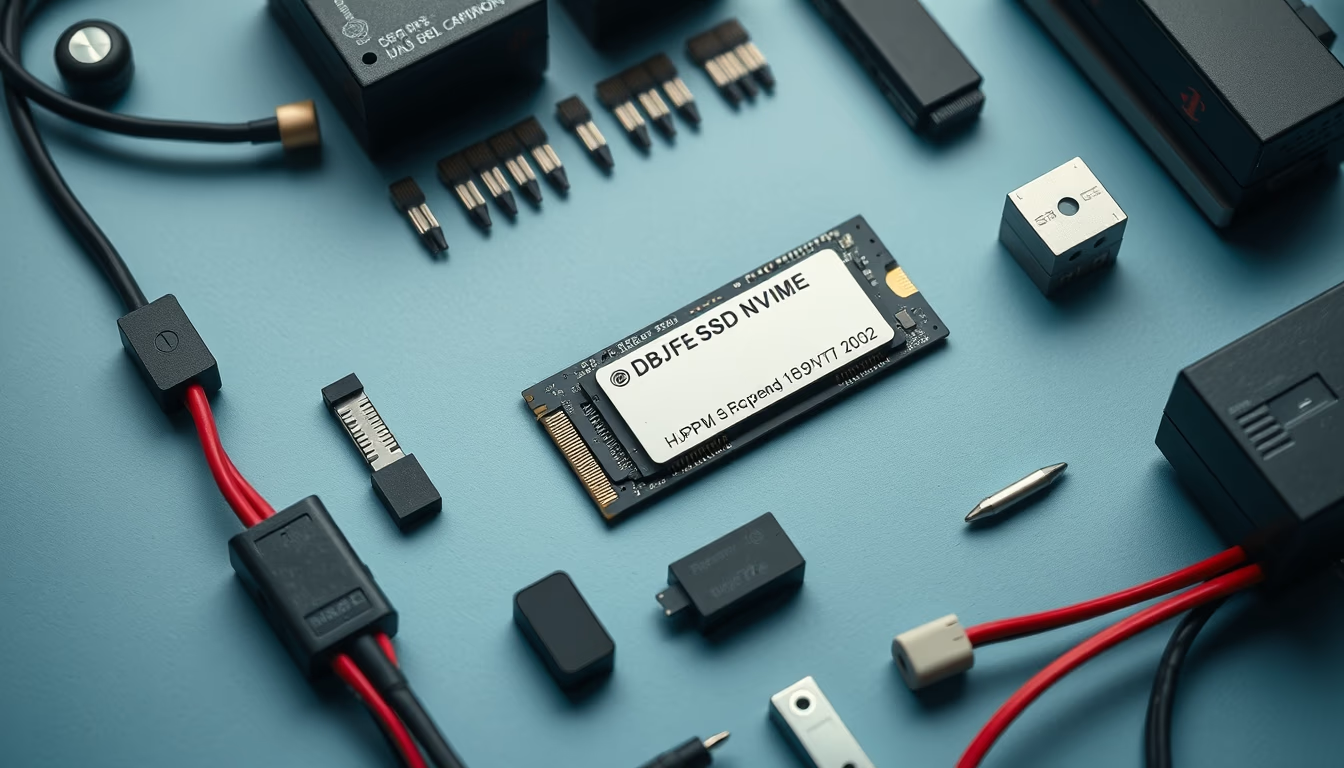
The NVMe SSD stick (M.2) is a high-speed storage device using the NVMe protocol for ultra-fast transfers, outperforming SATA SSDs.
About this subject
The NVMe SSD stick, in the M.2 form factor, represents the cutting edge of solid-state storage for modern computers. Unlike traditional SATA SSDs, which top out at around 550 MB/s, NVMe drives can achieve sequential read speeds exceeding 7,000 MB/s on PCIe 4.0 and up to 10,000 MB/s on PCIe 5.0. This immense leap comes from the NVMe protocol, developed by a consortium including Intel and Samsung, designed to exploit the parallelism of NAND flash memory and the deep queues of PCI Express lanes.
A typical M.2 NVMe SSD is about the size of a stick of gum and plugs directly into the motherboard, saving space. Common lengths include 2280 (22 mm wide, 80 mm long). Internally, they use controllers from Phison, Samsung, or Western Digital, and NAND flash memory types like TLC or QLC, balancing cost and performance. Because they generate heat, many models come with heatsinks, and under heavy load they may throttle speed to prevent overheating.
The impact of NVMe on daily computing is profound: booting in seconds, loading heavy games quickly, and transferring large files without waiting. They are essential for 4K/8K video editing workstations, database servers, and enthusiasts who demand maximum performance. The protocol also offers lower latency and better power efficiency compared to the AHCI used by SATA SSDs.
Interesting fact: the term "NVMe" was coined in 2011 with version 1.0. Previously, PCIe SSDs used proprietary drivers. Today, NVMe is natively supported by all major operating systems, including Windows, macOS, and Linux. The technology continues to evolve: PCIe 5.0 is already in use, PCIe 6.0 promises double the bandwidth, and NVMe SSDs now reach capacities of up to 8 TB in the M.2 form factor.
Frequently Asked Questions
What is the difference between NVMe and SATA SSDs?
NVMe SSDs use the NVMe protocol over the PCIe bus, achieving much higher speeds than SATA SSDs which use AHCI and top out around 550 MB/s. NVMe is ideal for high transfer rates and low latency.
What does M.2 mean and what sizes are available?
M.2 is a compact form factor for expansion cards. Common SSD sizes include 2280, 2260, and 2242, where the first two digits are width (22 mm) and the last digits are length in mm. The M.2 slot can support SATA or NVMe interfaces depending on the motherboard.
Do NVMe SSDs get hot? Do I need a heatsink?
Yes, under heavy loads the controller and NAND flash generate heat. Many drives come with a built-in heatsink, and modern motherboards often have a thermal cover over the M.2 slot. Without adequate cooling, the SSD may throttle to protect itself.
Direct URL
https://pub-c7d6a6ea828543ac903a74a341ccb2e1.r2.dev/imagens/ssd-nvme-stick-isometric-flat-lay-p5.avifHow to credit
Include a visible link back to UtilizAí. Copy one of the snippets below:
<a href="https://xn--utiliza-eza.com/en/midia/imagens/ssd-nvme-stick-isometric-flat-lay-p5">Ssd nvme stick</a> by <a href="https://xn--utiliza-eza.com">UtilizAí</a>, licensed under <a href="https://creativecommons.org/licenses/by/4.0/">CC BY 4.0</a>.
[Ssd nvme stick](https://xn--utiliza-eza.com/en/midia/imagens/ssd-nvme-stick-isometric-flat-lay-p5) by [UtilizAí](https://xn--utiliza-eza.com), CC BY 4.0
License: CC-BY-4.0