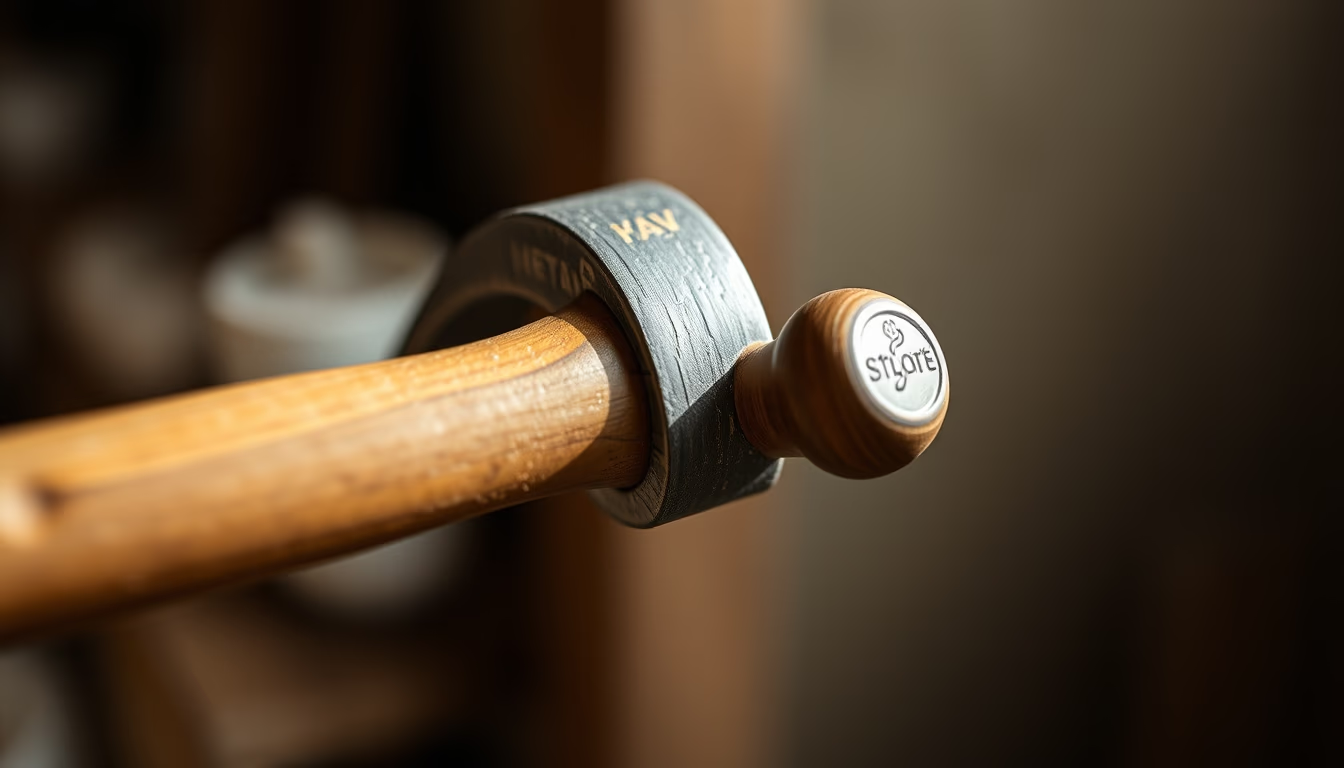
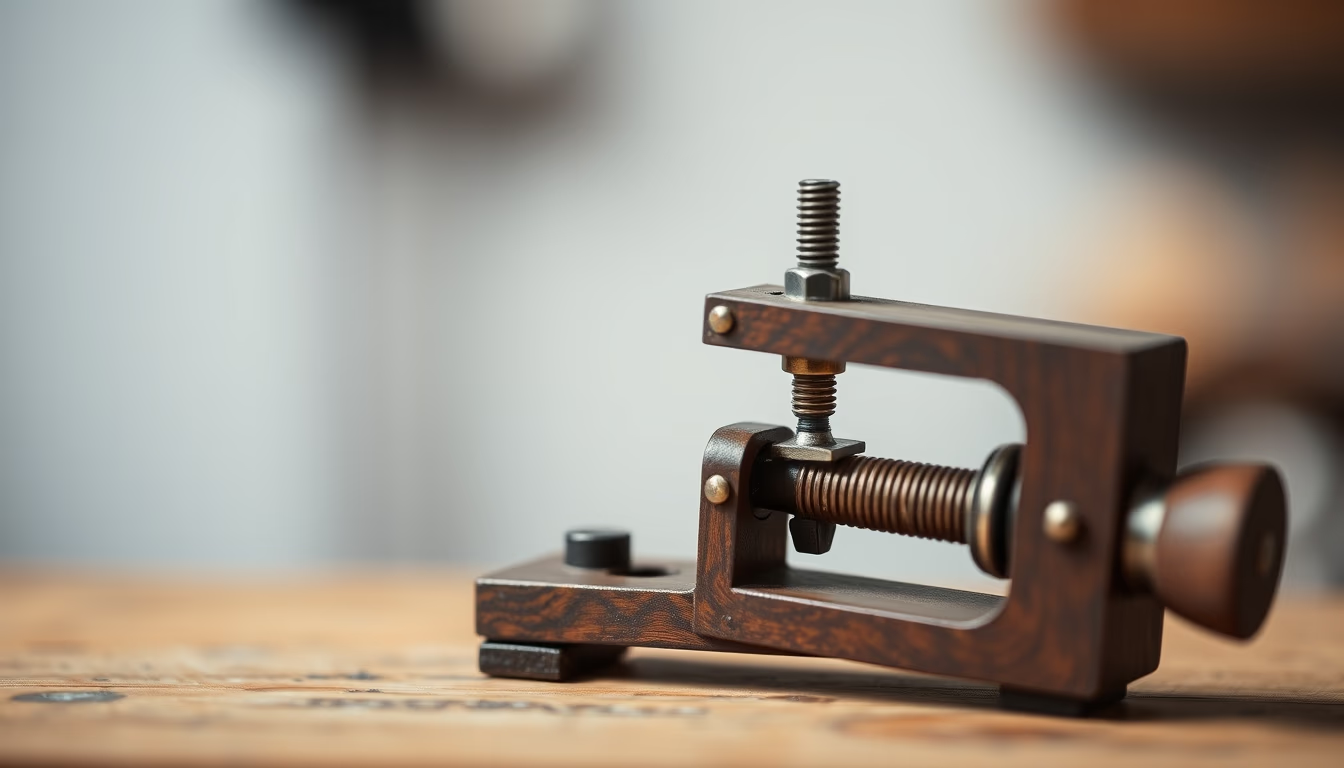
Square machinist
1344×768 · AVIF · CC BY 4.0

The machinist square is a precision tool used to check right angles on metal parts, essential in the metalworking industry since the Industrial Revolution.
About this subject
The machinist square, also known as an engineer's square, is a fundamental tool for professionals working in machining and metallurgy. Unlike common carpentry squares, this instrument is manufactured with much tighter dimensional tolerances, typically on the order of 0.01 mm per meter. Its typical construction involves a hardened steel blade and a solid base, often made of cast iron or steel, ensuring rigidity and thermal stability.
Historically, the development of the machinist square accompanied the advancement of industrial machinery in the 19th century. With the need for interchangeable parts and precise fits, tools like this became indispensable. Traditional brands such as Starrett, Mitutoyo, and Brown & Sharpe are worldwide references, with models ranging from small pocket squares to large fixed bench squares.
Proper use requires the square to be firmly supported against the reference surface and the workpiece to be brought up without excessive force, to avoid deformation. Checking perpendicularity is done against light: if no gap exists between the blade and the workpiece, the angle is correct. The hardened steel allows a long service life, but impacts can damage the measuring edge, requiring periodic lapping.
Interestingly, there are squares with adjustable blades for specific angles, such as the combination square, which also serves as a level and center finder. However, the fixed 90-degree model remains the calibration standard in metrology laboratories, attested by traceability certificates from national institutes like NIST or equivalent bodies.
Frequently Asked Questions
What is the difference between a machinist square and a common square?
A machinist square is manufactured with much tighter tolerances (up to 0.01 mm per meter), has a hardened steel blade and rigid base, and is used for precision measurements in metalworking, unlike carpentry squares which are less accurate and made of materials like mild steel or plastic.
How do you calibrate a machinist square?
Calibration is done by comparing it to a master square traceable to national standards (e.g., NIST), using a granite surface plate and checking perpendicularity against a master cylinder or with a dial indicator. Adjustments are rare, but lapping of the base or blade may be needed.
What materials are used to make machinist squares?
Common materials are tool steel (hardened) for the blade and cast iron or steel for the base. High-precision models may use stainless steel or tungsten carbide on measuring faces for greater wear resistance.
Direct URL
https://pub-c7d6a6ea828543ac903a74a341ccb2e1.r2.dev/imagens/square-machinist-film-grain-authentic-fresh6.avifHow to credit
Include a visible link back to UtilizAí. Copy one of the snippets below:
<a href="https://xn--utiliza-eza.com/en/midia/imagens/square-machinist-film-grain-authentic-fresh6">Square machinist</a> by <a href="https://xn--utiliza-eza.com">UtilizAí</a>, licensed under <a href="https://creativecommons.org/licenses/by/4.0/">CC BY 4.0</a>.
[Square machinist](https://xn--utiliza-eza.com/en/midia/imagens/square-machinist-film-grain-authentic-fresh6) by [UtilizAí](https://xn--utiliza-eza.com), CC BY 4.0
License: CC-BY-4.0