Sport kite stunt
1344×768 · AVIF · CC BY 4.0
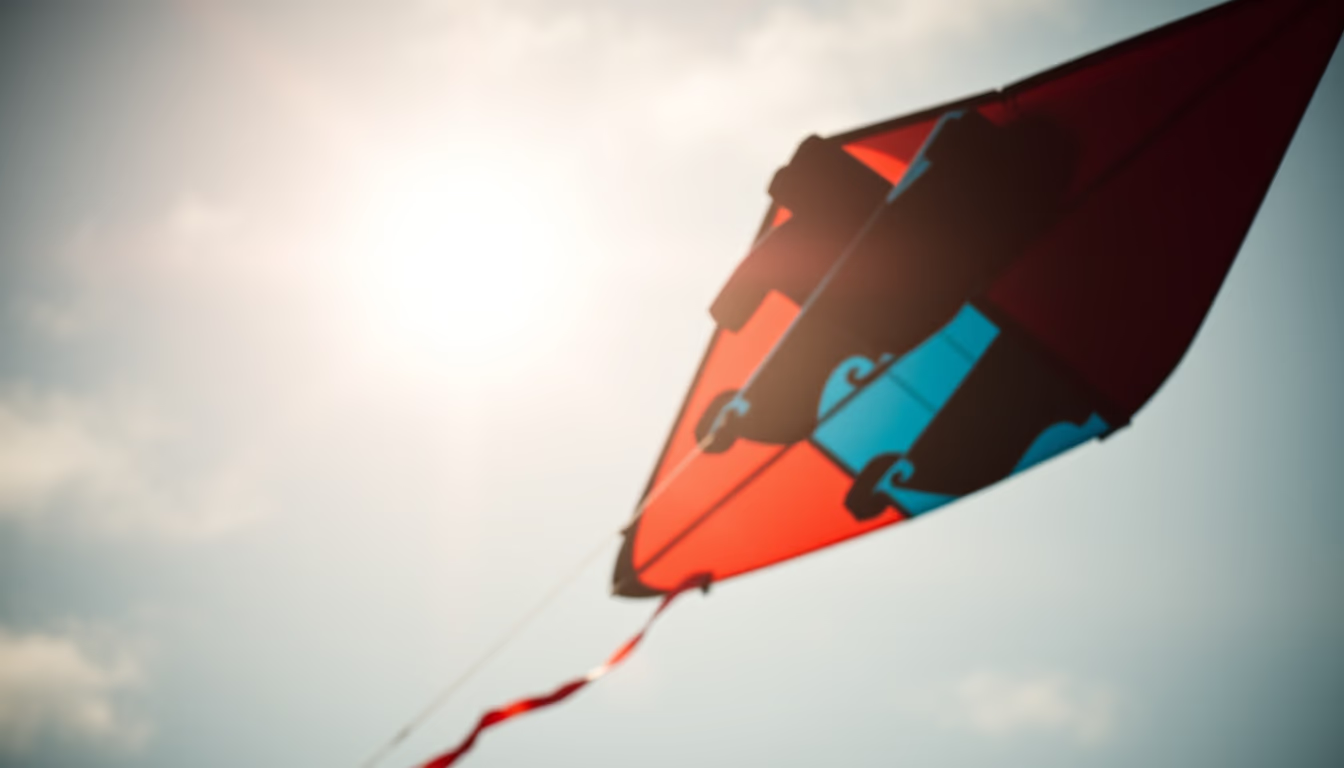
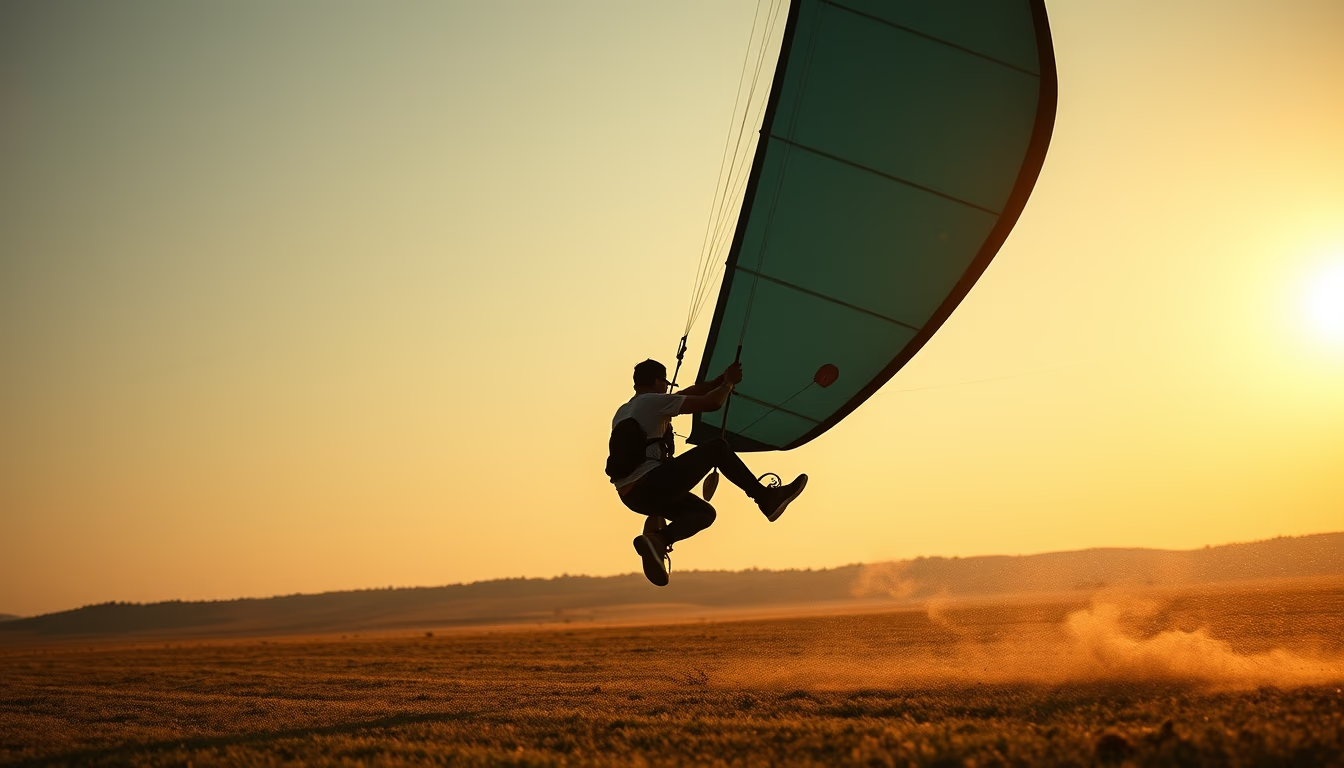
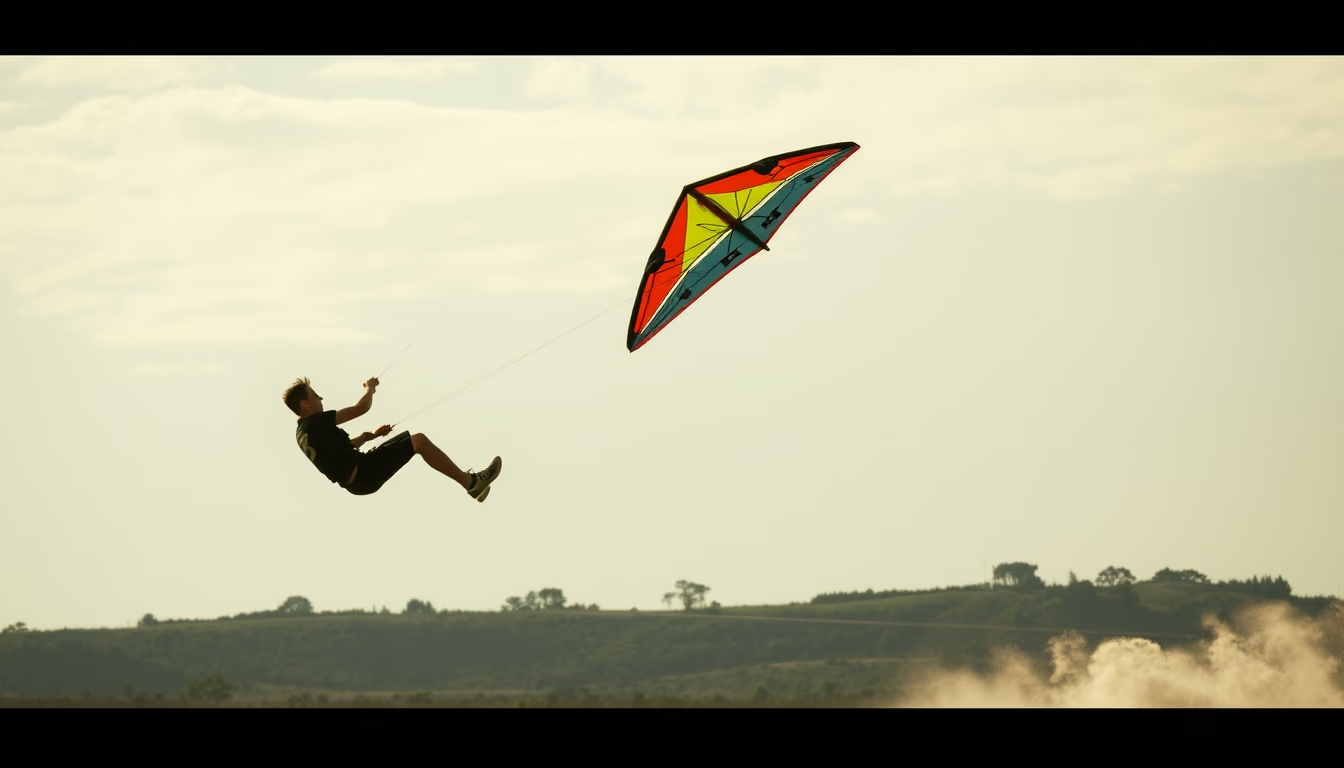
Sport stunt kites are designed for precise maneuvers, dual-line control, and aerial competitions.
About this subject
Stunt kites, also known as sport kites, differ from traditional single-line kites by having two or four control lines, enabling precise maneuvers like loops, dives, and geometric patterns. They emerged in the 1970s with designs such as the 'Peter Powell' and 'Skynasaur', which popularized aerobatic flying. Common materials include ripstop nylon and frames made of fiberglass or carbon fiber, providing lightness and durability.
Competitions in stunt kite flying are organized by bodies like the American Kitefliers Association (AKA) and the Fédération Française de Vol Libre, with categories judging precision, synchronization, and choreography. An advanced variation is kite buggying, where the kite pulls a three-wheeled vehicle across open terrain. The Guinness World Record for the largest stunt kite flown was set in 2012, with an area of 2,000 square meters.
Beginners are advised to start with two-line models such as Delta or Diamond kites, offering stability and smooth response. Experienced pilots often customize their kites with steel or Dyneema lines and adjust the spar angles to optimize performance in light or strong winds. Regular practice develops motor coordination and spatial awareness, making it a globally enjoyed outdoor activity.
Frequently Asked Questions
What is the difference between a stunt kite and a regular kite?
Stunt kites have two or four control lines, enabling complex maneuvers, while regular kites have a single line and fly steadily without precise directional control.
What wind conditions are ideal for flying a stunt kite?
Most stunt kites require winds between 10 and 30 km/h (6, 18 mph). Very light winds make control difficult, while very strong winds can damage the structure or cause loss of control.
How do I choose my first stunt kite?
For beginners, a two-line kite with an area of 1.5 to 2.5 m², such as a Delta or Diamond design, is recommended for its stability and predictable response. Avoid very small or very large kites initially.
Direct URL
https://pub-c7d6a6ea828543ac903a74a341ccb2e1.r2.dev/imagens/sport-kite-stunt-macro-closeup-fresh1.avifHow to credit
Include a visible link back to UtilizAí. Copy one of the snippets below:
<a href="https://xn--utiliza-eza.com/en/midia/imagens/sport-kite-stunt-macro-closeup-fresh1">Sport kite stunt</a> by <a href="https://xn--utiliza-eza.com">UtilizAí</a>, licensed under <a href="https://creativecommons.org/licenses/by/4.0/">CC BY 4.0</a>.
[Sport kite stunt](https://xn--utiliza-eza.com/en/midia/imagens/sport-kite-stunt-macro-closeup-fresh1) by [UtilizAí](https://xn--utiliza-eza.com), CC BY 4.0
License: CC-BY-4.0